Science Harvest connects kids with science, one pollinator at a time
UC program teams up with Northside Farmer’s Market for learning through play
Walking up to the Science Harvest booth at the Northside Farmers Market, surrounding their inviting, sparkly craft table, are nothing but kids with smiles.
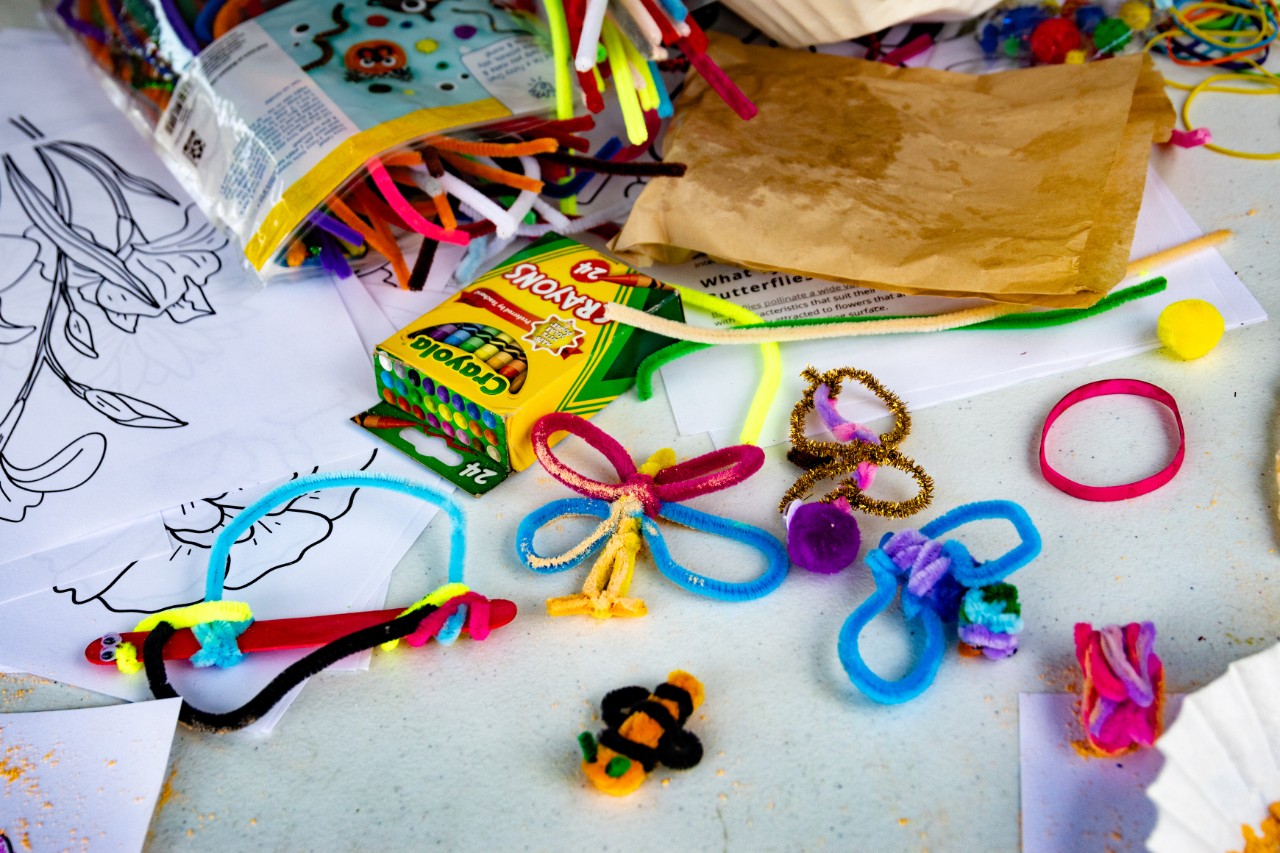
On closer look, the cut-out paper bugs and “pollen” (actually, mac and cheese powder), reveal themselves. Engaging with the kids is Kate Nicole Hoffman, researcher with the University of Cincinnati's Center for Public Engagement with Science, as she explains to them how pollination works.
Science Harvest’s mission is an extension the mission for the center, which is to educate the public on science-related topics to benefit everyone. This makes their weekly appearance at the family-friendly Northside Farmers market a perfect match.
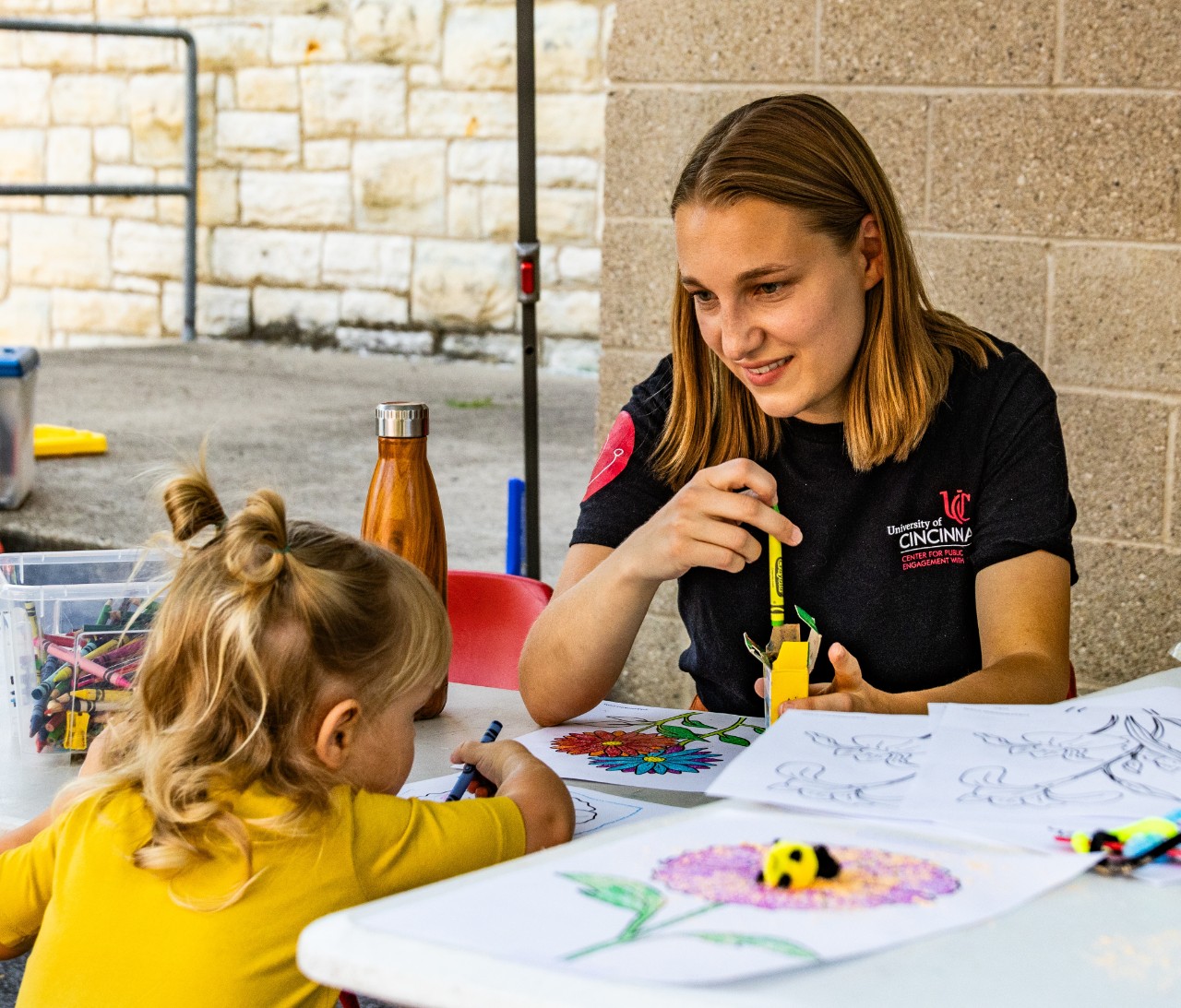
UC student researcher Kate Nicole Hoffman helps a little learner understand pollination at Northside Farmers Market. Photo/Emily Widman
“In order for flowers to make more flowers, you need to have different parts of flowers come together, but that's hard to do when they’re far apart,” Hoffman explained to the kids.
“So, how do they do it?,” Hoffman asks. “Well, flowers make some pollen, and we’re using mac and cheese powder instead. They need to get the pollen from one flower to another. We’ve got bees, we’ve got butterflies, we’ve got birds.”
Hoffman walks over to the table, picking up a cut-out butterfly decorated with crayons and pipe cleaners.
“They can make their own pollinators, dip in in the pollen, and they get to transfer it over to this flower. We’re using our creativity to demonstrate it and hopefully, make an impression that will last.”
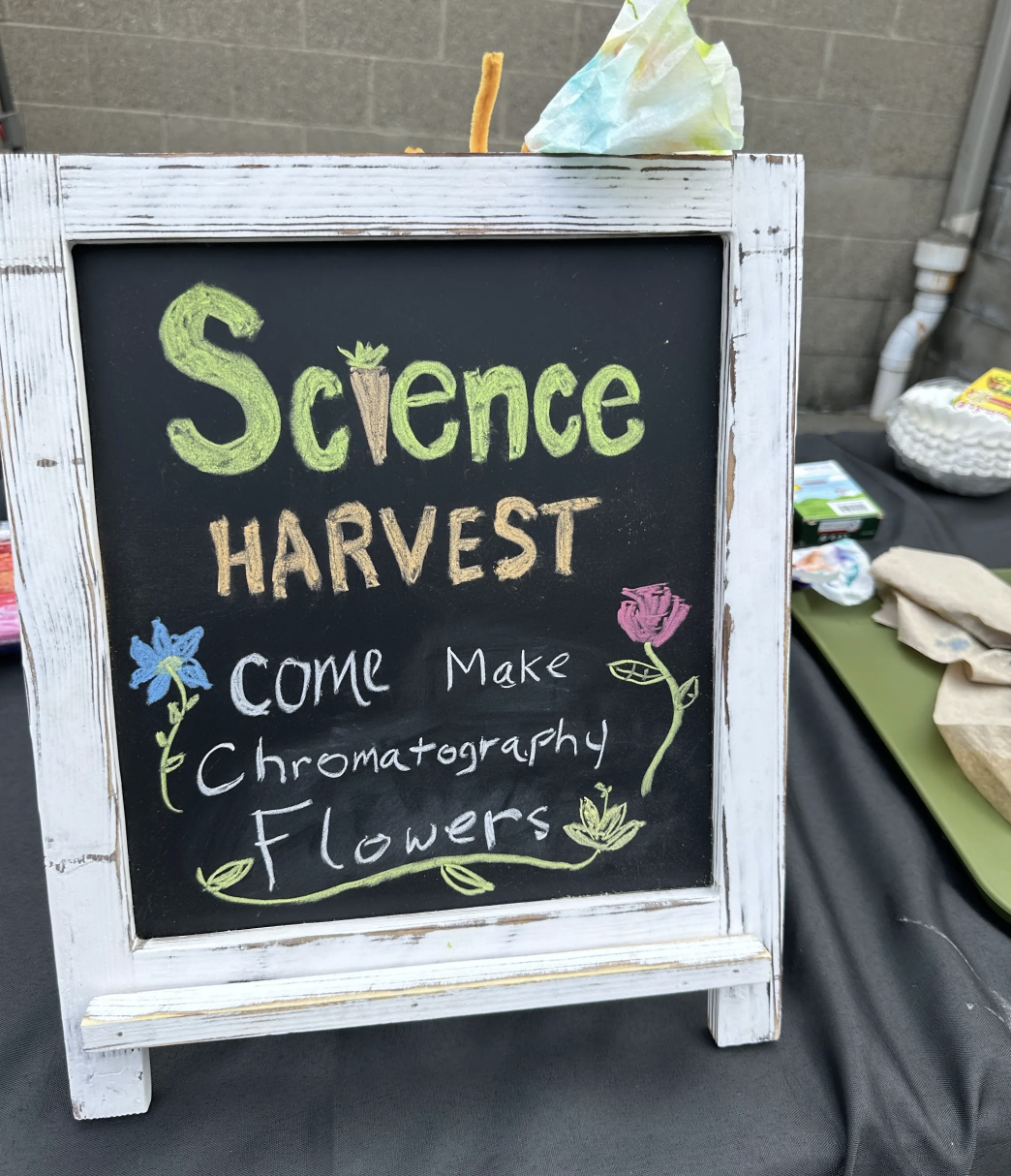
Sign welcoming visitors to Science Harvest. Photo/Hannah White
If there were a single thread that ran through each of their weekly projects, it would be the lighthearted, simplified spin they put on fundamental science lessons.
For years, Science Harvest has been at Northside Farmers Market every Wednesday with the same mission: make science approachable. Tucked away between the market’s advertising booth and a stall of produce and sourdough is a slice of the heart and soul behind the center.
“We try to do activities that are informative, but really hands on,” said Hoffman. “We want to show them that science is something they can do; that they can be scientists.”
The experience of bringing information to communities is so important.
Annika Baldwin UC student researcher
Science affects everyone every day. Hoffman wants everyone to embrace its lessons, no matter how small.
“Right now, it's important for kids to recognize the value of science and not to feel like it's something that happens separate from them and far away in a university or a lab that has nothing to do with them,” said Hoffman.
“We want them to feel like science is something they can do in their everyday lives; that it's approachable, that it's useful, that it helps them learn about the world around them.”
Offered through UC’s College of Arts and Sciences, Science Harvest is a win-win situation, where both the kids and their student teachers gain something valuable.

UC graduate student Annika Baldwin talks science with a child at Northside Farmers Market. Photo/Emily Widman
Annika Baldwin, first year graduate student at UC, has been teaching kids in some way since she was 15. Why has she stuck with it? It has helped her realize the value of discipline and creativity simultaneously, she said.
“They engender empathy and compassion and strengthen the world through the next generation,” said Baldwin. “I've realized how much my own creativity and empathy have assisted me in life, and I believe I wouldn't have learned those without discipline and attitude.
“The experience of bringing information to communities is so important,” she said. “There's a whole world besides themselves. Our world is beautiful and magnificent in its workings, and it should be protected.”
Adds Hoffman: “Engaging with the public on your research is a skill. At the Center for Public Engagement with Science, we’re really interested in effective science communication and outreach and connecting with the community. It takes work, but we don't want to be in this university bubble. We want to be connected with people in the community.”
Interested in engaging your kids with fun, impactful science fundamentals? PEWS will host Science Harvest at the Northside Farmers Market, 4222 Hamilton Ave., Wednesdays from 4-7 p.m. Find out more about PEWS and Science Harvest here.
Featured image at top: Activities table set up by UC's Center for Public Engagement with Science at Northside Farmers Market. Photo/Emily Widman

By Emily Widman
Student Journalist, College of Arts and Sciences Marketing and Communication
artscinews@uc.edu
Related Stories
UC launches Bearcats Affordability Grant
January 7, 2026
The University of Cincinnati is making college more attainable for students across Ohio with the creation of the Bearcats Affordability Grant. The new grant will provide a pathway to tuition-free college for students of families who make less than $75,000 per year. Beginning in fall 2026, the Bearcats Affordability Grant will cover the remaining cost of tuition for Ohio residents who are Pell eligible.
BearcatGPT AI platform now available to all UC faculty and staff
December 9, 2025
University of Cincinnati Digital Technology Solutions is excited to announce that BearcatGPT, the university’s private, secure AI platform, is now available to all UC faculty and staff.
Duo authentication changes coming January 2026
November 10, 2025
Effective Wednesday, January 21, 2026, Duo authentication via SMS text messages and phone calls will no longer be supported. Switch to the Duo Mobile app on an iOS or Android device (such as a smartphone or tablet). The Duo Mobile app supports Duo Push, which offers the most secure and user-friendly authentication experience.