
UC celebrates science with schoolchildren
Center for Public Engagement with Science hosts Science Day for fifth-graders

The University of Cincinnati hosted fifth graders from the local School for Creative and Performing Arts for the university’s Science Day.
Faculty and UC students in geosciences, biology and other departments in UC’s College of Arts and Sciences led students in activities about animals, senses and other topics.
Professor Joshua Gross, who studies animals such as blind cavefish in his lab, led students in an exercise that demonstrated how the sense of taste is tied closely to smell. Associate Professor Takuya Konishi, an expert on ancient marine reptiles called mosasaurs, organized the biology exercises.
Students chewed on a fruit called a miracle berry that affects the taste buds and found that it made sour foods like lemons taste sweet. The children participated in some exercises in the newly renovated Old Chemistry building, which reopened this month after $190 million in renovations.

Fifth-graders from Cincinnati's School for the Creative and Performing Arts visited UC's Uptown Campus to learn more about science. Photo/Michael Miller
And in the Geology-Physics Building, students got to explore the Geosciences Museum, which features exhibits on dinosaur fossils and geology. Visitors are greeted at the entrance by a sculpture of a woolly mammoth.
Geosciences Professor Carlton Brett gave the students a tour of the museum, holding up fossils of starfish and the tracks of ancient dinosaurs left in the mud. And under the fossilized skeleton of a giant mosasaur hanging from the ceiling, he led students on a walk through the Earth’s timeline from the Ordovician period through today using examples of its notable animals.
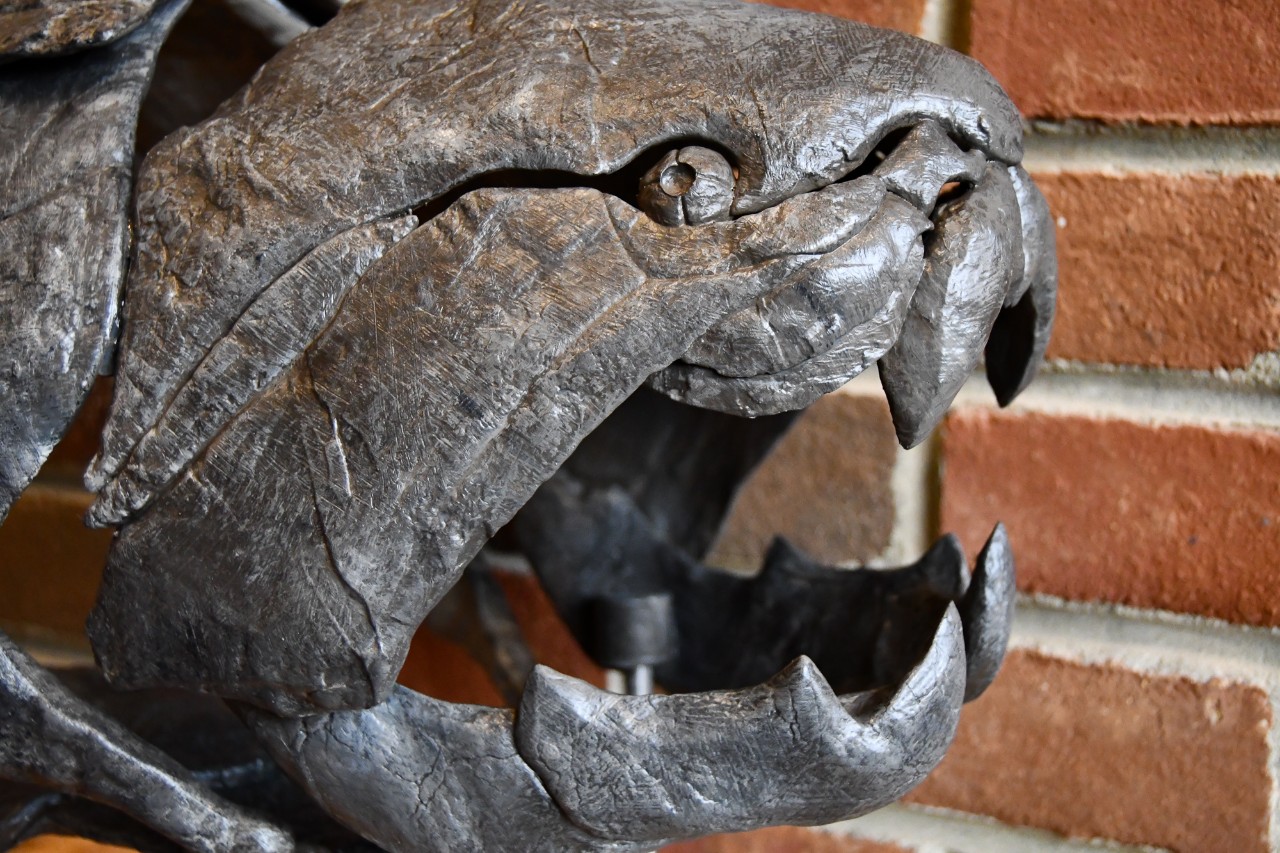
The fossilized skull of a prehistoric fish called Dunkleosteus is on display in UC's Geosciences Museum. This fish had a powerful crushing mouth like a snapping turtle's. Photo/Michael Miller
The students ate lunch with the UC Bearcat mascot, the reigning national champion in this year’s College Cheerleading and Dance National Championship.
The visit also gives students an introduction to the college campus. One in four students at UC is the first in his or her family to attend college. Center Director Angela Potochnik, head of philosophy at UC, said organizers wanted the children to feel like college insiders if they decide to attend UC after high school.
“These field trips illustrate how the UC Center for Public Engagement with Science creates programming that different units and colleges can contribute to, thereby maximizing UC’s collective impact,” she said.
The field trip was sponsored by the center and UC’s College of Arts and Sciences.
Featured image at top: Fifth-grader Aubrey Hightower and her grandmother, Tara, look at exhibits at UC's Geosciences Museum during a field trip to hosted by the College of Arts and Sciences and the Center for Public Engagement with Science. Photo/Michael Miller
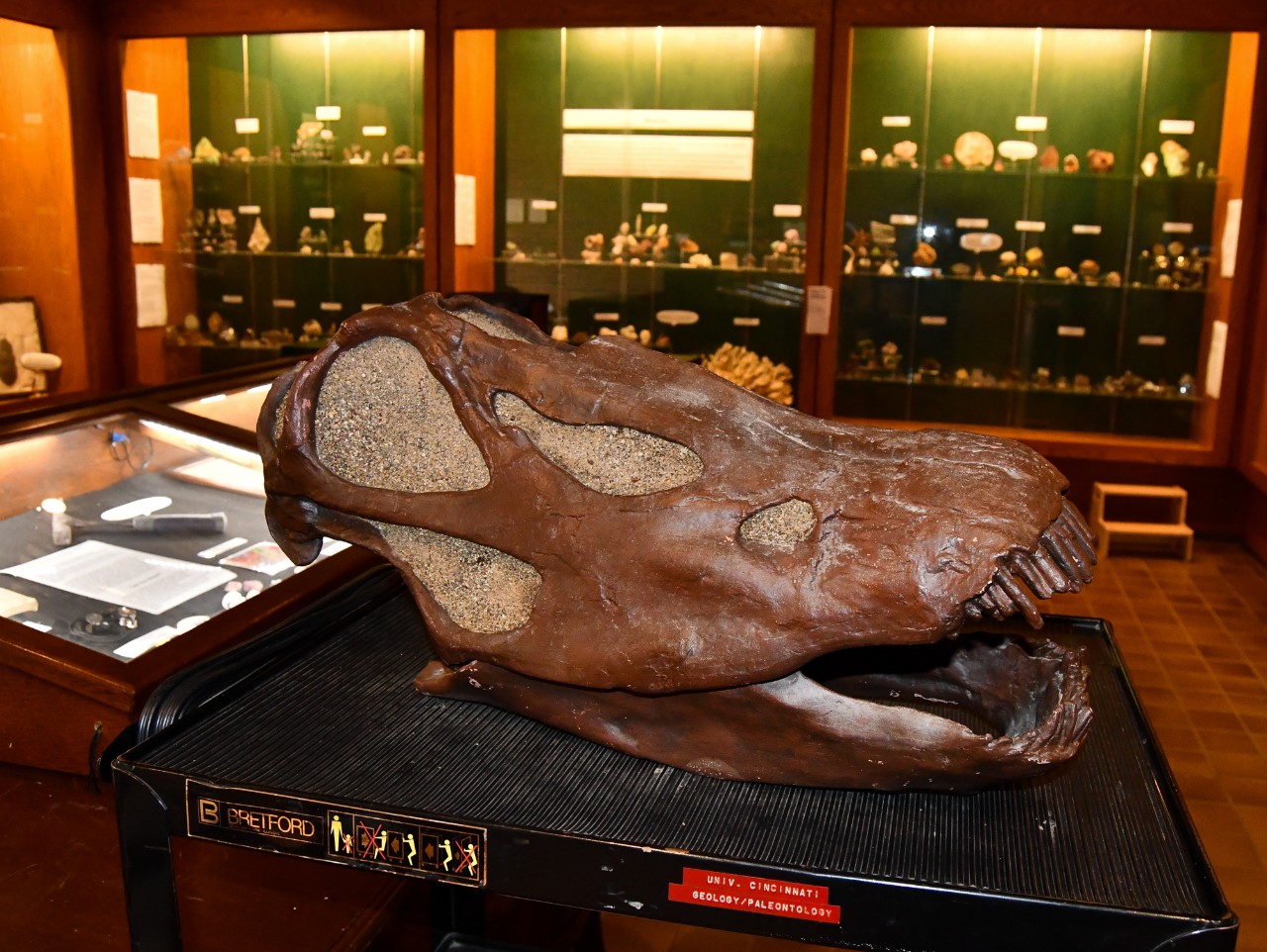
A dinosaur called Diplodocus graces a display in UC's Geosciences Museum in the Geo-Phys Building. Photo/Michael Miller
Related Stories
UC launches Bearcats Affordability Grant
January 7, 2026
The University of Cincinnati is making college more attainable for students across Ohio with the creation of the Bearcats Affordability Grant. The new grant will provide a pathway to tuition-free college for students of families who make less than $75,000 per year. Beginning in fall 2026, the Bearcats Affordability Grant will cover the remaining cost of tuition for Ohio residents who are Pell eligible.
BearcatGPT AI platform now available to all UC faculty and staff
December 9, 2025
University of Cincinnati Digital Technology Solutions is excited to announce that BearcatGPT, the university’s private, secure AI platform, is now available to all UC faculty and staff.
Duo authentication changes coming January 2026
November 10, 2025
Effective Wednesday, January 21, 2026, Duo authentication via SMS text messages and phone calls will no longer be supported. Switch to the Duo Mobile app on an iOS or Android device (such as a smartphone or tablet). The Duo Mobile app supports Duo Push, which offers the most secure and user-friendly authentication experience.