
Celebrating Black history with a vision for the future
UC’s month of events blend past, present and future in a dynamic tribute to Black excellence

At the University of Cincinnati, Black History Month is not just a time for reflection; it’s a time for action, celebration and envisioning the future.
The 2025 theme for Black History Month is "African Americans and Labor" highlighting the many ways that work has been a central part of the Black American experience, including both voluntary and involuntary, skilled and unskilled labor.
With a packed calendar of events spanning February, the university’s African American Cultural & Resource Center (AACRC) and partners are starting conversations, presenting performances and leading celebrations designed to educate, challenge and inspire.
Crowning next-gen leaders

Kuamka Ball. Photo provided
Beginning the festivities in late January, UC’s annual Kuamka Week — Swahili for "in the beginning" — set the tone with a series of engaging programs celebrating leadership and culture.
The 26th Annual Kuamka Ball in Tangeman University Center’s Great Hall capped the week’s events on Feb. 1, and kicked off the official Black History Month celebrations. As part of the annual festivities, student leaders were crowned as Kuamka royalty and then champion the AACRC’s mission throughout the year.
The theme, “Liberation is for Everyone (LIFE),” calls on students to expect collective empowerment and transformation.
From symphonies to soul food

Randall Goosby, Mac Music Innovator, Cincinnati Symphony Orchestra. Photo provided
In partnership with the Cincinnati Symphony Orchestra (CSO), the AACRC will host a Lunch & Learn on Mon., Feb. 3, featuring Randall Goosby, CSO, noon to 1 p.m., offering students and faculty space for discussion and discovery about Black cultural influence in music and history.
Throughout the month, the Taft Research Center joins the celebration, co-hosting Black FUTURE Month 2025, presented by UC’s Department of Africana Studies and the College of Arts and Sciences. Marking the 99th anniversary of Black History Month with this year’s Taft Center theme, “Radical Worldmaking,” the center offers a packed calendar of 35 immersive events over 28 days.
Beginning with Monday’s Uncommon Read-Ins with Cassandra Jones, attendants can read about relationships between innovation and inequity, knowledge and power and health and justice at UC's Charles P. Taft Research Center. Continuing throughout the week, events include Tuesday Mini-movie Festivals and Free Food Fridays featuring Black-owned food trucks, every day brings a new opportunity to engage.
Drink, think and debate

Holly McGee
For those who like a side of debate with their drinks, join UC’s Holly McGee, associate professor of U.S. and African American History, at Wednesday’s Drink ’n Think four-part lecture series at Ludlow Wines. Each event promises to tackle engaging topics including the origins and future of Black History Month itself — should it continue or evolve?
One particular Drink ’n Think session on Black pioneers, from cowboys in the American West to formerly enslaved people who escaped through the Underground Railroad, promises to uncover stories as astonishing as they are little known.
Click here for the full, interactive calendar.
Legacy through the lens
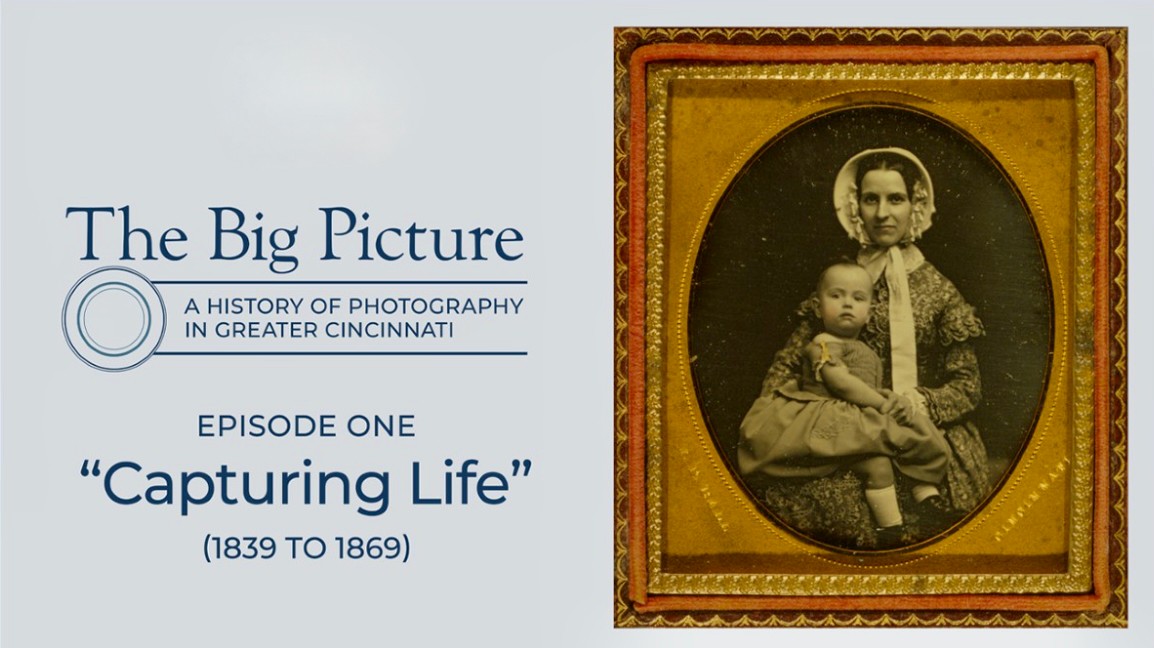
Photo provided
On Sunday, Feb. 16, at 4:30 p.m., UC art history professor Theresa Leininger-Miller takes center stage in the hour-long CET and Think TV documentary “Capturing Life, 1839-1869,” the first in a three-part series, “The Big Picture: A History of Photography in Greater Cincinnati.”
In the documentary, she delves into the life and times of Cincinnati’s J.P. Ball, one of America’s earliest African American photographers. Ball, a freeman, opened a one-room daguerreotype studio in Cincinnati in 1845, using the process of recording photographs onto silver-plated copper.
Later this spring, Leininger-Miller’s students will study Ball’s original daguerreotypes and photographs firsthand at the Geier Center of the Cincinnati Museum Center, as well as other Black artistic masterworks at the Cincinnati Art Museum and Taft Museum of Art.
UC Medicine’s proud roots
In a tribute to UC’s first Black graduate of the College of Medicine’s Emergency Medicine Residency Program — the oldest emergency medicine residency program in the U.S. — local WKRC weekend reporter Sydney Hawkins created a news story on Marcus L. Martin, chief resident in the late 1970s and UC’s first black graduate from the program.
Her in-depth feature titled "Black History Month: First Black graduate of UC Emergency Medicine program shares journey," chronicles Martin's collegiate journey beginning with his years at North Carolina University as a walk-on football player in 1967 to grduating from Eastern Virginia Medical School in the 1970s.
His experience working in emergency medicine for the U.S. Public Health Service Commissioned Corps in New York was the catalyst that led Martin to the Queen City, applying and getting accepted to UC's first emergency medicine residency program in the country.
"It was a no-brainer for me to apply to Cincinnati to meet Dr. Richard Levy and other people like Dr. Glenn Hamilton," Martin explained in the WKRC news srory. "They were some of the 'fathers' of emergency medicine."
At this point in life, Martin said he felt he was paving the way for future doctors of color and had the desire to keep opening doors.
Featured image at top: Tribute banner to Black History Month/Photo courtesy of Depositphotos
Impact Lives Here
The University of Cincinnati is leading public urban universities into a new era of innovation, impact and inclusion. Our faculty, staff and students are saving lives, changing outcomes and bending the future in our city's direction.
Related Stories
UC launches Bearcats Affordability Grant
January 7, 2026
The University of Cincinnati is making college more attainable for students across Ohio with the creation of the Bearcats Affordability Grant. The new grant will provide a pathway to tuition-free college for students of families who make less than $75,000 per year. Beginning in fall 2026, the Bearcats Affordability Grant will cover the remaining cost of tuition for Ohio residents who are Pell eligible.
BearcatGPT AI platform now available to all UC faculty and staff
December 9, 2025
University of Cincinnati Digital Technology Solutions is excited to announce that BearcatGPT, the university’s private, secure AI platform, is now available to all UC faculty and staff.
Sugar overload killing hearts
November 10, 2025
Two in five people will be told they have diabetes during their lifetime. And people who have diabetes are twice as likely to develop heart disease. One of the deadliest dangers? Diabetic cardiomyopathy. But groundbreaking University of Cincinnati research hopes to stop and even reverse the damage before it’s too late.