UC engineering professor named highly cited researcher
Dion Dionysiou’s water research earned him a spot on the list for the fifth consecutive year

Dionysios (Dion) Dionysiou, University of Cincinnati professor of environmental engineering, was named a 2022 Highly Cited Researcher by Clarivate for the fifth consecutive year for his work developing technologies and strategies to identify, monitor, and treat water pollutants and toxins.

Clarivate, a scientific and innovation analytics company, annually releases the list of researchers who have demonstrated exceptional research influence as reflected in the publication of multiple papers frequently cited by their peers during the last decade. These papers rank in the top 1% by citations for a field and publication year in the Web of Science citation index.
Dionysiou was recognized in three categories — engineering, environment/ecology and chemistry. He is one of only 28 researchers globally to be selected for the distinction in three categories. Dionysiou has more than 600 publications which have been cited a total of 68,000 times in other papers. He has several publications cited more than 1,000 times and many others cited more than 100 times.
His research career has spanned all aspects of water quality and safety. Dionysiou and his research team in the Sustainable Solutions Lab developed novel technologies to mitigate pollutants from water, especially pollutants of emerging concern. He has established strong collaborations with faculty members in the UC chemistry department for the development of a sensor that detects cyanotoxins from algal blooms that taint surface water such as rivers, lakes and streams. Early detection of these toxins gives water treatment plants time to prevent the dangerous substances from contaminating drinking water.
Dionysiou’s group has also developed mechanistic understanding of the fate of various organic pollutants during treatment with advanced oxidation processes. He collaborates with faculty members in the UC College of Medicine to determine how the overall toxicity of water changes during various water treatment processes.
He is working on a new treatment process that uses UV light with chlorine to break down cyanotoxins in water. Some of the current treatments do not fully remove cyanotoxins.
He is also developing strategies to break down difficult to degrade chemicals such as per- and polyfluoroalkyl substances (PFAS) in various water sources, as well as to remove emerging contaminants such as pharmaceuticals and personal care products in water supply sources.
Earlier in 2022, Dionysiou was awarded the prestigious Prince Sultan Bin Abdulaziz International Prize for Water. The University of Cincinnati named him 2022 Distinguished Research Professor.

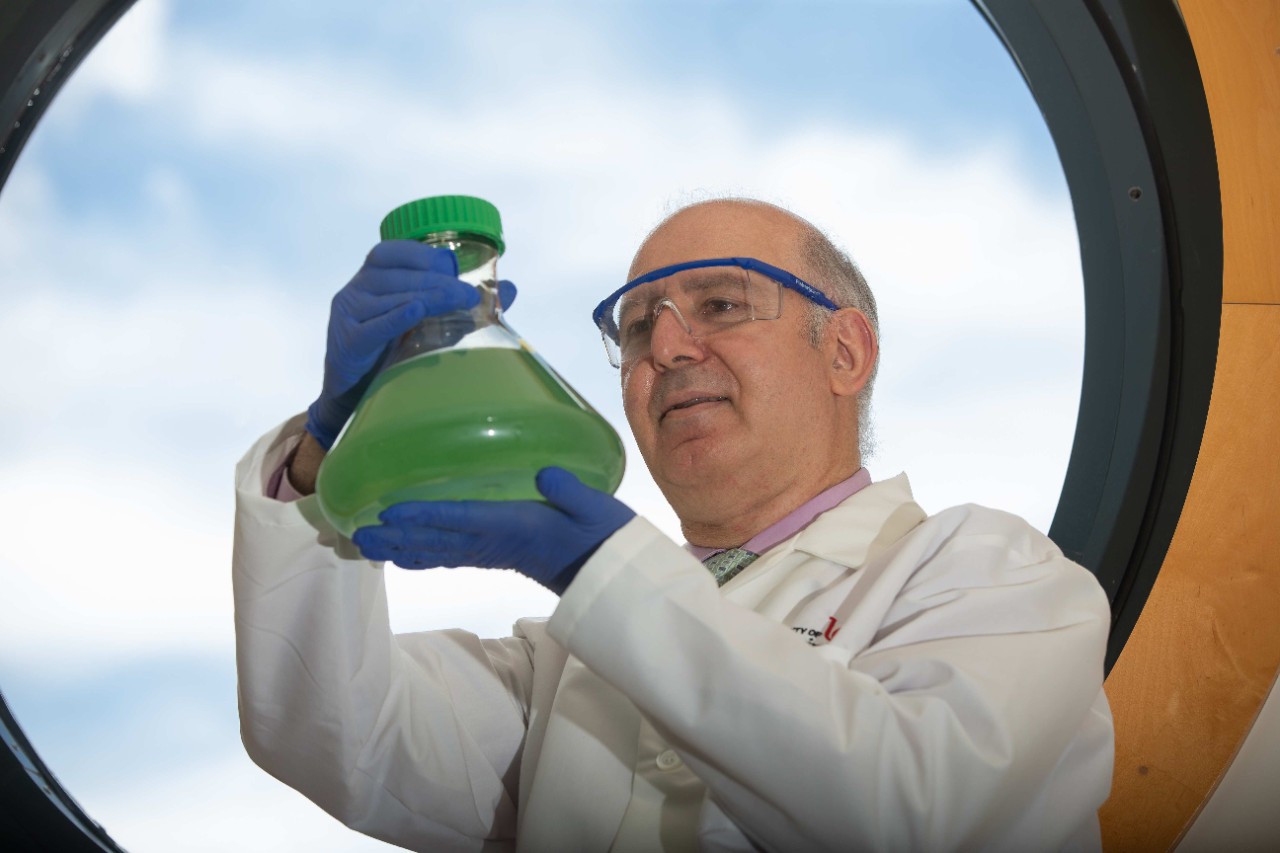
Professor Dion Dionysiou is well-known for his research developing technologies and strategies to address water pollution. Photos/Andrew Higley/UC Marketing + Brand
Next Lives Here
The University of Cincinnati is classified as a Research 1 institution by the Carnegie Commission and is ranked in the National Science Foundation's Top-35 public research universities. UC's graduate students and faculty investigate problems and innovate solutions with real-world impact. Next Lives Here.
Related Stories
Sugar overload killing hearts
November 10, 2025
Two in five people will be told they have diabetes during their lifetime. And people who have diabetes are twice as likely to develop heart disease. One of the deadliest dangers? Diabetic cardiomyopathy. But groundbreaking University of Cincinnati research hopes to stop and even reverse the damage before it’s too late.
Is going nuclear the solution to Ohio’s energy costs?
November 10, 2025

The Ohio Capital Journal recently reported that as energy prices continue to climb, economists are weighing the benefits of going nuclear to curb costs. The publication dove into a Scioto Analysis survey of 18 economists to weigh the pros and cons of nuclear energy. One economist featured was Iryna Topolyan, PhD, professor of economics at the Carl H. Lindner College of Business.
App turns smartwatch into detector of structural heart disease
November 10, 2025

An app that uses an AI model to read a single-lead ECG from a smartwatch can detect structural heart disease, researchers reported at the 2025 Scientific Sessions of the American Heart Association. Although the technology requires further validation, researchers said it could help improve the identification of patients with heart failure, valvular conditions and left ventricular hypertrophy before they become symptomatic, which could improve the prognosis for people with these conditions.