Chemistry PhD candidate recognized with NSF graduate research fellowship
Moriah Weese brings prestigious award to UC for the first time in recent history

University of Cincinnati’s Moriah Weese, a PhD candidate in the College of Arts and Sciences department of Chemistry, has won a highly-competitive National Science Foundation (NSF) graduate research fellowship.

Moriah Weese. Photo/Provided
The award is the oldest graduate fellowship of its kind, recognizing and supporting outstanding graduate students in NSF-supported science, technology, engineering and mathematics disciplines.
Each year NSF receives more than 13,000 applications from 500 academic institutions for approximately 2,000 fellowship offers. The majority of graduate research fellowships are awarded to students at elite universities such as the University of California and the Massachusetts Institute of Technology.
Students can apply for the fellowship before they begin their graduate studies or as an early graduate student. This was Weese’s second time applying. She applied in her senior year of her undergraduate studies and received an Honorable Mention.
“For science to continue to progress, it's essential that we fund students at smaller, less well-known schools, particularly since they typically have less access to funding,” Weese said. “Several of my classmates are planning to apply next year, so hopefully someone will be writing about them next spring!”
It really is a remarkable thing to watch students blossom and reach their full potential
Ashley Ross, UC assistant professor of chemistry
“I was her undergraduate research mentor and now her graduate adviser and it really is a remarkable thing to watch students blossom and reach their full potential,” said Ashley Ross, Weese’s graduate adviser and an assistant professor of chemistry.
“Her winning the GRFP has just further solidified how excellent she really is,” Ross said.
Weese’s research proposal for the fellowship was on Estradiol, the primary form of estrogen, which is known to be released rapidly in parts of the brain, and regulate dopamine. “However, we don't have a way to measure it as it's being released. My proposal was to (research), and work towards measuring it and dopamine together in the brain,” Weese said.
Estradiol is the form of estrogen that is responsible for the maturing and maintenance of the female reproductive system. The body ceases to create Estradiol after menopause. Pharmaceutical Estradiol is used to treat symptoms of menopause as well as prostate and breast cancer.
The fellowship has both short- and long-term ramifications for her life and research, Weese said.
In the short term, it will allow her to focus on her research, rather than teaching.
“And in the long term, the fellowship demonstrates to future employers, funding agencies, and other scientists that I can think scientifically, write grants that get funded, and communicate my science to others well,” she said.
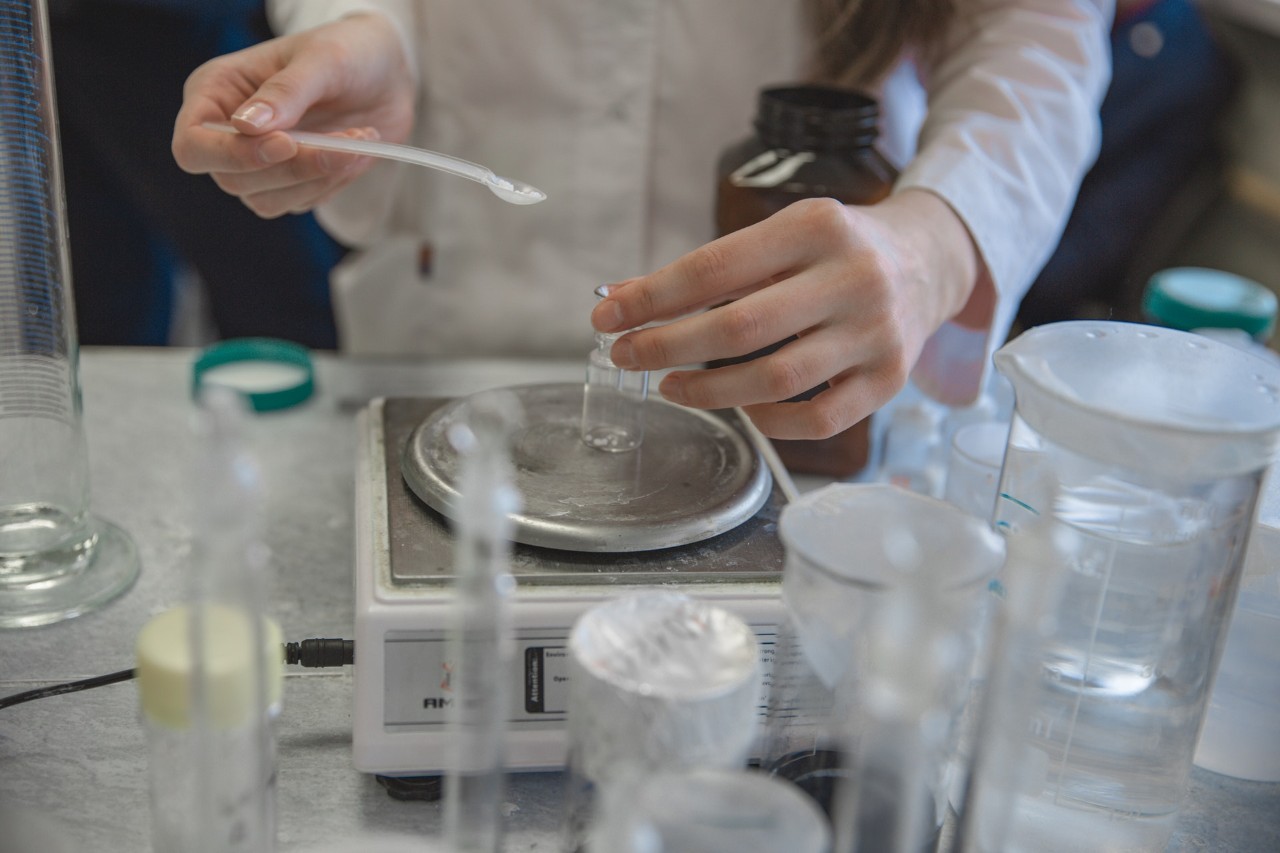
Featured image at top: Photo/Anna/Pexels.
Related Stories
New hires reflect UC’s commitment to research, innovation and impact
November 6, 2025
With the 2025-26 school year in full swing, the College of Arts and Sciences has welcomed five faculty members to lead departments that span from chemistry to journalism. Dean James Mack said these new hires “reflect our unwavering commitment to ‘Discovery in Action,’ as we continue to enhance our academic and research excellence”. With these additions, the future of UC is in good hands, and students can look forward to new opportunities for learning, research, and innovation.
Museum helps UC Chemistry celebrate 150 years
October 10, 2025
UC's Oesper Collections in the History of Chemistry museum is helping to celebrate 150 years of UC chemistry. The chemistry museum features scientific artifacts, books, journals, photos and prints chronicling the development of chemical science over the centuries.
UC inventor of Benadryl receives national honors
September 11, 2025
The American Chemical Society recognized UC chemist George Rieveschl's discovery of Benadryl on the Chemistry Department's 150th anniversary. The group named Benadryl a national historic chemical landmark.