
UC inventor of Benadryl receives national honors
Association recognizes discovery with National Historic Chemical Landmark

Many people seeking relief from ragweed and other fall allergens can thank a University of Cincinnati professor when they reach for their box of Benadryl.
The late George Rieveschl invented the blockbuster bestselling antihistamine which has helped countless millions of people with allergies, itchy rashes and cold symptoms.
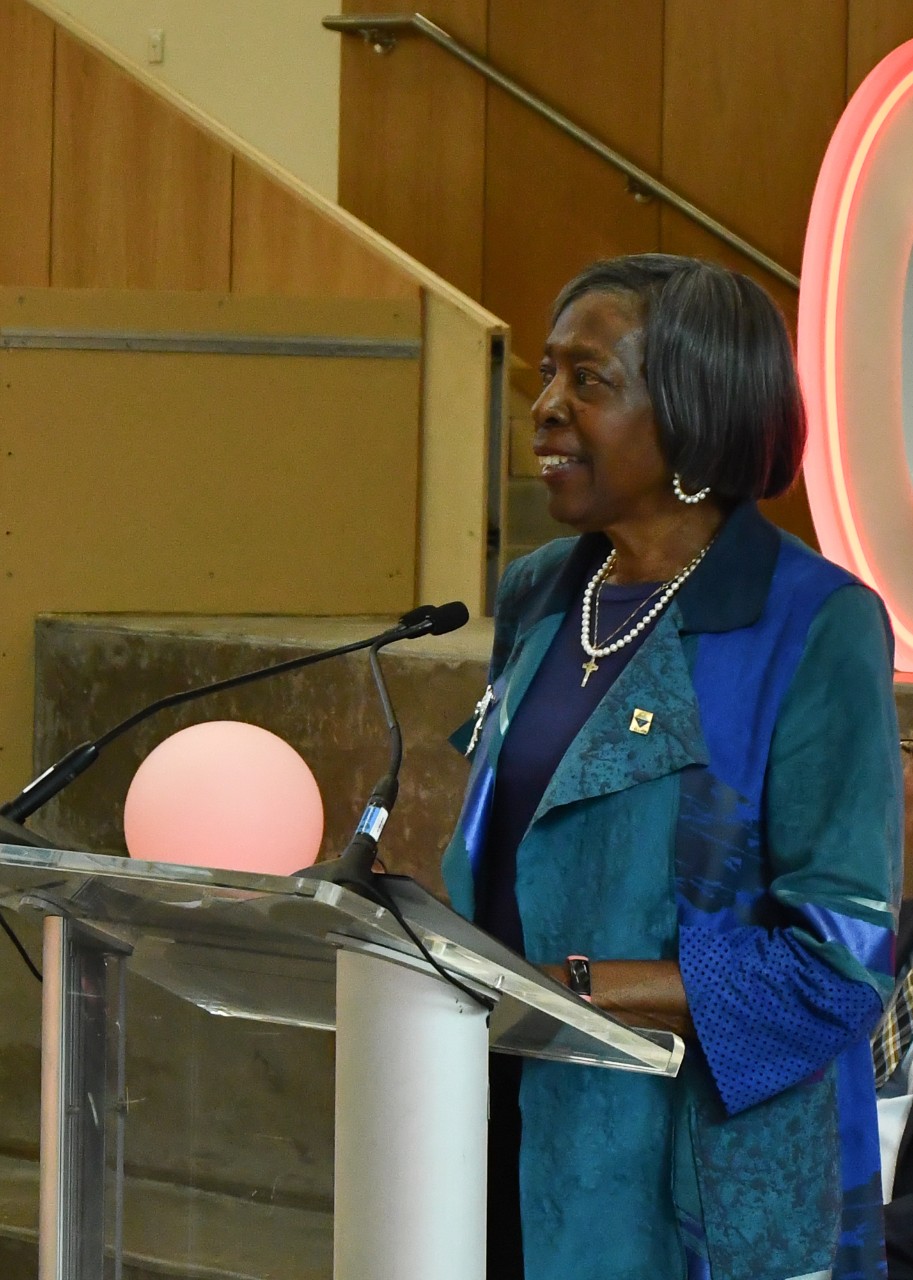
UC alumna and American Chemical Society President Dorothy Phillips pays tribute to the late George Rieveschl during the Chemistry Department's 150th anniversary celebration at Old Chem. Photo/Michael Miller
The American Chemical Society this week honored Rieveschl’s profound contributions to society with a new National Historic Chemical Landmark dedicated to his discovery. The discovery joins an esteemed list of 100 other scientific achievements, from Scotch tape to the first synthetic laundry detergent, Tide, since the award was established in 1992.
“This recognition celebrates the legacy of Benadryl, George Rieveschl and the University of Cincinnati and the enduring impact of chemistry on our lives,” UC alumna and American Chemical Society President Dorothy Phillips said.
Phillips is a trailblazing chemist and the first African American woman to earn a doctoral degree in biochemistry at UC. She was joined by past American Chemical Society presidents Silvia Jurisson and Diane Schmidt, both UC alumni.
“Progress takes time, it takes vision and it takes people who are willing to see possibilities, even when the outcome is uncertain,” Phillips said. “That’s what we celebrate today, a legacy built with purpose and care and I’m honored to be a part of it.”
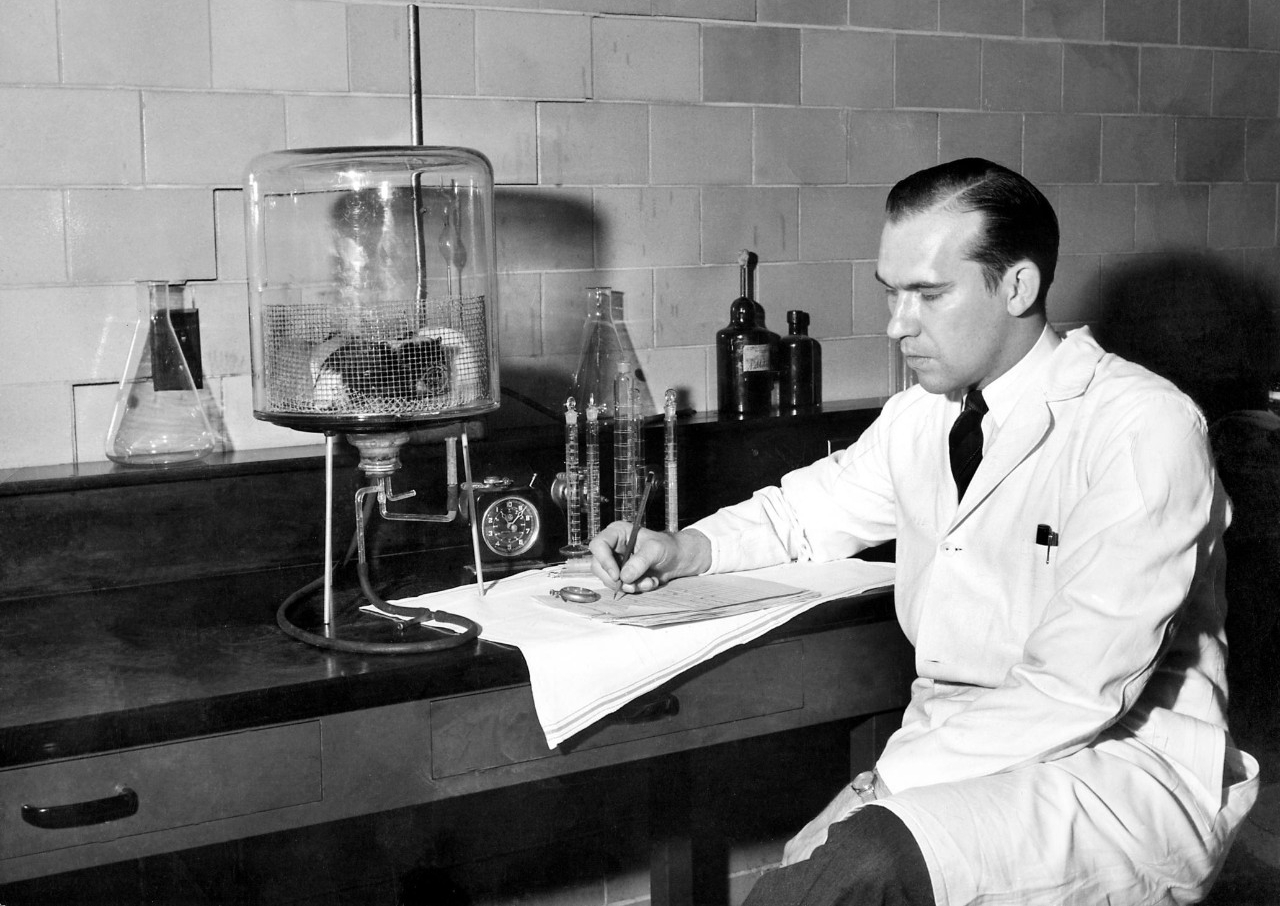
UC chemist and chemical engineering Professor George Rieveschl is the inventor of the popular antihistamine Benadryl. The American Chemical Society recognized his invention by naming it a national historic chemical landmark. Photo/UC
UC unveiled the society’s plaque while celebrating the Department of Chemistry’s 150th anniversary and the newly renovated Old Chemistry building.
“For 150 years, chemistry at UC has advanced knowledge, trained innovators and improved lives,” UC Interim Provost John Weidner said. “I have no doubt that the next 150 years will bring discoveries we have yet to imagine.”
Weidner, a chemical engineer, lauded Rieveschl’s groundbreaking discovery.
“George’s story shows us what can happen when curiosity, talent and collaboration meet. We believe Old Chem’s new chapter will inspire the same spirit of innovation for generations to come,” Weidner said.
Dr. Rieveschl’s legacy extends far beyond one antihistamine. He helped transform UC into the research powerhouse it is today.
Patrick Limbach, UC Vice President for Research
The award marks the second such honor for UC. In 2022, the society recognized UC's Oesper Collections in the History of Chemistry, one of the world's largest stores of scientific artifacts, chemistry books and papers, many of which are on display in a campus museum.
“Dr. Rieveschl’s legacy extends far beyond one antihistamine,” UC Vice President for Research Patrick Limbach said. “He helped transform UC into the research powerhouse it is today through his science, his leadership and his philanthropy. It was a sincere honor and pleasure to know him personally and benefit from his generous spirit and zest for discovery.”
Today produced by Johnson & Johnson and Pfizer, Benadryl was the first FDA-approved prescription antihistamine in 1946. It became a popular over-the-counter drug in 1982.
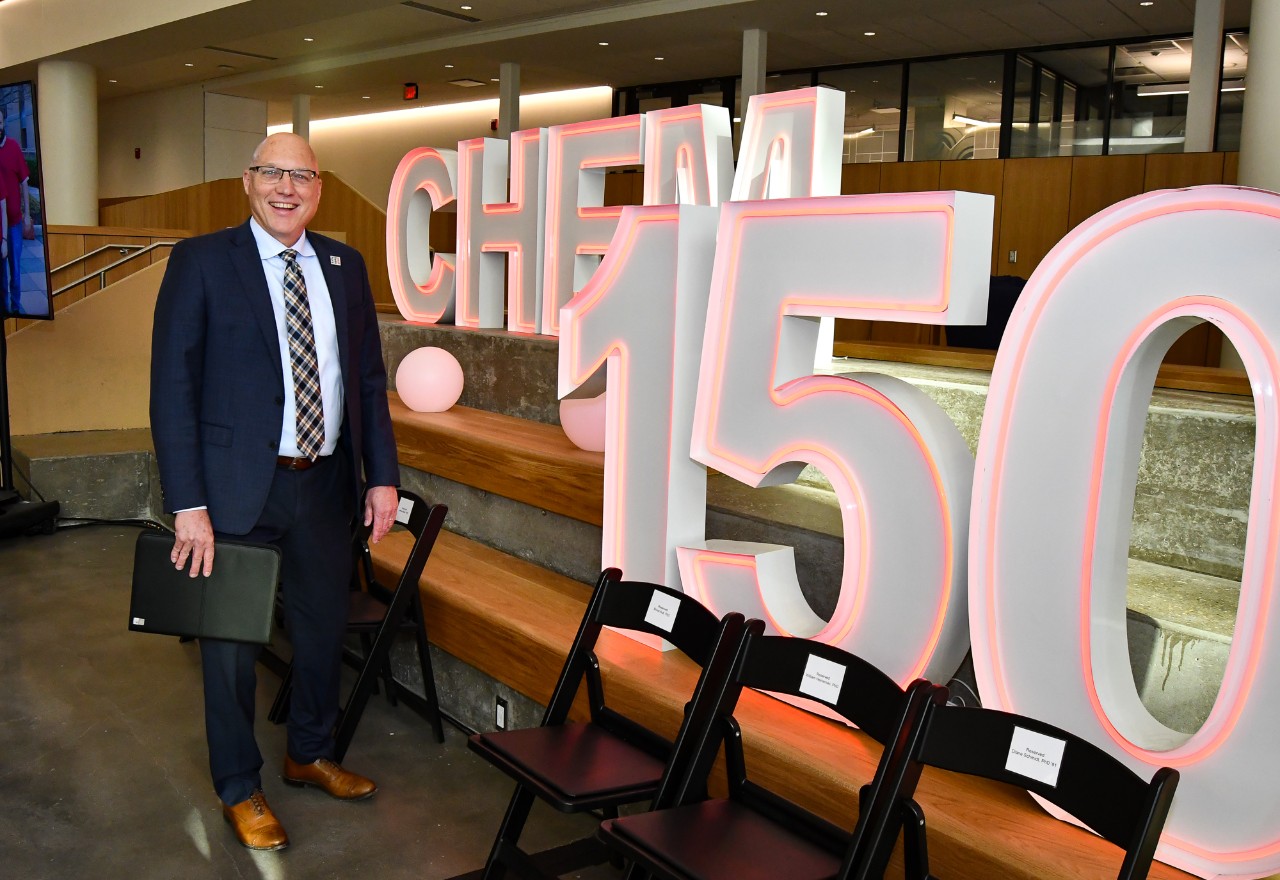
UC Interim Provost John Weidner, a chemical engineer, helps the Department of Chemistry celebrate its 150th anniversary at Old Chem. Photo/Michael Miller
After earning bachelor's, master's and doctoral degrees at UC, Rieveschl taught chemical engineering in UC’s College of Engineering and Applied Science. He worked in industry before returning to UC in 1970 to serve as vice president of research, working with UC Professor Neil Armstrong after Armstrong's famous Apollo 11 mission.
Rieveschl also founded the UC Foundation. He was inducted into the International Science and Engineering Hall of Fame in 1995. He died in 2007 at age 91.
“Millions of sufferers of allergies, colds, rashes, hives and hayfever can thank George Rieveschl for the relief they receive by swallowing a capsule of the antihistamine he invented and renamed Benadryl,” the New York Times wrote in his news obituary.
UC recognizes distinguished scientific research among faculty each year with an award given in Rieveschl's honor. He is also the namesake of Rieveschl Hall on UC’s Uptown Campus.
His papers are maintained at Cincinnati’s Lloyd Library.
Featured image at top: UC celebrated the naming of Benadryl as a national historic chemical landmark. Pictured from left are UC College of Arts and Sciences Dean James Mack, Chemistry Department Head George Stan, American Chemical Society President Dorothy Phillips and UC Interim Provost John Weidner. Photo/Michael Miller
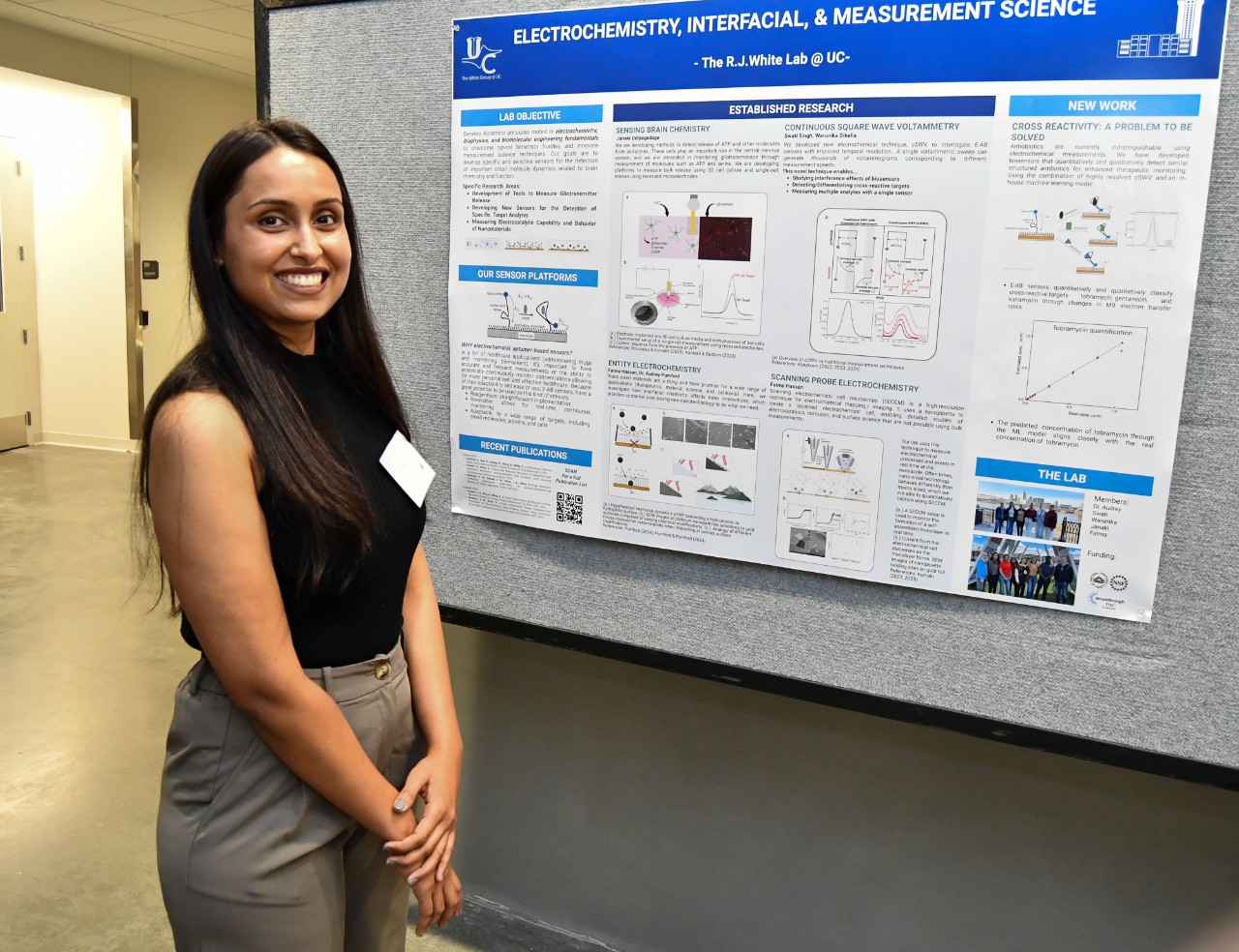
UC doctoral student Swati Singh discusses her research at a poster presentation during the Department of Chemistry's 150th anniversary celebration at Old Chem. Singh works in UC Graduate School Interim Dean Ryan White's lab. Photo/Michael Miller
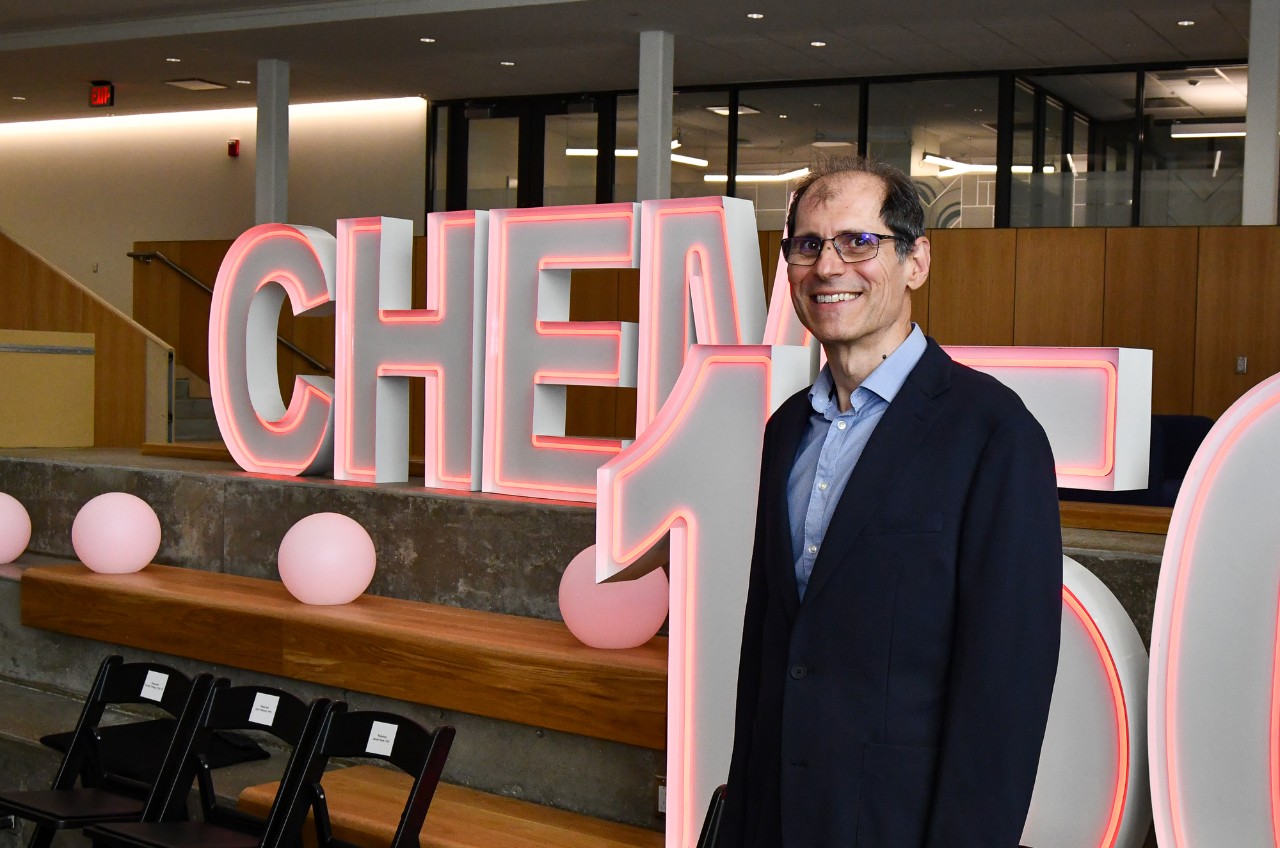
Chemistry Department Head George Stan helps celebrate the department's 150th anniversary at Old Chem. Photo/Michael Miller
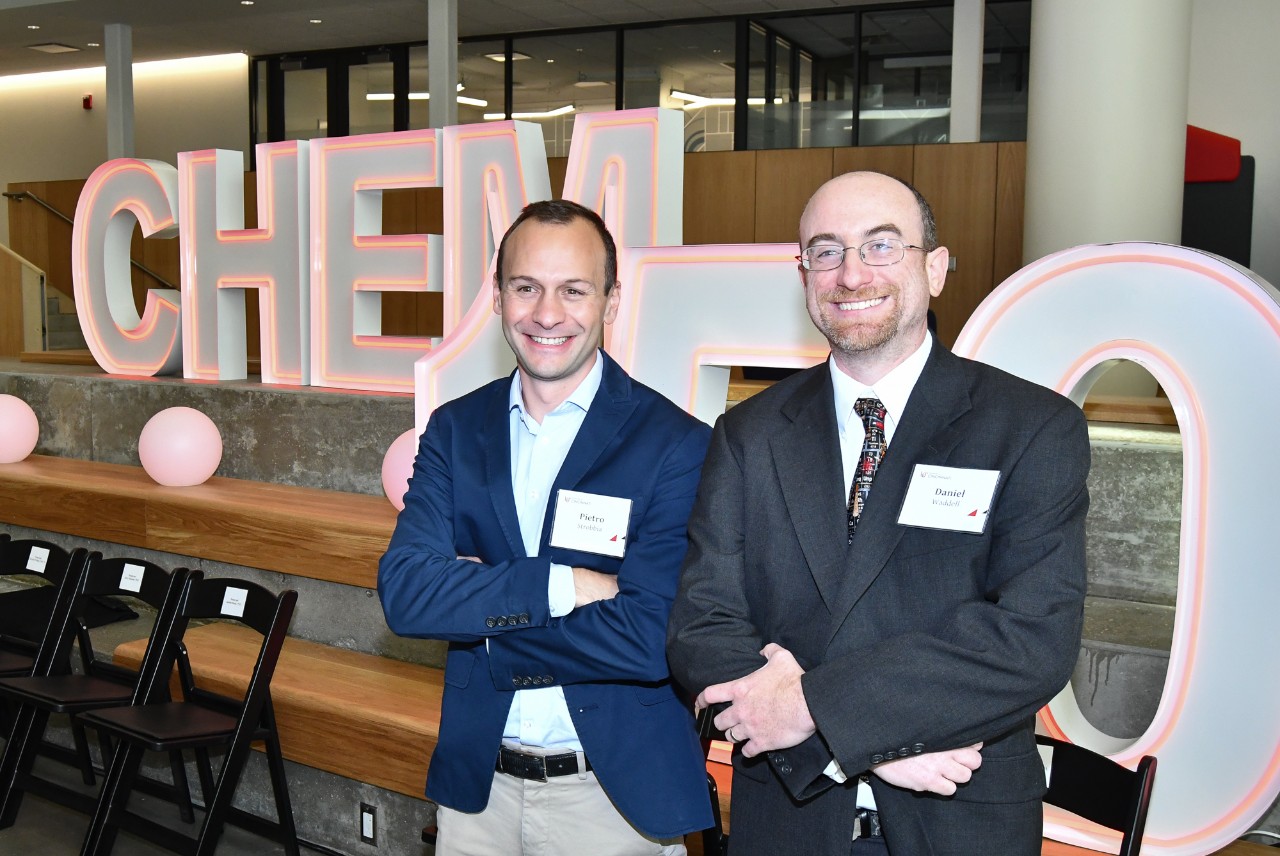
UC Assistant Professor Pietro Strobbia, left, and Associate Professor Educator Daniel Waddell celebrate the 150th anniversary of the Chemistry Department. Photo/Michael Miller
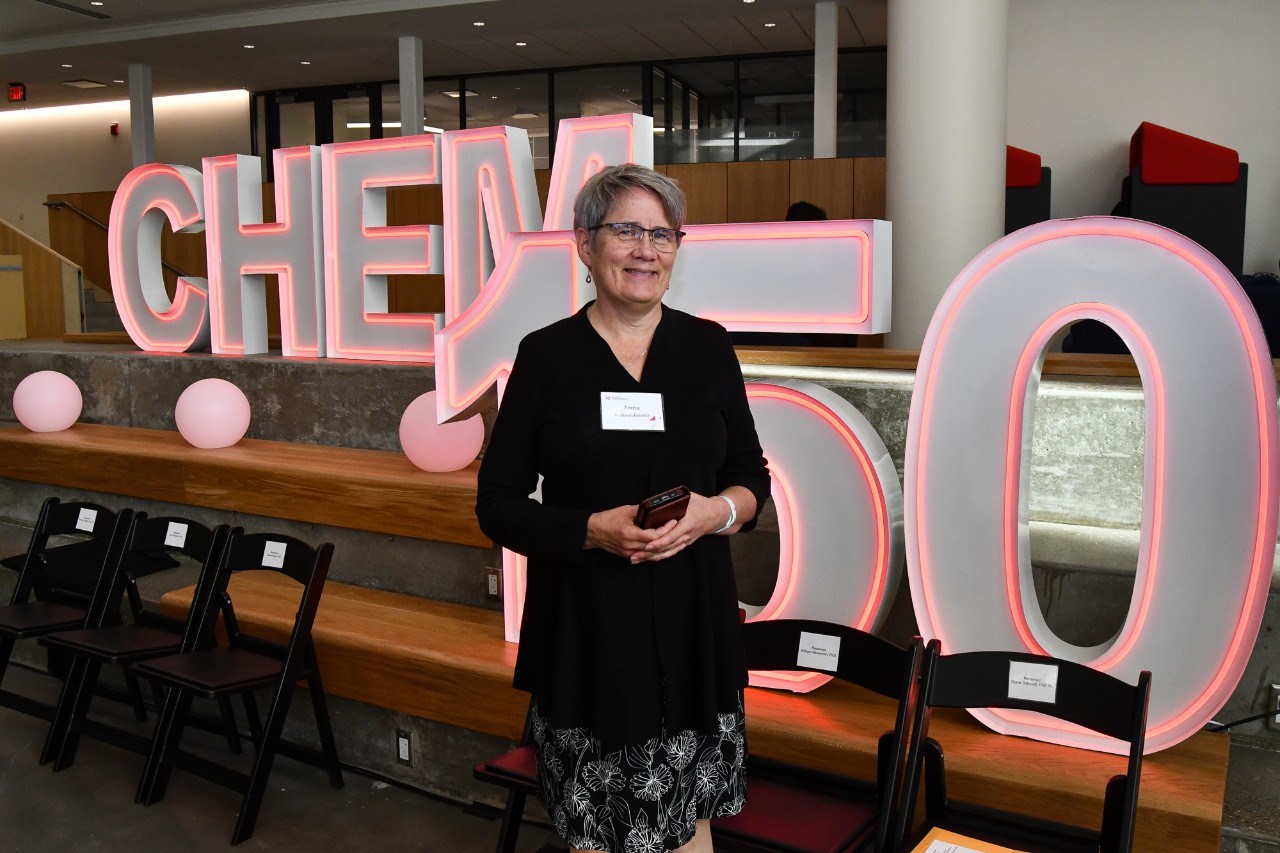
UC Professor Anna Gudmundsdottir helps UC celebrate the 150th anniversary of the Department of Chemistry. Photo/Michael Miller
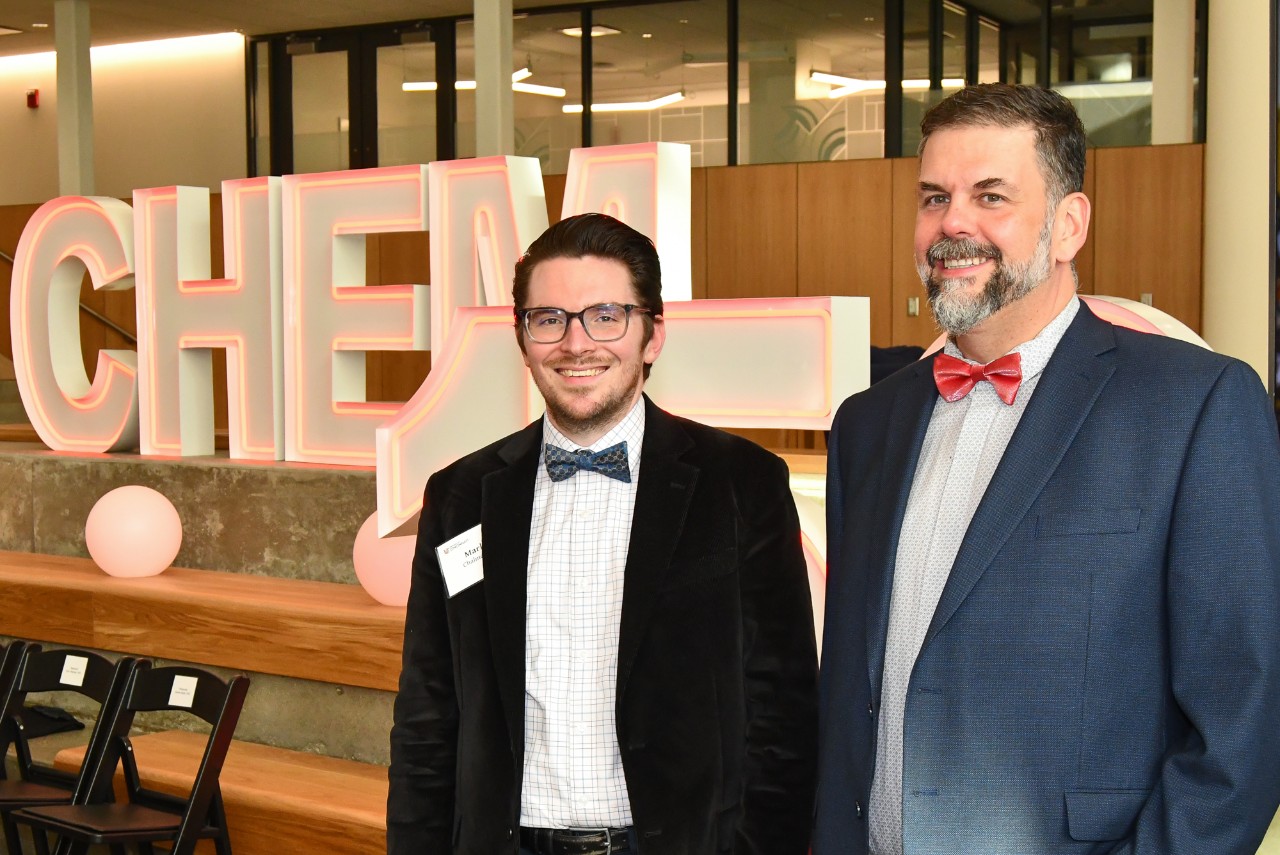
Associate Librarian Mark Chalmers, left, and Senior Librarian Ted Baldwin, director of science and engineering libaries, help UC's Department of Chemistry celebrate its 150th anniversary at Old Chem. Photo/Michael Miller
Bearcats for Life
Join us as we redefine what it means to be a Bearcat — where every learner is supported, valued and equipped to tackle the challenges of tomorrow. It’s our promise.
Bearcats for Life
Related Stories
UC launches Bearcats Affordability Grant
January 7, 2026
The University of Cincinnati is making college more attainable for students across Ohio with the creation of the Bearcats Affordability Grant. The new grant will provide a pathway to tuition-free college for students of families who make less than $75,000 per year. Beginning in fall 2026, the Bearcats Affordability Grant will cover the remaining cost of tuition for Ohio residents who are Pell eligible.
BearcatGPT AI platform now available to all UC faculty and staff
December 9, 2025
University of Cincinnati Digital Technology Solutions is excited to announce that BearcatGPT, the university’s private, secure AI platform, is now available to all UC faculty and staff.
Sugar overload killing hearts
November 10, 2025
Two in five people will be told they have diabetes during their lifetime. And people who have diabetes are twice as likely to develop heart disease. One of the deadliest dangers? Diabetic cardiomyopathy. But groundbreaking University of Cincinnati research hopes to stop and even reverse the damage before it’s too late.