First cohort accepted for Accelerated Dietitian Nutritionist pilot program
Program gives students unique opportunities like pediatric Cincinnati Children's internship
After several years of preparation, this fall will mark the launch of the new Accelerated Dietitian Nutritionist Program at the UC College of Allied Health Sciences, with 10 students accepted to the pilot program. The innovative program enables students to earn their bachelor’s and master’s degrees and complete the required 1,200 hours of supervised practice in just five years. Graduate Program Director Sarah Couch, PhD, RDN, LDN, and Accelerated Dietitian Nutritionist Program Director John Pantel, MS, RDN, LDN, designed the new program in response to changes in the nutrition and dietetics field that require a master’s degree to take the registered dietitian nutritionist credentialing exam.
“Dr. Couch was really instrumental in putting the curriculum together to change our current coordinated dietetics program from a four-year undergraduate degree to an accelerated five-year bachelor’s-to-master’s program with an internship intertwined,” Pantel says. “The traditional route to earn a master’s degree could take students seven years or longer, because it involves a four-year undergraduate degree, plus a yearlong internship, and then a two-year master’s degree. That’s the route most current dietitians with a graduate degree took."
We’re cutting two years off the time students have in school, which lowers tuition costs and enables them to enter the workforce earlier.
John Pantel, MS, RDN, LDN Program Director
Not only will students save time and money, they’ll also become stronger clinical dietitians, thanks to the accelerated program’s unique clinical nutrition concentration, quality improvement training, and integrated supervised practice experience.
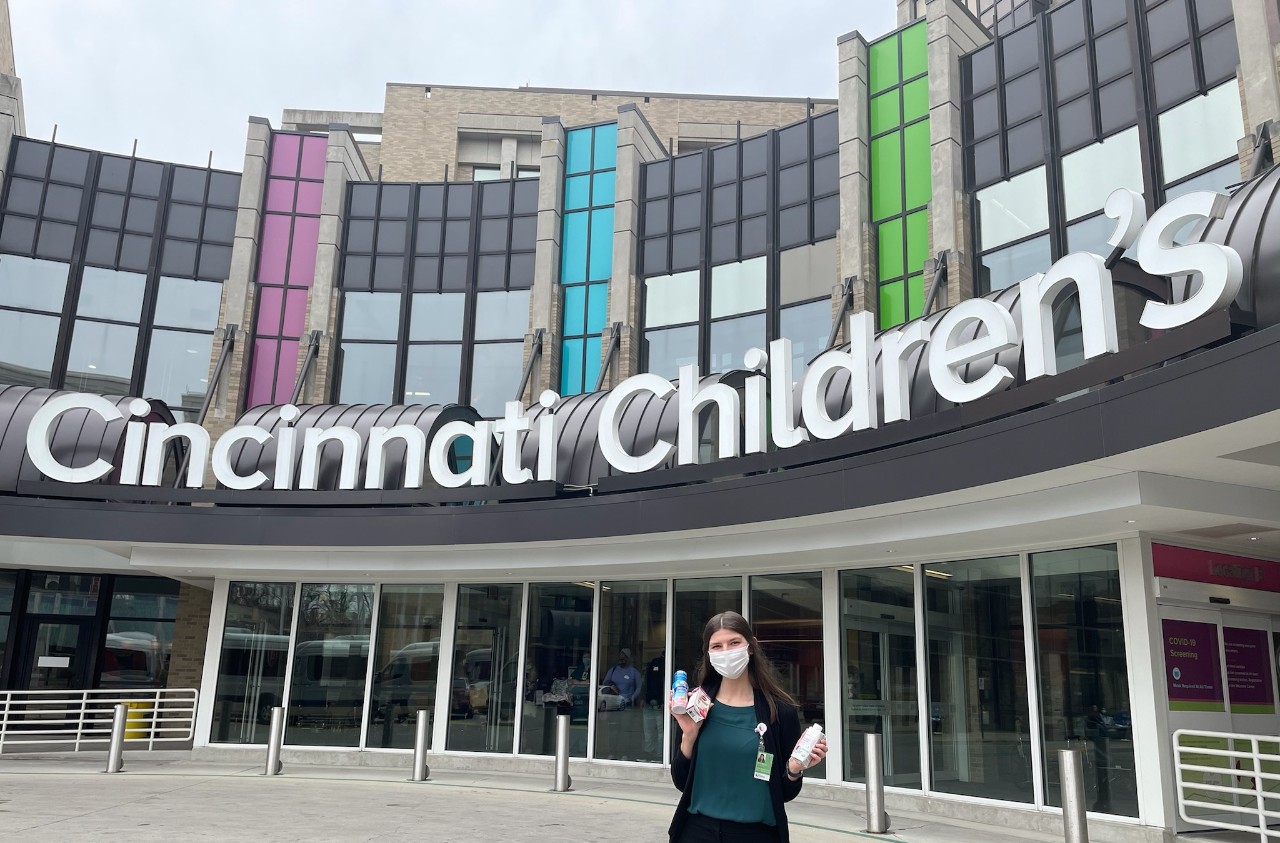
Although Couch had already started redesigning the curriculum by the time Pantel joined the team in 2017, Pantel spearheaded the supervised practice portion of the program, helping secure highly coveted semester-long clinical internships at Cincinnati Children’s Hospital Medical Center (CCHMC). Completing an extended, immersive, in-patient pediatric rotation at a top pediatric hospital in the country is a professional development experience students can’t find anywhere else, Pantel says.

Kylie Werling
Kylie Werling is one of four UC students in the coordinated dietetics program who earned a supervised practice opportunity at CCHMC this spring—more than half of the 30 students in her cohort applied. She says the biggest benefit of interning at CCHMC is the exposure to complex medical conditions
“When I interned at a Post-Acute Care rotation, I mostly saw patients who were on tracheostomies or vents; whereas here [at CCHMC] I see something different each week and learn how the nutrition role differs in each patient’s plan of care,” Werling says.
Werling spent the first four weeks of the 15.5-week internship developing foundational skills and working with a mentor in a base cluster in the hospital’s bone marrow transplant and hematology and oncology units. For the remainder of the program, she transferred to a new unit each week, learning the various roles nutrition plays in neurology, orthopedics, the gastrointestinal division, general pediatrics, the neonatal and cardiac intensive care units, and more. Although she admits it was extremely fast-paced, she says the experience solidified her desire to work with children in a family-oriented environment.
“Dietitians have a lot of rapport with the families [at CCHMC], because a lot of these families spend a very long time at the hospital,” Werling says. “Treating patients for an extended period of time is something I’ve taken interest in; I enjoy playing a role in their nutrition throughout the phases of care.”
After witnessing how highly regarded the dietitians at CCHMC are and the positive impact they have on patients, Werling hopes to land a position at the hospital after graduating with her Bachelor of Science in Nutrition & Dietetics at the end of the month and passing the registered dietitian nutritionist credentialing exam.
I have really loved my time there and I feel like the extent and variety of patients I’ve seen gives me more insight than a typical candidate applying straight out of school
Kylie Werling, current student in the CCHMC internship
Fortunately for Werling, Pantel says most students who have completed the supervised practice at CCHMC and applied to work there after graduation have been hired. This is a huge win for UC students, since CCHMC is home to the largest staff of dietitians in the country and there generally isn’t an abundance of dietitian jobs in pediatrics.
“The internship is a really good entryway possibility for students who finish that program because it gives them a leg up on other job applicants,” Pantel says. “Even if they don’t apply to Children’s right after graduation, it’s still advantageous to have pediatrics training if it’s something they would ever consider doing, and we’re excited to be able to continue offering this supervised practice experience in our new accelerated program format.”
Learn more
The University of Cincinnati's exciting new Accelerated Dietitian Nutritionist program is now available for students to fast-track their way to becoming a registered dietitian nutritionist.
Related Stories
Sugar overload killing hearts
November 10, 2025
Two in five people will be told they have diabetes during their lifetime. And people who have diabetes are twice as likely to develop heart disease. One of the deadliest dangers? Diabetic cardiomyopathy. But groundbreaking University of Cincinnati research hopes to stop and even reverse the damage before it’s too late.
App turns smartwatch into detector of structural heart disease
November 10, 2025

An app that uses an AI model to read a single-lead ECG from a smartwatch can detect structural heart disease, researchers reported at the 2025 Scientific Sessions of the American Heart Association. Although the technology requires further validation, researchers said it could help improve the identification of patients with heart failure, valvular conditions and left ventricular hypertrophy before they become symptomatic, which could improve the prognosis for people with these conditions.
Duo authentication changes coming January 2026
November 10, 2025
Effective Wednesday, January 21, 2026, Duo authentication via SMS text messages and phone calls will no longer be supported. Switch to the Duo Mobile app on an iOS or Android device (such as a smartphone or tablet). The Duo Mobile app supports Duo Push, which offers the most secure and user-friendly authentication experience.