Study sheds light on inflammation following an intracerebral hemorrhage
Research published in the journal BMC Neurology

Intracerebral hemorrhages (ICH) account for 15% of strokes but a disproportionate 50% of all stroke deaths.
An ICH occurs when a blood vessel bursts inside the brain and causes bleeding in the brain. The University of Cincinnati’s Kyle Walsh said while it is known the bleeding itself causes injury, there is also evidence that inflammation after the stroke can contribute to more damage, or a secondary injury.
“In addition to causing more damage, this post-ICH inflammation could also include processes involved in repair,” said Walsh, MD, associate professor in UC’s College of Medicine, UC Health attending emergency medicine physician, and a member of the UC Neurocritical Care and Stroke teams. “There is a significant need for new and better treatments for ICH, and our research focuses on the secondary injury as potential treatment targets.”
Walsh and colleagues recently published a study in the journal BMC Neurology that sheds more light on the course of inflammation following an ICH and specific genes involved in the process.

Kyle Walsh, MD. Photo/University of Cincinnati.
“The overall idea is to better understand the time course and mediators of inflammation after ICH so that the harmful inflammation can be inhibited and/or the beneficial inflammation can be promoted,” he said.
The researchers collected blood samples from 27 patients at less than 24 hours, around three days and around seven days after an ICH.
“It's more challenging to collect blood early after ICH compared with later, but it was important for this study to have that first early blood draw in order to compare with the additional blood collections,” Walsh noted.
The blood samples were tested for messenger RNA (mRNA) — which shows how genes are functioning and being “expressed” in cells — and for microRNA (miRNA) — important regulatory molecules that modulate gene expression.
The team found neutrophils, the most abundant white blood cells in circulating blood, had the most significantly increased inflammatory processes at seven days following ICH compared to the first 24 hours. Walsh said it would be expected for inflammatory processes to peak in intensity around three days.
“Because we found this increased neutrophil signal at seven days compared with 72 hours, this suggests there could be something unique in ICH which causes more delayed neutrophil-driven inflammation,” he said. “If this is confirmed in larger studies, it could be a treatment target to modulate neutrophil function in ICH.”
The miRNA analysis found miR-3613 and miR-3690 were most correlated with neutrophil-related genes.
“Because miRNA are such powerful regulators of gene expression, these miRNA could also be treatment targets if confirmed with additional research,” Walsh said.
Walsh credited the multidisciplinary team of trial coordinators who screened and enrolled patients and collected and processed blood samples; experts in the UC Genomics, Epigenomics and Sequencing Core who performed the mRNA and miRNA sequencing; and bioinformatics collaborators who translated the raw data into meaningful results for helping to make the research successful.
Impact Lives Here
The University of Cincinnati is leading public urban universities into a new era of innovation and impact. Our faculty, staff and students are saving lives, changing outcomes and bending the future in our city's direction. Next lives here.
Other coauthors on the study include Miranda C. Marion, Dengfeng Li, Hannah C. Ainsworth, Amy Zinnia, Xiang Zhang, Stacie L. Demel, Brady Williamson, David J. Roh, Robert Campbell, Frederik Denorme, Daniel Woo and Carl D. Langefeld. The research was supported by an American Heart Association grant.
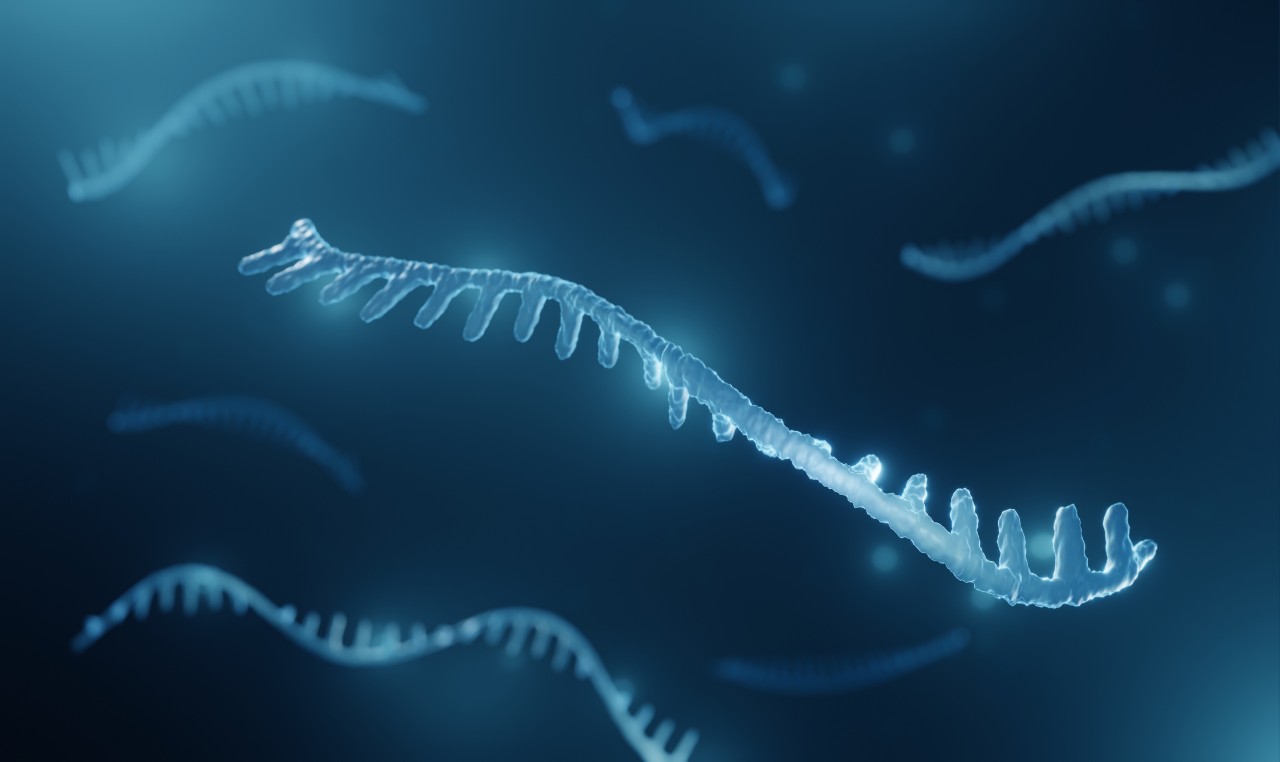
Featured illustration at top of microRNA. Photo/Artur Plawgo/iStock Photo.
Related Stories
UC launches Bearcats Affordability Grant
January 7, 2026
The University of Cincinnati is making college more attainable for students across Ohio with the creation of the Bearcats Affordability Grant. The new grant will provide a pathway to tuition-free college for students of families who make less than $75,000 per year. Beginning in fall 2026, the Bearcats Affordability Grant will cover the remaining cost of tuition for Ohio residents who are Pell eligible.
BearcatGPT AI platform now available to all UC faculty and staff
December 9, 2025
University of Cincinnati Digital Technology Solutions is excited to announce that BearcatGPT, the university’s private, secure AI platform, is now available to all UC faculty and staff.
Sugar overload killing hearts
November 10, 2025
Two in five people will be told they have diabetes during their lifetime. And people who have diabetes are twice as likely to develop heart disease. One of the deadliest dangers? Diabetic cardiomyopathy. But groundbreaking University of Cincinnati research hopes to stop and even reverse the damage before it’s too late.