Kissing bug disease should be declared endemic to U.S.
UC researcher talks about health risks from Chagas disease

WVXU turned to a researcher at the University of Cincinnati to explain why Chagas disease is becoming more commonly diagnosed in the United States.
UC College of Arts and Sciences Assistant Professor Noelia Lander studies the parasite responsible for Chagas, a disease that can cause long-term cardiovascular and digestive issues.
The parasite is spread through the feces of kissing bugs, insects that are found across North and South America. The insects bite people and the parasites enter the bloodstream when the insect's poop gets into the wound, eyes or mouth.
They get their name because kissing bugs typically bite people around their exposed faces when they are sleeping.
Chagas is found in many countries in Central and South America. Now researchers say it should be considered endemic to the United States as well.
Initially, people infected with Chagas have mild or even no symptoms, Lander said. But decades later, infected patients can develop life-threatening cardiovascular issues.
“At that point after when symptoms appear, it's probably too late to treat the disease,“ she told WVXU.
In her lab, she and her research team are working on developing interventions to kill the parasite in infected people by targeting its lifecycle before it can damage heart cells.
The disease has been identified in people living in at least eight states. Lander said declaring the disease endemic to the United States will make doctors and patients more aware of the risks from the disease.
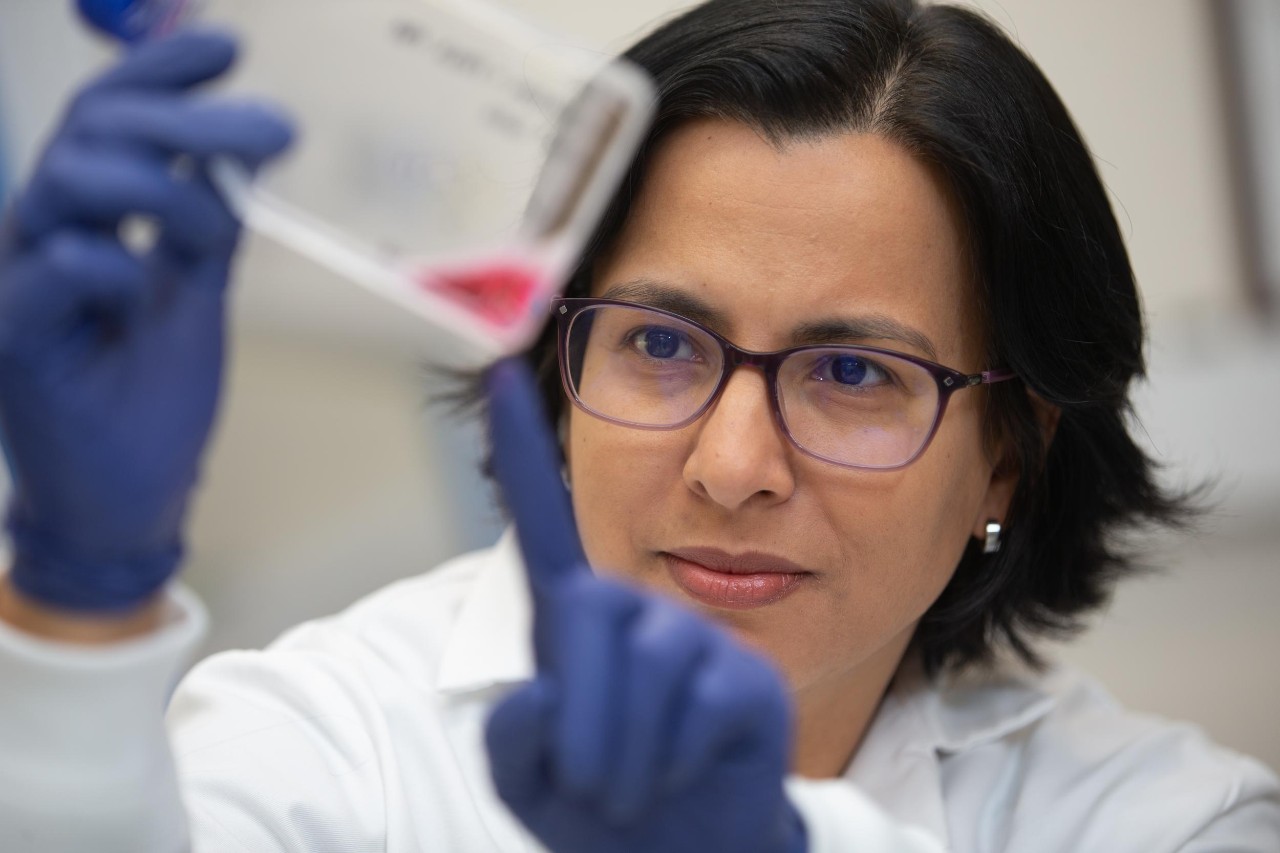
Featured image at top: UC Assistant Professor Noelia Lander is researching ways to prevent Chagas disease in her lab. Photo/Andrew Higley/UC

UC College of Arts and Sciences Assistant Professor Noelia Lander spoke to WVXU public radio about her research into Chagas disease. Photo/Andrew Higley/UC
Related Stories
Sugar overload killing hearts
November 10, 2025
Two in five people will be told they have diabetes during their lifetime. And people who have diabetes are twice as likely to develop heart disease. One of the deadliest dangers? Diabetic cardiomyopathy. But groundbreaking University of Cincinnati research hopes to stop and even reverse the damage before it’s too late.
Is going nuclear the solution to Ohio’s energy costs?
November 10, 2025

The Ohio Capital Journal recently reported that as energy prices continue to climb, economists are weighing the benefits of going nuclear to curb costs. The publication dove into a Scioto Analysis survey of 18 economists to weigh the pros and cons of nuclear energy. One economist featured was Iryna Topolyan, PhD, professor of economics at the Carl H. Lindner College of Business.
App turns smartwatch into detector of structural heart disease
November 10, 2025

An app that uses an AI model to read a single-lead ECG from a smartwatch can detect structural heart disease, researchers reported at the 2025 Scientific Sessions of the American Heart Association. Although the technology requires further validation, researchers said it could help improve the identification of patients with heart failure, valvular conditions and left ventricular hypertrophy before they become symptomatic, which could improve the prognosis for people with these conditions.