How a presidential hoax unfolded on social media
UC expert discusses why some conspiracy theories get attention

National news media turned to a University of Cincinnati expert on conspiracy theories to explain why rumors about President Trump's health over Labor Day weekend captured public attention.
Social media posts trended with false reports of the president's passing. The hoax made it back to the White House on Tuesday when Fox News asked the president, “How did you find out over the weekend that you were dead?”
UC Professor Jeffrey Blevins said one thing that fanned the fire of conspiracy was a comment Vice President J.D. Vance made that was shared out of context on social media.
USA Today asked Vance if he was prepared to assume the duties of president, given Trump's age at 79.
Blevins told PolitiFact that Vance's comments were innocuous, but in combination with speculation about the president's health and his nonpublic weekend schedule "gives spark to these (kinds) of ideas.”
Blevins also told the nonprofit Poynter Institute that what distinguished the latest hoax was how widely it was shared on social media. The claims reached millions of people.
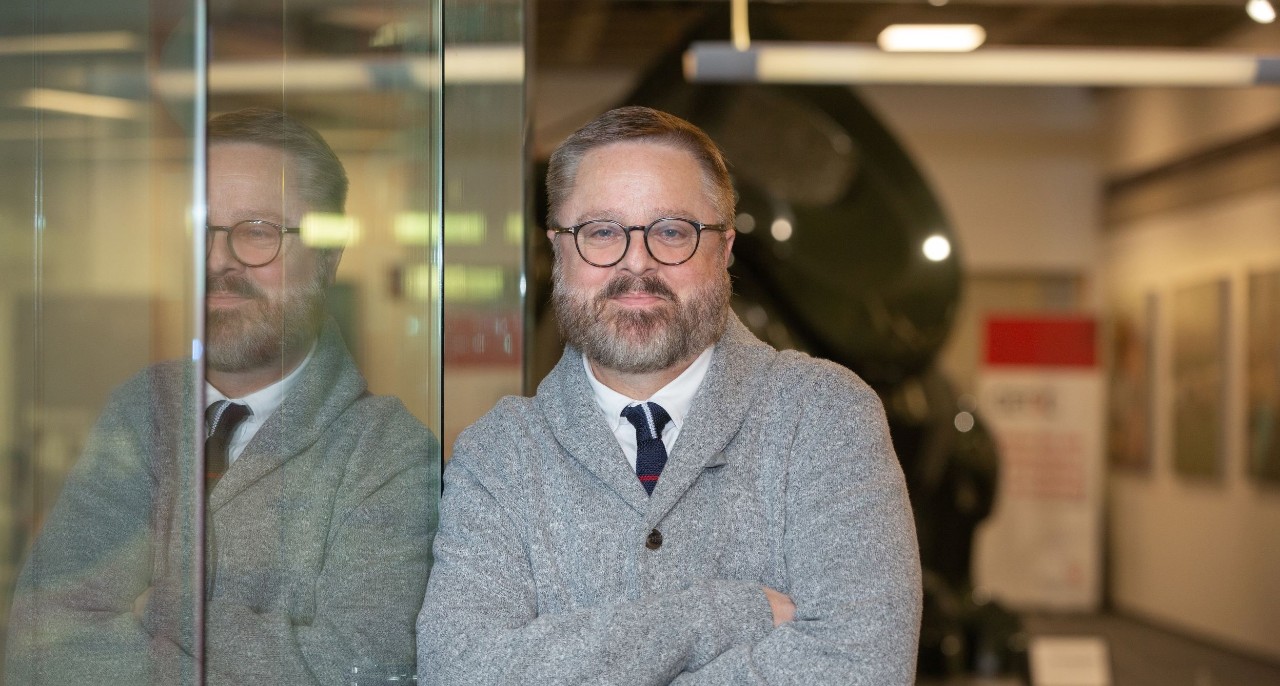
Blevins teaches in UC's School of Public and International Affairs. He studies misinformation and the way conspiracy theories take hold. He is co-author of the 2024 book “Social Media and Digital Politics: Networked Reason in an Age of Digital Emotion.”
MSN and PBS NewsHour shared the PolitiFact story.
Related Stories
Sugar overload killing hearts
November 10, 2025
Two in five people will be told they have diabetes during their lifetime. And people who have diabetes are twice as likely to develop heart disease. One of the deadliest dangers? Diabetic cardiomyopathy. But groundbreaking University of Cincinnati research hopes to stop and even reverse the damage before it’s too late.
Is going nuclear the solution to Ohio’s energy costs?
November 10, 2025

The Ohio Capital Journal recently reported that as energy prices continue to climb, economists are weighing the benefits of going nuclear to curb costs. The publication dove into a Scioto Analysis survey of 18 economists to weigh the pros and cons of nuclear energy. One economist featured was Iryna Topolyan, PhD, professor of economics at the Carl H. Lindner College of Business.
App turns smartwatch into detector of structural heart disease
November 10, 2025

An app that uses an AI model to read a single-lead ECG from a smartwatch can detect structural heart disease, researchers reported at the 2025 Scientific Sessions of the American Heart Association. Although the technology requires further validation, researchers said it could help improve the identification of patients with heart failure, valvular conditions and left ventricular hypertrophy before they become symptomatic, which could improve the prognosis for people with these conditions.