UC Law professor discusses upcoming US Supreme Court decision

Ryan Thoreson, an assistant professor at the University of Cincinnati College of Law, spoke with Newsweek about arguments before the U.S. Supreme Court for the case Chiles v. Salazar.
That case focuses on the use of conversion therapy, the practice of trying to change a person’s sexual orientation or gender identity through counseling. Kaley Chiles, a counselor in Colorado, is challenging the state’s law prohibiting the use of conversion therapy on minors before the high court.
In a petition to the Supreme Court, her attorneys wrote that she is a "licensed counselor who helps people by talking with them." Conversion therapy for minors is banned in more than 20 states, reports Newsweek.
Thoreson told Newsweek he believes Colorado has strong arguments in favor of its ban, but that he is "skeptical this Court will uphold the state's conversion therapy ban in light of its recent First Amendment rulings."
States currently regulate the conduct of medical professionals and can prohibit practices that fall below a certain standard of care, Thoreson says.
"And they can do so even when that conduct involves some amount of speech,” Thoreson told Newsweek.
Read the full Newsweek article online.
Learn more about UC Law’s Ryan Thoreson online.
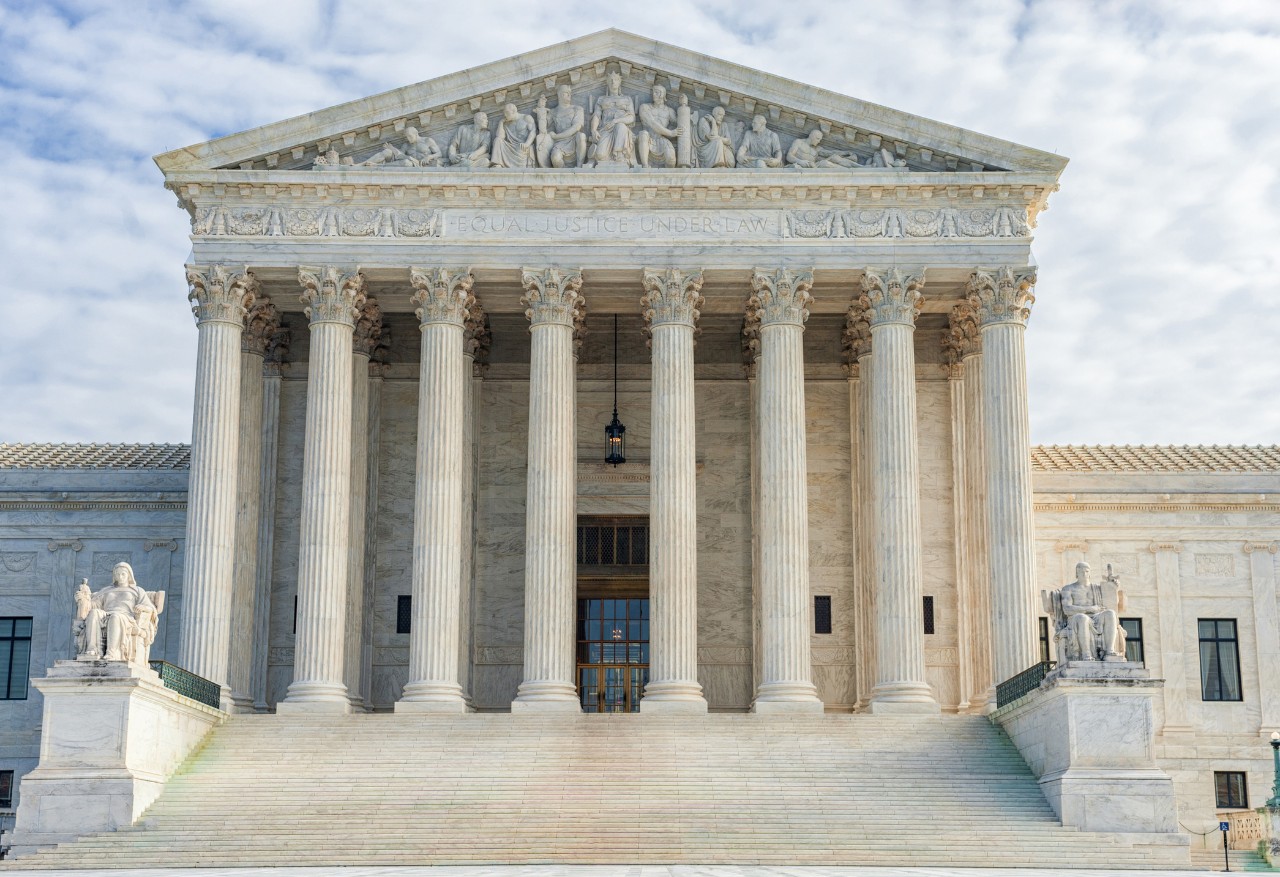
Featured top image of the U.S. Supreme Court. Photo/Istock.
Related Stories
Sugar overload killing hearts
November 10, 2025
Two in five people will be told they have diabetes during their lifetime. And people who have diabetes are twice as likely to develop heart disease. One of the deadliest dangers? Diabetic cardiomyopathy. But groundbreaking University of Cincinnati research hopes to stop and even reverse the damage before it’s too late.
Is going nuclear the solution to Ohio’s energy costs?
November 10, 2025

The Ohio Capital Journal recently reported that as energy prices continue to climb, economists are weighing the benefits of going nuclear to curb costs. The publication dove into a Scioto Analysis survey of 18 economists to weigh the pros and cons of nuclear energy. One economist featured was Iryna Topolyan, PhD, professor of economics at the Carl H. Lindner College of Business.
App turns smartwatch into detector of structural heart disease
November 10, 2025

An app that uses an AI model to read a single-lead ECG from a smartwatch can detect structural heart disease, researchers reported at the 2025 Scientific Sessions of the American Heart Association. Although the technology requires further validation, researchers said it could help improve the identification of patients with heart failure, valvular conditions and left ventricular hypertrophy before they become symptomatic, which could improve the prognosis for people with these conditions.