Trial supports using clot-busting drug in late window after acute ischemic stroke
UC expert featured in TCT MD article

The University of Cincinnati's Eva Mistry spoke with TCT MD about new trial data that found administering the clot-busting drug alteplase is beneficial for patients with acute ischemic stroke and salvageable brain tissue on imaging up to 24 hours after symptom onset.
Results of the HOPE trial, published online last week in the journal JAMA, found 40.3% of patients treated with alteplase were functionally independent at 90 days after a stroke, while 26.3% of patients who received standard care were functionally independent. The alteplase group had a higher up-front rate of symptomatic intracranial hemorrhage, but there was no difference in 90-day mortality.
“These findings support extending the therapeutic window for IV thrombolysis in appropriately selected patients when endovascular thrombectomy is not initially planned or indicated,” the researchers concluded.
Mistry said these results are mostly applicable in places where thrombectomy isn't readily available. Thrombectomy is a minimally invasive stroke procedure that uses a catheter to remove a blood clot from a blood vessel in the brain to restore blood flow.
“That still concerns me in terms of generalizability of the results outside of resource-poor settings where thrombectomy isn’t available,” said Mistry, MBBS, associate professor in UC's College of Medicine and a UC Gardner Neuroscience Institute physician. In low-to-middle-income countries with insufficient resources, long transfer times, and/or no thrombectomy services, on the other hand, she said it is encouraging “that now, patients may be considered for a reperfusion therapy based on advanced imaging selection in the extended time window.”
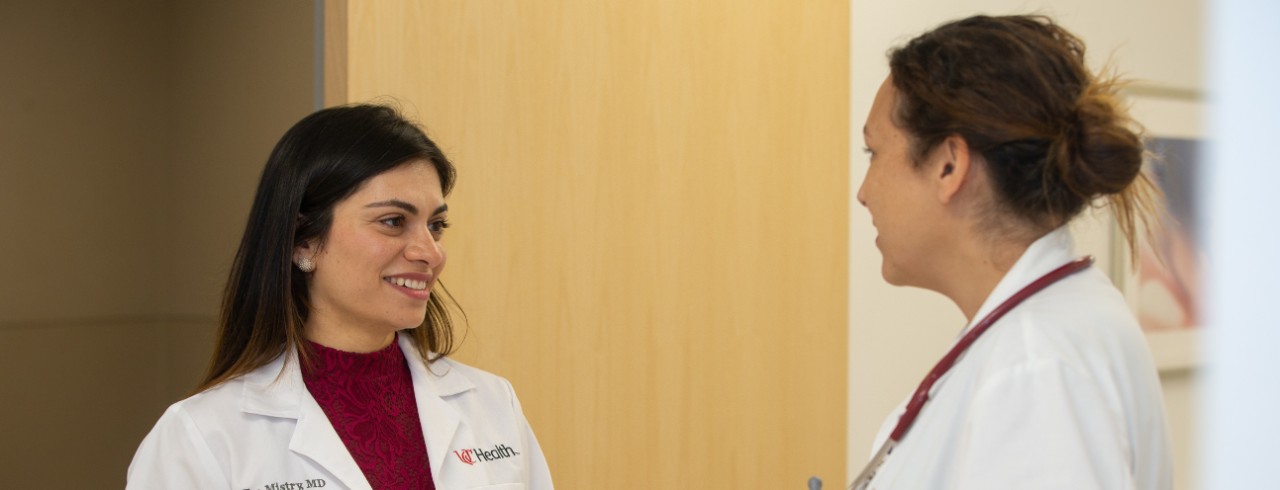
Featured photo at top of Mistry, left, and Stacie Demel, DO. Photo/Andrew Higley/UC Marketing + Brand.
Related Stories
Sugar overload killing hearts
November 10, 2025
Two in five people will be told they have diabetes during their lifetime. And people who have diabetes are twice as likely to develop heart disease. One of the deadliest dangers? Diabetic cardiomyopathy. But groundbreaking University of Cincinnati research hopes to stop and even reverse the damage before it’s too late.
Is going nuclear the solution to Ohio’s energy costs?
November 10, 2025

The Ohio Capital Journal recently reported that as energy prices continue to climb, economists are weighing the benefits of going nuclear to curb costs. The publication dove into a Scioto Analysis survey of 18 economists to weigh the pros and cons of nuclear energy. One economist featured was Iryna Topolyan, PhD, professor of economics at the Carl H. Lindner College of Business.
App turns smartwatch into detector of structural heart disease
November 10, 2025

An app that uses an AI model to read a single-lead ECG from a smartwatch can detect structural heart disease, researchers reported at the 2025 Scientific Sessions of the American Heart Association. Although the technology requires further validation, researchers said it could help improve the identification of patients with heart failure, valvular conditions and left ventricular hypertrophy before they become symptomatic, which could improve the prognosis for people with these conditions.