New AHA/ASA policy statement urges stroke rehab overhaul
UC expert featured in Medscape article

The University of Cincinnati's Joseph Broderick spoke with Medscape about a new American Heart Association/American Stroke Association policy statement warning that stroke survivors across the US face steep barriers to rehabilitation, including insurance denials, geographic “care deserts,” and high out-of-pocket costs. The statement was coauthored by UC's Oluwole Awosika, MD.
The writing group called for enacting measures to ensure full transparency in payer databases on the rehabilitation services patients with stroke receive and their outcomes, as well as the rate of denials for postacute stroke care. They additionally advocated for advancing research that reflects real-world stroke recovery challenges by prioritizing patient-centered studies and addressing caregiving needs, mental health and long-term outcomes such as quality of life, return to work and community reintegration.
Broderick told Medscape the statement is "very important and timely," noting the problem with postacute care does not lie with acute care hospitals where care is standardized, mesaured and recognized by certification programs.
“The problem comes when the recommendation for inpatient rehab or skilled nursing facility is made to the insurance carrier and managed governmental programs. There is an incentive to not approve inpatient rehab and particularly long-term acute care — even when the patient meets the criteria,” said Broderick, professor in UC’s Department of Neurology and Rehabilitation Medicine in the College of Medicine, director of the UC Gardner Neuroscience Institute and a UC Health physician.
Another issue Broderick raised is insurers not approving, reviewing or interacting with postacute care plans for patients on weekends.
“So a key part of the health system for determining postacute care is not only delaying disposition but doesn’t function 2 days a week,” he said. “It would be like pilots in the airline industry not available to fly on the weekends and passengers piling up at the airport and surrounding hotels until Monday, when the pilots came back online and take them to their next destination."
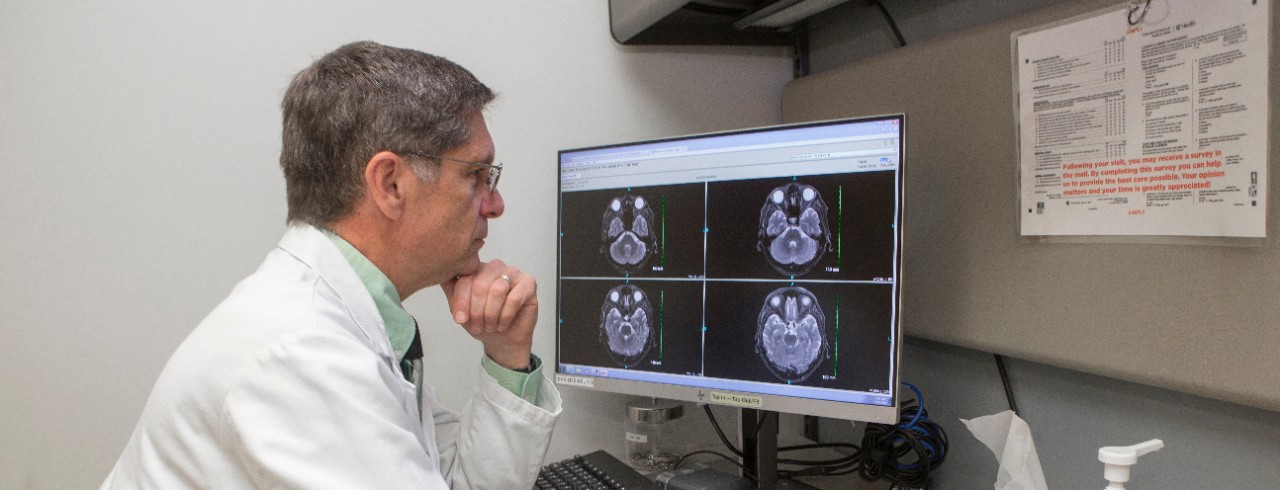
Featured photo at top of Dr. Broderick. Photo/Joseph Fuqua II/University of Cincinnati
Related Stories
Sugar overload killing hearts
November 10, 2025
Two in five people will be told they have diabetes during their lifetime. And people who have diabetes are twice as likely to develop heart disease. One of the deadliest dangers? Diabetic cardiomyopathy. But groundbreaking University of Cincinnati research hopes to stop and even reverse the damage before it’s too late.
Is going nuclear the solution to Ohio’s energy costs?
November 10, 2025

The Ohio Capital Journal recently reported that as energy prices continue to climb, economists are weighing the benefits of going nuclear to curb costs. The publication dove into a Scioto Analysis survey of 18 economists to weigh the pros and cons of nuclear energy. One economist featured was Iryna Topolyan, PhD, professor of economics at the Carl H. Lindner College of Business.
App turns smartwatch into detector of structural heart disease
November 10, 2025

An app that uses an AI model to read a single-lead ECG from a smartwatch can detect structural heart disease, researchers reported at the 2025 Scientific Sessions of the American Heart Association. Although the technology requires further validation, researchers said it could help improve the identification of patients with heart failure, valvular conditions and left ventricular hypertrophy before they become symptomatic, which could improve the prognosis for people with these conditions.