UC lab using $2.6M grant to study type of heart disease linked to diabetes
Research focuses on how excess sugar impacts cardiovascular structure, function

A University of Cincinnati College of Medicine researcher has been awarded a $2.6 million federal grant to study a potentially deadly form of heart disease that affects people with diabetes, who are already at higher risk of developing heart failure.

Konstantinos Drosatos, PhD. Photo/Provided by Konstantinos Drosatos.
Konstantinos Drosatos, PhD, an Ohio Eminent Scholar and professor in the Department of Pharmacology, Physiology and Neurobiology, received the four-year grant from the National Heart, Lung and Blood Institute to investigate how high sugar levels in the heart contribute to diabetic cardiomyopathy — a condition that causes heart dysfunction in people with diabetes, even in the absence of common issues such as high blood pressure or blocked arteries.
“This condition doesn’t get as much attention as other complications of diabetes, but it can be just as deadly,” said Drosatos. “We want to understand exactly how it develops and how to stop it.”
Drosatos and his lab are focusing their research on a protein called GLUT1 (Glucose Transporter 1), which sits on the membranes of heart cells and plays a key role in importing glucose, or sugar, into those cells. In diabetes, GLUT1 becomes overactive, resulting in an influx of glucose into the heart. Instead of helping the heart produce energy to pump blood, the sugar overload causes harmful changes at the cellular level.
“Glucotoxicity, or sugar-related damage, and lipotoxicity, which is fat-related damage, both contribute to the weakening of the heart’s structure and function and can lead to heart failure,” said Sobuj Mia, PhD, assistant research professor in the Drosatos Lab and in the Department of Pharmacology, Physiology and Neurobiology.
We’re hopeful this will lead to real treatment options for patients in the future.
Konstantinos Drosatos, PhD Professor, Department of Pharmacology, Physiology & Neurobiology
Drosatos and his team have found that this sugar overload then activates another protein, KLF5 (Kruppel-like factor 5), which contributes to lipid buildup and cell damage in the heart. KLF5 is responsible for cardiac toxicity and is linked to ischemia, or reduced blood flow to tissues, and ischemia-reperfusion injury, or damage that occurs to previously oxygen-deprived tissue when blood flow is restored.
“KLF5 acts like a switch that turns on toxic signaling pathways in the heart,” said Drosatos. “We believe that GLUT1 overactivity is what flips that switch. Our goal is to find out how we can block that harmful process.”
The Drosatos Lab is exploring whether blocking GLUT1 from going into overdrive could be a possible treatment for diabetic cardiomyopathy, particularly in those with Type 2 diabetes. “We are working to identify the changes triggered by glucose transported through GLUT1 in the diabetic heart and to find ways to prevent diabetes-induced heart failure,” said Mia.
The research could pave the way for the development of new therapeutics that specifically target the early molecular drivers of diabetic cardiomyopathy.

Members of the Drosatos Lab. Photo/Provided by Konstantinos Drosatos.
“This is about going upstream and stopping diabetic heart disease before it gets worse,” said Drosatos. “If we can stop this toxic signaling at the source, we might be able to prevent damage before it progresses into serious heart failure.”
Drosatos, who has led a metabolic biology lab in UC’s Cardiovascular Research Center for the past three and a half years, is conducting the research in collaboration with scientists at Virginia Tech and Baylor College of Medicine.
“We’re hopeful this will lead to real treatment options for patients in the future,” he said.
Impact Lives Here
The University of Cincinnati is leading public urban universities into a new era of innovation and impact. Our faculty, staff and students are saving lives, changing outcomes and bending the future in our city's direction. Next Lives Here.
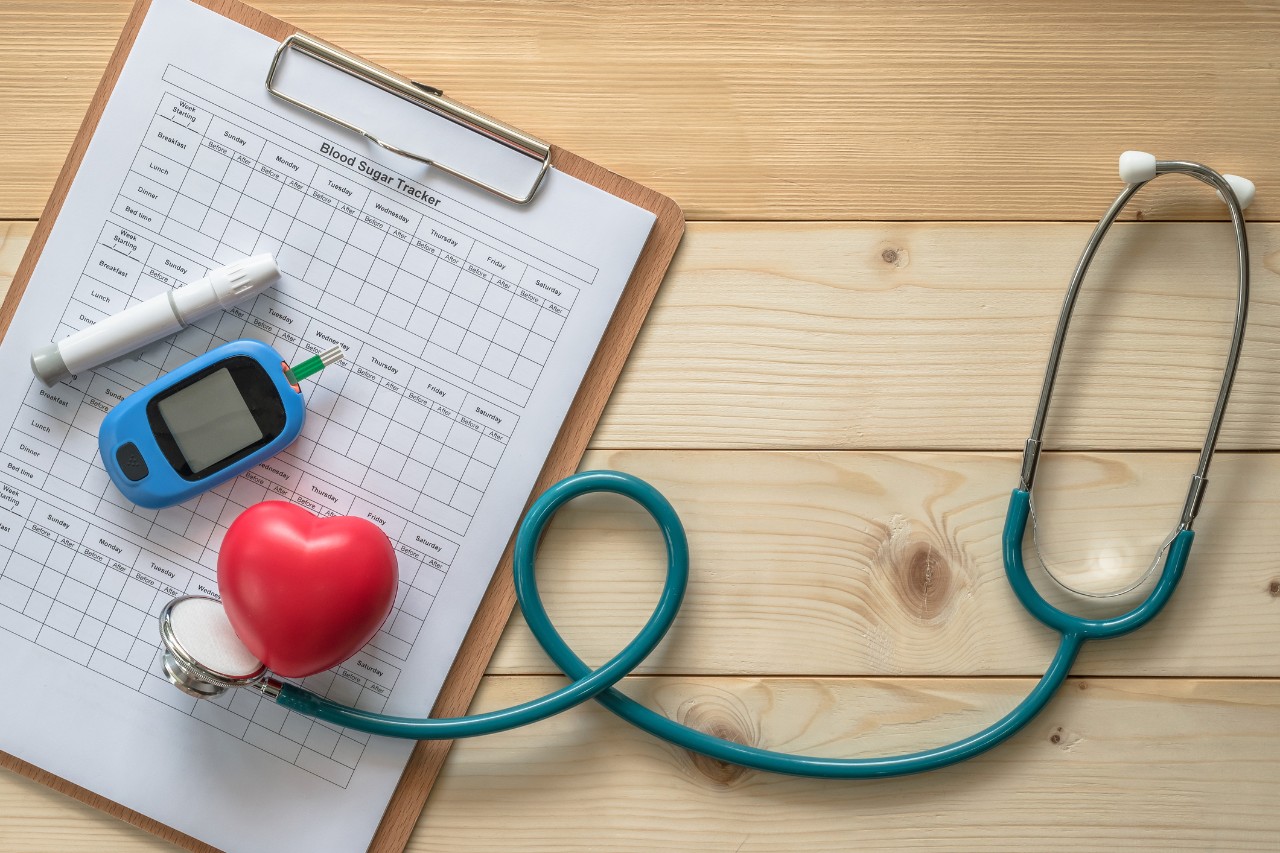
Featured image at top: Blood drop examination tool kit, blood sugar tracker record and heart with doctor's stethoscope. Photo/iStock/Chinnapong.
Related Stories
Sugar overload killing hearts
November 10, 2025
Two in five people will be told they have diabetes during their lifetime. And people who have diabetes are twice as likely to develop heart disease. One of the deadliest dangers? Diabetic cardiomyopathy. But groundbreaking University of Cincinnati research hopes to stop and even reverse the damage before it’s too late.
Is going nuclear the solution to Ohio’s energy costs?
November 10, 2025

The Ohio Capital Journal recently reported that as energy prices continue to climb, economists are weighing the benefits of going nuclear to curb costs. The publication dove into a Scioto Analysis survey of 18 economists to weigh the pros and cons of nuclear energy. One economist featured was Iryna Topolyan, PhD, professor of economics at the Carl H. Lindner College of Business.
App turns smartwatch into detector of structural heart disease
November 10, 2025

An app that uses an AI model to read a single-lead ECG from a smartwatch can detect structural heart disease, researchers reported at the 2025 Scientific Sessions of the American Heart Association. Although the technology requires further validation, researchers said it could help improve the identification of patients with heart failure, valvular conditions and left ventricular hypertrophy before they become symptomatic, which could improve the prognosis for people with these conditions.