The secret life of potholes
UC engineer puts pothole fixes to the test

It might not come as a surprise to drivers used to the shake, rattle and roll of storm-damaged roads, but not all pothole repairs are created equal.
Cleveland.com highlighted work by a University of Cincinnati engineering professor to find out just which solutions work best for winter-damaged roads.
UC College of Engineering and Applied Science Professor Munir Nazzal and his students spent the winter of 2021 following roads departments as they repaired 686 potholes in four cities across Ohio. Crews used nine different materials or combinations to fill them.
Researchers found that no single material worked best for every weather condition or road surface. And the cost of repairs can vary depending on the materials and methods used.
“You cannot control when it will snow, when it will freeze, you cannot control anything like that,” Nazzal told Cleveland.com. “What you can control is basically making sure that you’re putting the effort to select the right material and the right procedure.”
Nazzal is director of UC's Center for Smart, Sustainable and Resilient Infrastructure.
Subsequently, he and his students have conducted related studies examining better ways to fix damaged roads. Often, the best repair is prevention — sealing road cracks to keep ice from heaving the surface.
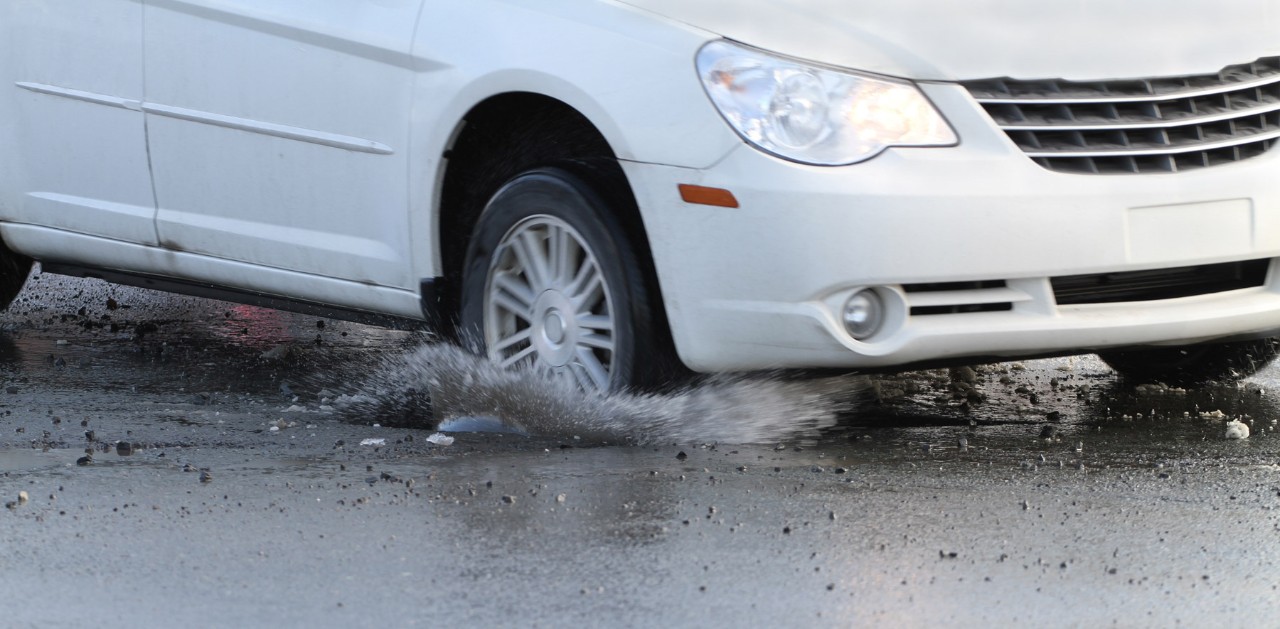
Featured image at top: University of Cincinnati Professor Munir Nazzal studies the most effective ways to repair storm-damaged roads. Photo/kozmoat98/istockphoto

UC College of Engineering and Applied Science Professor Munir Nazzal poses in the high-bay lab at UC's Digital Futures. He is director of UC's Center for Smart, Sustainable and Resilient Infrastructure. Photo/Andrew Higley/UC Marketing + Brand
Related Stories
Sugar overload killing hearts
November 10, 2025
Two in five people will be told they have diabetes during their lifetime. And people who have diabetes are twice as likely to develop heart disease. One of the deadliest dangers? Diabetic cardiomyopathy. But groundbreaking University of Cincinnati research hopes to stop and even reverse the damage before it’s too late.
Is going nuclear the solution to Ohio’s energy costs?
November 10, 2025

The Ohio Capital Journal recently reported that as energy prices continue to climb, economists are weighing the benefits of going nuclear to curb costs. The publication dove into a Scioto Analysis survey of 18 economists to weigh the pros and cons of nuclear energy. One economist featured was Iryna Topolyan, PhD, professor of economics at the Carl H. Lindner College of Business.
App turns smartwatch into detector of structural heart disease
November 10, 2025

An app that uses an AI model to read a single-lead ECG from a smartwatch can detect structural heart disease, researchers reported at the 2025 Scientific Sessions of the American Heart Association. Although the technology requires further validation, researchers said it could help improve the identification of patients with heart failure, valvular conditions and left ventricular hypertrophy before they become symptomatic, which could improve the prognosis for people with these conditions.