How Minnesota conspiracy theories took over social media
UC professor explains why politicians use misinformation

NBC News turned to a University of Cincinnati expert on conspiracy theories to explain why politicians immediately spread unfounded rumors on social media in the wake of the shootings of two Minnesota state lawmakers and their spouses.
Police on Sunday arrested suspect Vance Boelter in connection with the shootings.
Police said Boelter had a hit list of 47 politicians — all Democrats.
But prominent Republicans and social media influencers immediately alleged on social media that Boelter was a left-wing terrorist.
Elon Musk tweeted, “The far-left is murderously violent.“
U.S. Sen. Mike Lee, R-Utah, wrote on X, “This is what happens when Marxists don't get their way.“
According to NBC News: ”It’s now a pattern after tragic news events: Moments after a notable death or a crime, social media influencers accuse political rivals of guilt or complicity with little to no evidence, and when their theories turn out to be unfounded or false, neither the influencers nor the social media companies are held accountable.”
Experts said conspiracy theories like the ones about Minnesota serve two aims: to make the political opposition appear evil and to preempt claims about extremism on your own side.
“These types of conspiracy theories or disinformation campaigns — they serve political interests,” Blevins told NBC News.
Blevins studies misinformation and the way conspiracy theories take hold. He is co-author of the 2024 book “Social Media and Digital Politics: Networked Reason in an Age of Digital Emotion.” He teaches in UC's School of Public and International Affairs.
“Instead of, ‘Look how radicalized my side of the aisle has become’ — oh, no, ‘it’s their side of the aisle that is radicalized, and we don’t have to deal with this now. It’s their fault,’” he said.
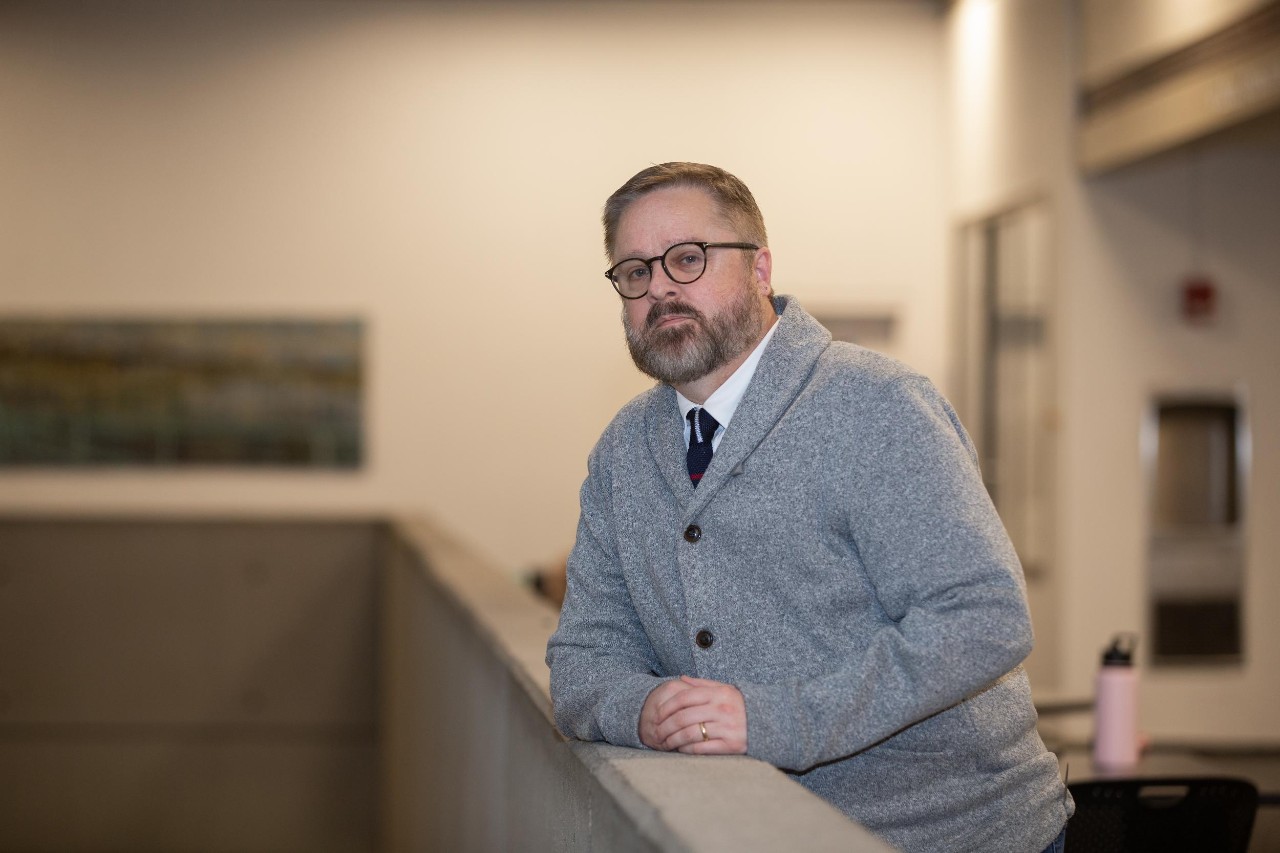
Featured image at top: UC College of Arts and Sciences Professor Jeffrey Blevins is an expert in misinformation and conspiracy theories. Photo/Andrew Higley/UC Marketing + Brand
Related Stories
Sugar overload killing hearts
November 10, 2025
Two in five people will be told they have diabetes during their lifetime. And people who have diabetes are twice as likely to develop heart disease. One of the deadliest dangers? Diabetic cardiomyopathy. But groundbreaking University of Cincinnati research hopes to stop and even reverse the damage before it’s too late.
Is going nuclear the solution to Ohio’s energy costs?
November 10, 2025

The Ohio Capital Journal recently reported that as energy prices continue to climb, economists are weighing the benefits of going nuclear to curb costs. The publication dove into a Scioto Analysis survey of 18 economists to weigh the pros and cons of nuclear energy. One economist featured was Iryna Topolyan, PhD, professor of economics at the Carl H. Lindner College of Business.
App turns smartwatch into detector of structural heart disease
November 10, 2025

An app that uses an AI model to read a single-lead ECG from a smartwatch can detect structural heart disease, researchers reported at the 2025 Scientific Sessions of the American Heart Association. Although the technology requires further validation, researchers said it could help improve the identification of patients with heart failure, valvular conditions and left ventricular hypertrophy before they become symptomatic, which could improve the prognosis for people with these conditions.