UC, Case Western Reserve study platelet-inspired therapeutics to treat traumatic brain injury, hemorrhage
Air Force Research Laboratory grant funds nanomedicine research

University of Cincinnati (UC) and Case Western Reserve University (CWRU) researchers have received an Air Force Research Laboratory (AFRL) grant to test platelet-inspired nanotherapeutics to treat traumatic brain injuries (TBI) and hemorrhages.
Study background
Situations where TBI is combined with additional injuries elsewhere in the body can occur on the battlefield during military operations or civilian settings like car accidents. In addition, this line of research can increase the Department of Homeland Security's medical response capabilities for events that can impact the nation, such as natural disasters or terrorist attacks.
In all of these scenarios, the effect of such combined injuries can often be lethal.
Within these combination injuries, the body often has a compromised ability to form stable clots to stop bleeding, and these bleeding complications can lead to tissue and organ damage and additional health problems.
The most effective treatment for these bleeding complications is blood transfusion, but blood products and platelets have a short shelf life and depend on having available donors and proper storage.
Study details

Anirban Sen Gupta, PhD. Photo/Case Western Reserve University.
To address this need, CWRU’s Anirban Sen Gupta, Ph.D., and his colleagues have researched and developed “synthetic platelets” from nanoparticles called liposomes.
Platelets can be thought of as a Swiss Army knife, where each tool within the larger structure has a different use. To mimic this, the researchers put the synthetic platelets together with building blocks of unique molecules to accomplish various specific functions of the platelets.
“We have been interested in mimicking the various mechanisms that platelets use to form and stabilize blood clots, especially in the context of driving necessary clot formation to stop bleeding,” said Sen Gupta, professor in the Department of Biomedical Engineering at the Case School of Engineering and Case Western Reserve School of Medicine.
To test the effectiveness of these customizable “synthetic platelets” in acute injury settings, Sen Gupta is collaborating with Michael Goodman, MD, and his colleagues at UC who have more than a decade of experience in polytrauma models that replicate combination TBI and hemorrhage injuries.
“We will use small animal-based polytrauma models with a well-established injury pattern to determine the utility and distribution of the platelet-inspired nanotherapeutics to reduce bleeding in the brain after injury,” said Goodman, professor and director of general surgery research in the Department of Surgery in UC’s College of Medicine and a UC Health physician.

Michael Goodman, MD. Photo/University of Cincinnati.
The goal is to develop a library of platelet-inspired therapies developed by Sen Gupta’s group and demonstrate safety and efficacy when tested in the models developed by Goodman’s group. The team hopes this work can provide a foundation for future clinical trials and be a step toward U.S. Food and Drug Administration approval of this novel approach to treat TBI and hemorrhage.
"Hemorrhage is the leading cause of preventable battlefield death, and AFRL is dedicated to addressing this critical challenge,” said Col. Scott Sonnek, PhD, aerospace and operational medicine product line lead, AFRL’s Human Effectiveness Directorate. “By investing in this innovative nanomedicine research, we are developing solutions that bridge the gap between battlefield needs and real-world medical challenges. The partnership between UC and CWRU is poised to deliver groundbreaking therapies, transforming trauma care and improving outcomes for service members and civilians alike."
Study impact
The researchers said having a synthetic platelet alternative could be especially useful in environments where platelet availability for transfusion is limited, including smaller hospitals and austere military environments. Emergency medical technicians and other first responders could also benefit from the advancements, and the technology could help reduce the burden on medical facilities seeing increased patient numbers during mass casualty events or other times of high patient volume.
For patients, the synthetic alternative may lead to improved recovery and a reduction in complications such as reduced blood loss and less inflammation.
“All of these research endeavors are interdisciplinary by nature, which enables expertise from multiple fields — science, engineering and medicine — to come together to solve important medical problems nationally and globally,” Sen Gupta said. “I hope more of such endeavors continue to emerge.”
The study has received approval from the UC Institutional Animal Care and Use Committee (IACUC), protocol number 24-07-24-01. The protocol also received concurrence by the Air Force Surgeon General's Animal Research Oversight & Compliance Office (AROCO), protocol number: AFOSR-2025-0003A.
Innovation Lives Here
The University of Cincinnati is leading public urban universities into a new era of innovation and impact. Our faculty, staff and students are saving lives, changing outcomes and bending the future in our city's direction. Next Lives Here.
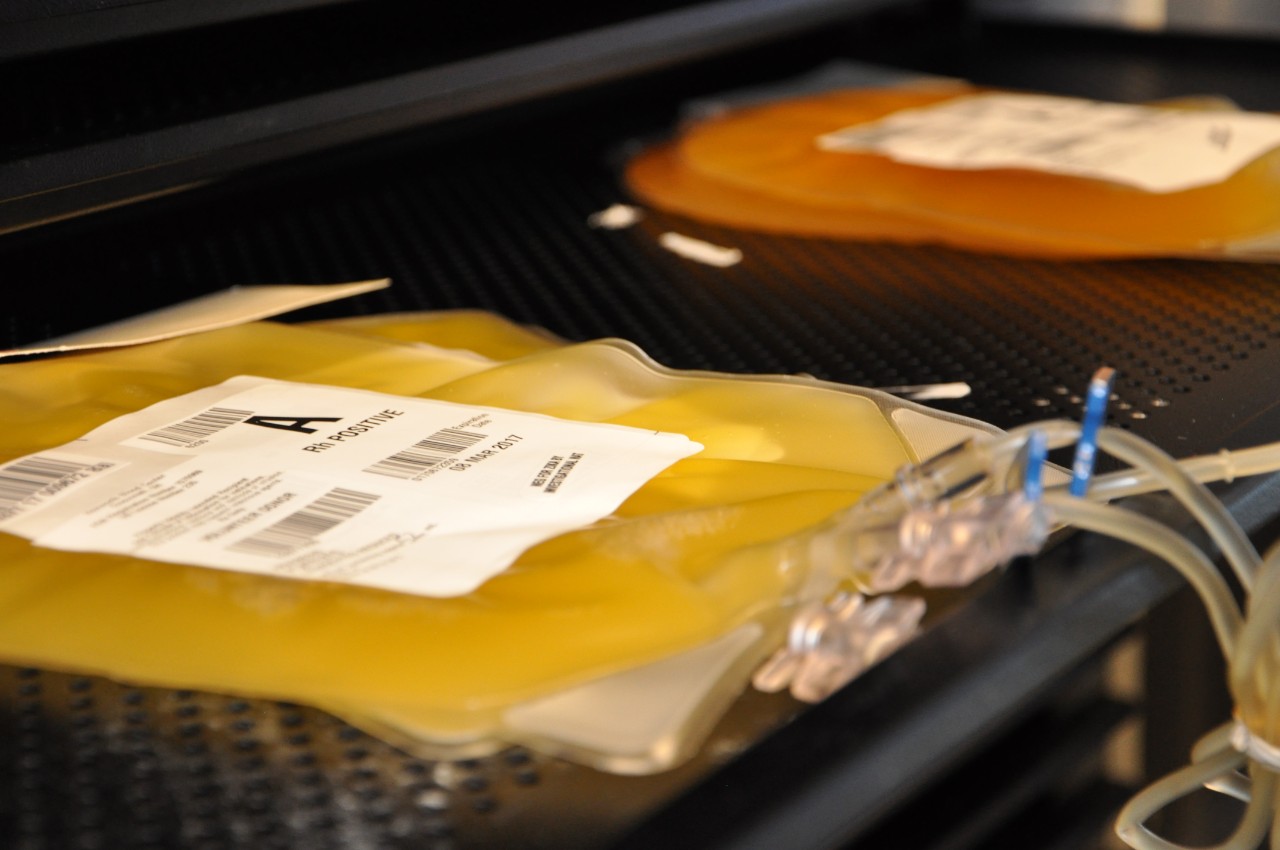
Featured photo at top of donated blood platelets. Photo/University of Cincinnati.
About AFRL
The Air Force Research Laboratory (AFRL) is the primary scientific research and development center for the Department of the Air Force. AFRL plays an integral role in leading the discovery, development and integration of affordable warfighting technologies for our air, space and cyberspace force. With a workforce of more than 11,000 across nine technology areas and 40 other operations across the globe, AFRL provides a portfolio of science and technology ranging from fundamental to advanced research and technology development. For more information, visit www.afresearchlab.com.
Related Stories
Sugar overload killing hearts
November 10, 2025
Two in five people will be told they have diabetes during their lifetime. And people who have diabetes are twice as likely to develop heart disease. One of the deadliest dangers? Diabetic cardiomyopathy. But groundbreaking University of Cincinnati research hopes to stop and even reverse the damage before it’s too late.
Is going nuclear the solution to Ohio’s energy costs?
November 10, 2025

The Ohio Capital Journal recently reported that as energy prices continue to climb, economists are weighing the benefits of going nuclear to curb costs. The publication dove into a Scioto Analysis survey of 18 economists to weigh the pros and cons of nuclear energy. One economist featured was Iryna Topolyan, PhD, professor of economics at the Carl H. Lindner College of Business.
App turns smartwatch into detector of structural heart disease
November 10, 2025

An app that uses an AI model to read a single-lead ECG from a smartwatch can detect structural heart disease, researchers reported at the 2025 Scientific Sessions of the American Heart Association. Although the technology requires further validation, researchers said it could help improve the identification of patients with heart failure, valvular conditions and left ventricular hypertrophy before they become symptomatic, which could improve the prognosis for people with these conditions.