Study sheds light on enzyme's role in driving lymphoma growth
MSN highlights UC cancer biology research

MSN highlighted a study led by University of Cincinnati Cancer Center researchers that sheds new light on the mechanisms by which a major oncogene promotes and sustains lymphoma development and progression, paving the way for novel targeted therapies.
The research, led by first author Austin C. MacMillan and senior author Tom Cunningham, was published May 29 in the journal Redox Biology.
The Cunningham lab focuses on an oncogene called MYC that “turbocharges” the metabolism of cancer cells to fuel their aggressive growth and proliferation. The team examined the role of an enzyme called phosphoribosyl pyrophosphate synthetase (PRPS) that is present in lymphoma cells in two forms: PRPS1 and PRPS2. Using CRISPR gene editing technology, the team knocked out either form of the enzyme in lymphoma cell line models.
The researchers found that PRPS1 and PRPS2 have different activities but work together in the same biochemical complex, with PRPS2 increased and more active in lymphoma cells where MYC is overexpressed.
“The PRPS enzymes and the PRPS complex have a cell-wide effect on redox homeostasis,” said MacMillan, a doctoral cancer biology student in Cunningham’s lab. “The many buffering mechanisms in place to regulate redox homeostasis make it very uncommon to find that the difference in catalyzation of a single biochemical reaction produces such a measurable change in the cell’s global redox state, so that was a major surprise.”
“There are so many checks and balances, so many ways of recalibrating that cellular redox state to keep it stable. Discovering that changing flux through the single PRPS enzyme can have such profound consequences on overall cellular redox state,” Cunningham added. “Having the molecular tools at our disposal to harness that is a really powerful bit of knowledge that we can use in the future.”
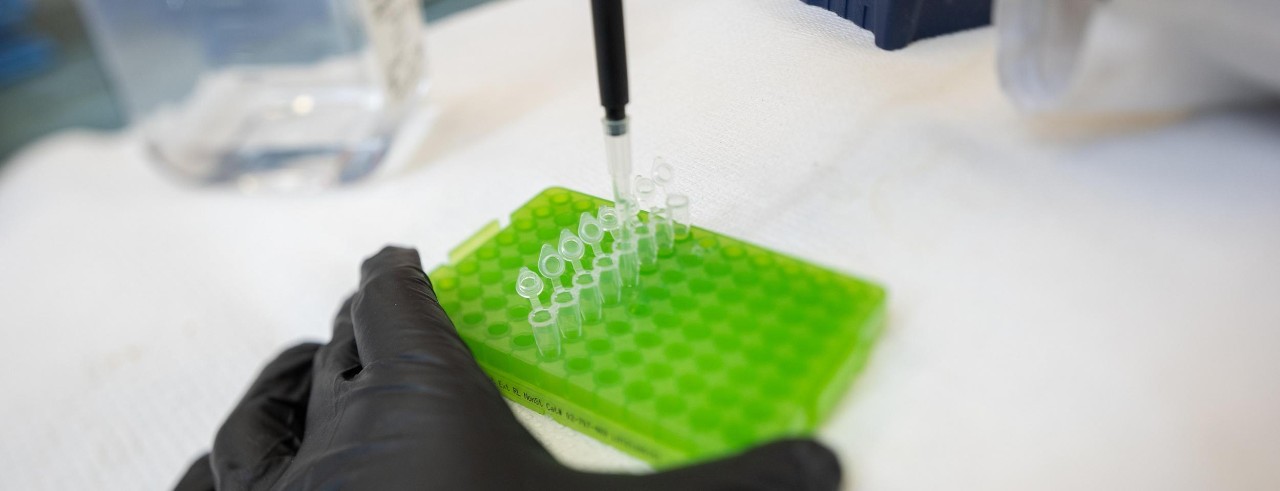
Featured photo at top of a researcher pipetting samples in the Cunningham lab. Photo/Andrew Higley/UC Marketing + Lab.
Related Stories
Sugar overload killing hearts
November 10, 2025
Two in five people will be told they have diabetes during their lifetime. And people who have diabetes are twice as likely to develop heart disease. One of the deadliest dangers? Diabetic cardiomyopathy. But groundbreaking University of Cincinnati research hopes to stop and even reverse the damage before it’s too late.
Is going nuclear the solution to Ohio’s energy costs?
November 10, 2025

The Ohio Capital Journal recently reported that as energy prices continue to climb, economists are weighing the benefits of going nuclear to curb costs. The publication dove into a Scioto Analysis survey of 18 economists to weigh the pros and cons of nuclear energy. One economist featured was Iryna Topolyan, PhD, professor of economics at the Carl H. Lindner College of Business.
App turns smartwatch into detector of structural heart disease
November 10, 2025

An app that uses an AI model to read a single-lead ECG from a smartwatch can detect structural heart disease, researchers reported at the 2025 Scientific Sessions of the American Heart Association. Although the technology requires further validation, researchers said it could help improve the identification of patients with heart failure, valvular conditions and left ventricular hypertrophy before they become symptomatic, which could improve the prognosis for people with these conditions.