How does digestion affect molecular analysis of animal scat?
UC researchers examine popular method of studying elusive animals

Scientists are using isotopes to answer a surprising variety of questions about the world, according to University of Cincinnati Professor Brooke Crowley.
Isotopes are different forms of the same element that researchers can use like a fingerprint to identify where and when something lived and even what that place was like.
“Isotopic analysis is coming into its heyday. In the last five to 10 years, there has been a tremendous explosion of research analyses.”

UC Professor Brooke Crowley uses isotopic analysis to learn more about elusive, endangered and even extinct animals. Photo/Andrew Higley/UC Marketing + Brand
In Crowley’s Stable Isotope Ecology course, students come up with creative questions and applications for isotopic analysis and carry out small group projects.
“Does shade-grown coffee look different from sun-grown? Absolutely,” she said.
“What about cage-free eggs or free-range chickens versus the alternative? Yes,” she said.
“Does digestion affect the ratios of isotopes?” The answer is yes, according to a study published in the journal Ecology and Evolution.
“What goes in is isotopically different from what comes out,” researchers concluded.
The research was led by UC College of Arts and Sciences graduate Maddie Greenwood, initially as part of a class project and then as a senior research project. Rachel Reid, a research scientist from Virginia Tech University, also worked on the project.
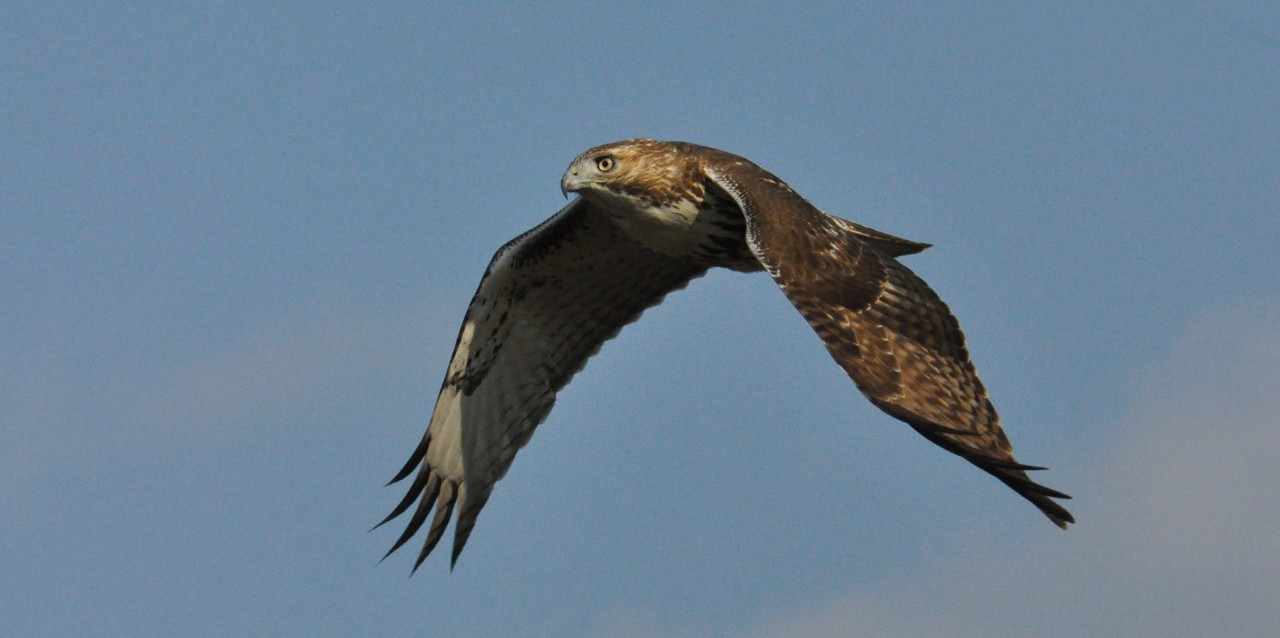
They collected the droppings and regurgitated pellets from two captive animals at the Cincinnati Zoo & Botanical Garden: a Eurasian eagle owl and a red-tailed hawk, both of which subsist on a diet of frozen rats. The acidic digestive system of the hawk helped it digest more bone than that of the owl, but both leave behind at least some bone in their pellets and droppings.
I’ve always been interested in animals, which is why I was drawn to Dr. Crowley’s classes. She really pushes her students to satisfy their own curiosity.
Maddie Greenwood, UC College of Arts and Studies graduate
The researchers compared the ratios of carbon, nitrogen, oxygen and strontium isotopes in the rats to those found in the bird poop and pellets. And there were significant differences, Crowley said. They concluded that the influence of digestion on bone is large enough to affect interpretations of diet and ingested strontium.
“The results were not what we were expecting,” she said.

UC researchers studied regurgitated pellets and poop from a red-tailed hawk and an eagle owl at the Cincinnati Zoo & Botanical Garden. Photo/Michael Miller
Increasingly, scientists are turning to isotopes in poop to non-invasively study wild animals that are rare or difficult to track like jaguars. They also use bones from small animals to help establish what environmental conditions were in the past. However, remains of small animals in archaeological and paleontological settings are often accumulations of bones regurgitated by birds of prey like owls.
“Researchers should use caution if using potentially digested bone to evaluate the diet of consumed prey, establish strontium baselines or infer past climate or environmental conditions,” the study warned.
“This is significant for anyone using rodent bones to identify prey locations or climate and other environmental conditions,” Crowley said. “But by no means is it the end of the story. More work needs to be done.”
The project was supported by a UC STEM undergraduate research award.

UC student Maddie Greenwood works in Professor Brooke Crowley's lab in this 2019 photo. She has since graduated from UC's College of Arts and Sciences. Photo/Jay Yocis/UC
UC's Greenwood said the next step could be to widen the study and perhaps include more species.
“I would love to get a larger sample size. This was a small-scale study,” she said.
Greenwood said the results demonstrate how insightful isotopic analysis can be to answer questions about the natural world.
“I think it’s incredibly rewarding. Just like anything in science, we figure out new ways to use this tool and new ways to make it helpful. I appreciate being a part of that,” she said.
Today, she works as a veterinary technician, using many of the same research skills she learned at UC.
“Especially sample processing and working in a lab. Also how to write scientifically and how to think in creative ways to problem solve. It’s been incredibly useful,” she said.
Greenwood credited Crowley with encouraging her to pursue a career in science.
“I’ve always been interested in animals, which is why I was drawn to Dr. Crowley’s classes,” Greenwood said. “She really pushes her students to satisfy their own curiosity. She cares a lot about her students and fostering independent thinking.”
Featured image at top: UC researchers found that digestion can affect the results of isotopic analysis when studying bird droppings and pellets. The findings could help conservationists who use this tool to study elusive or endangered wildlife. Photo/Michael Miller

UC Professor Brooke Crowley, left, and UC graduate Maddie Greenwood pose in Crowley's lab in this 2019 file photo. Photo/Jay Yocis/UC
Innovation Lives Here
The University of Cincinnati is leading public urban universities into a new era of innovation and impact. Our faculty, staff and students are saving lives, changing outcomes and bending the future in our city's direction. Next Lives Here.
Related Stories
Sugar overload killing hearts
November 10, 2025
Two in five people will be told they have diabetes during their lifetime. And people who have diabetes are twice as likely to develop heart disease. One of the deadliest dangers? Diabetic cardiomyopathy. But groundbreaking University of Cincinnati research hopes to stop and even reverse the damage before it’s too late.
Is going nuclear the solution to Ohio’s energy costs?
November 10, 2025

The Ohio Capital Journal recently reported that as energy prices continue to climb, economists are weighing the benefits of going nuclear to curb costs. The publication dove into a Scioto Analysis survey of 18 economists to weigh the pros and cons of nuclear energy. One economist featured was Iryna Topolyan, PhD, professor of economics at the Carl H. Lindner College of Business.
App turns smartwatch into detector of structural heart disease
November 10, 2025

An app that uses an AI model to read a single-lead ECG from a smartwatch can detect structural heart disease, researchers reported at the 2025 Scientific Sessions of the American Heart Association. Although the technology requires further validation, researchers said it could help improve the identification of patients with heart failure, valvular conditions and left ventricular hypertrophy before they become symptomatic, which could improve the prognosis for people with these conditions.