Engineers develop stress test to measure cortisol
Device could help diagnose depression, cardiac issues

Yahoo! Finance and other news outlets highlighted devices developed by engineers at the University of Cincinnati to test cortisol and cardiac issues.
UC College of Engineering and Applied Science Distinguished Research Professor Chong Ahn and his students developed a “lab-on-a-chip” device that measures the stress hormone cortisol from a patient’s saliva. Knowing if a patient has elevated stress hormones can provide useful diagnostic information even if patients do not report feelings of anxiety, stress or depression in a standard mental health questionnaire.
Mental health disorders affect more than 400 million people around the world. Stress disorders such as anxiety and depression are among the leading causes of disability worldwide. Prolonged cortisol elevation is linked to numerous mental health disorders, including depression and anxiety.
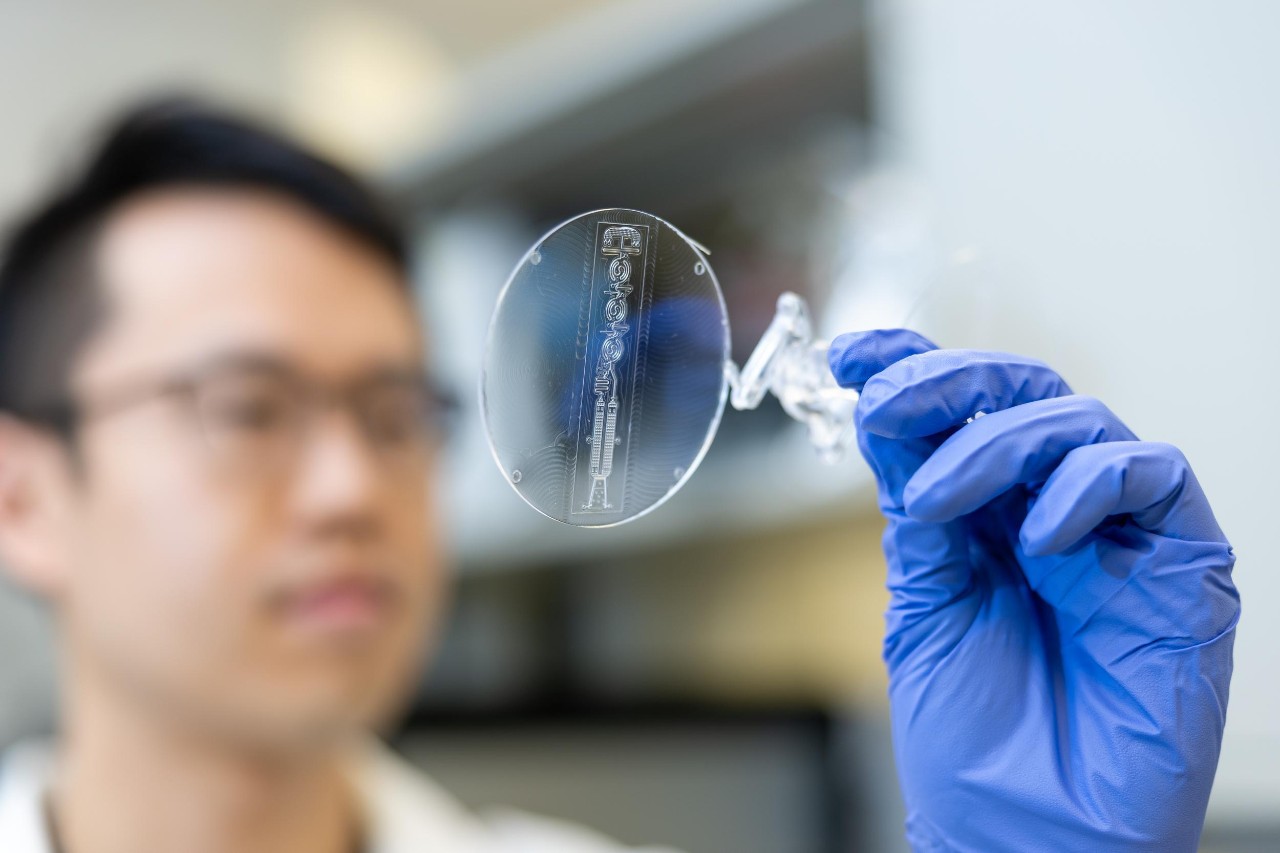
UC researchers created a lab-on-a-chip system to track a patient’s cortiso levels. It consists of a disposable collection device that a person puts in their mouth which is then inserted into a reader. The reader can transmit results in minutes to a portable analyzer and phone.
The study was published in the journal Biomedical Microdevices.
Featured image at top: UC doctoral student Heeyong Jang holds up a microfluidic device developed in Chong Ahn's lab. Photo/Andrew Higley/UC Marketing + Brand

Distinguished Research Professor Chong Ahn is working on point-of-care tests in his electrical engineering lab. Photo/Andrew Higley/UC Marketing + Brand
More UC Electrical Engineering in the news

UC doctoral students Heeyong Jang, left, and Supreeth Setty work in Chong Ahn's electrical engineering lab. Photo/Andrew Higley/UC Marketing + Brand
- Technology Networks: At-home device would let patients test stress hormones
- Life Sciences: Engineers develop saliva test for depression, anxiety
- Bioengineer.org: Lab-on-a-chip technology brings public health capabilities into home
- Neuroscience News: At home saliva tests measures hidden stress
Related Stories
Sugar overload killing hearts
November 10, 2025
Two in five people will be told they have diabetes during their lifetime. And people who have diabetes are twice as likely to develop heart disease. One of the deadliest dangers? Diabetic cardiomyopathy. But groundbreaking University of Cincinnati research hopes to stop and even reverse the damage before it’s too late.
Is going nuclear the solution to Ohio’s energy costs?
November 10, 2025

The Ohio Capital Journal recently reported that as energy prices continue to climb, economists are weighing the benefits of going nuclear to curb costs. The publication dove into a Scioto Analysis survey of 18 economists to weigh the pros and cons of nuclear energy. One economist featured was Iryna Topolyan, PhD, professor of economics at the Carl H. Lindner College of Business.
App turns smartwatch into detector of structural heart disease
November 10, 2025

An app that uses an AI model to read a single-lead ECG from a smartwatch can detect structural heart disease, researchers reported at the 2025 Scientific Sessions of the American Heart Association. Although the technology requires further validation, researchers said it could help improve the identification of patients with heart failure, valvular conditions and left ventricular hypertrophy before they become symptomatic, which could improve the prognosis for people with these conditions.