Volcanic ash buried huge herd of Nebraskan rhinos
UC researchers discover prehistoric rhinos lived in super-herds

Discover magazine highlighted research by the University of Cincinnati that found prehistoric rhinos lived in super-herds 12 million years ago.
Researchers studied the isotopes of rhino teeth found in what is now northeast Nebraska. Here, more than 100 rhinos at a single water hole died and were entombed in ash from an eruption of the Yellowstone supervolcano.
Since the discovery of rhinos at Nebraska’s Ashfall Fossil Beds State Historical Park in 1971, researchers have wondered what drew so many animals together in the same place. Did they converge from far away, perhaps to seek shelter from the unfolding natural disaster of the volcanic eruption with its choking ash?
“We found they didn’t move very much,” lead author and UC graduate Clark Ward said. “We didn’t find evidence for seasonal migration or any evidence of a response to the disaster.”
Read the Discover magazine story.
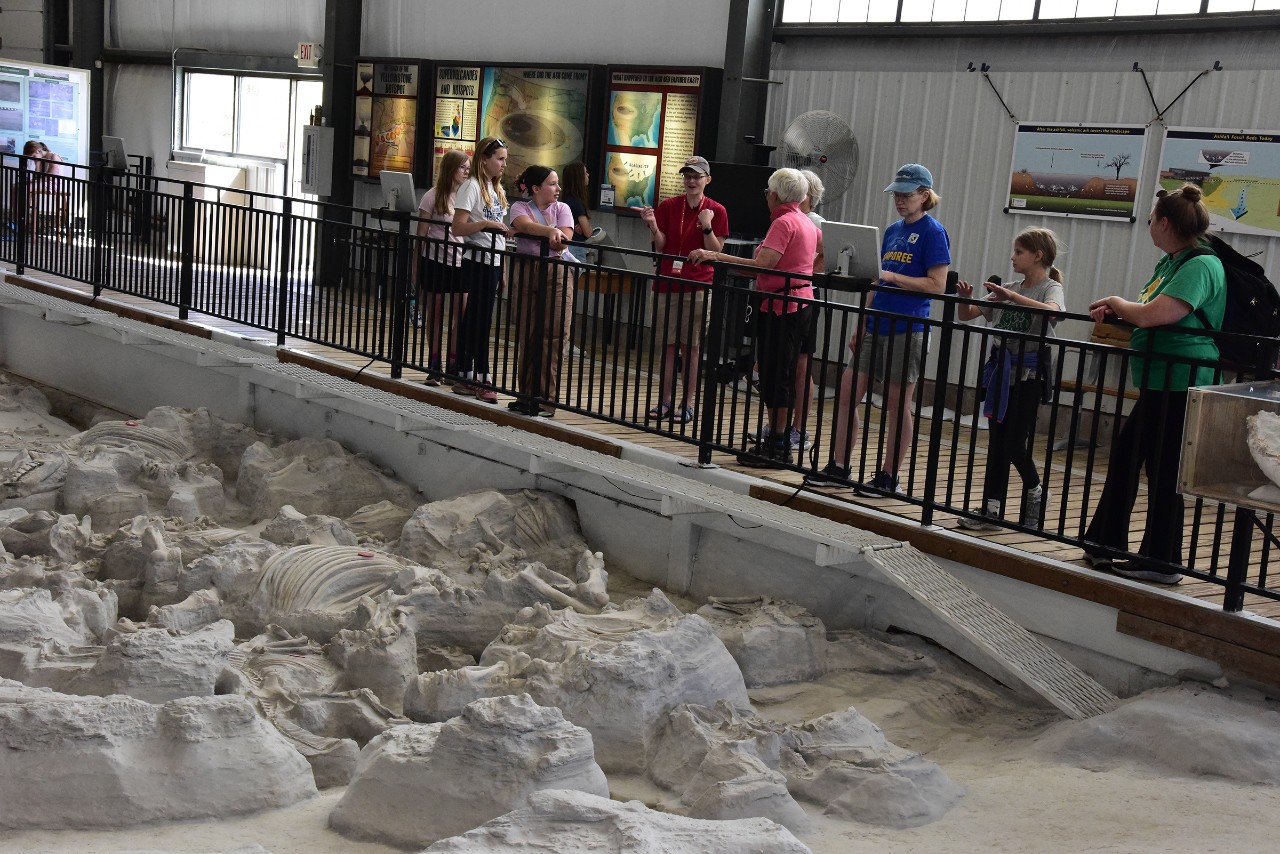
Featured image at top: Visitors listen to a docent at Nebraska's Ashfall Fossil Beds State Historical Park. Photo/John Haxby/The University of Nebraska State Museum
More UC Geosciences in the news

Ashfall Fossil Beds State Historical Park features more than 100 specimens of prehistoric rhino. Photo/John Haxby/The University of Nebraska State Museum
- BBC Wildlife Magazine: In the 1970s, over 100 ancient rhinos were found entombed in Yellowstone ash — we finally know what happened
- Billings Gazette: Prehistoric rhinos lived in super-herds
- All That's Interesting: Scientists investigate fossils from massive herd of prehistoric rhinos
Related Stories
Sugar overload killing hearts
November 10, 2025
Two in five people will be told they have diabetes during their lifetime. And people who have diabetes are twice as likely to develop heart disease. One of the deadliest dangers? Diabetic cardiomyopathy. But groundbreaking University of Cincinnati research hopes to stop and even reverse the damage before it’s too late.
Is going nuclear the solution to Ohio’s energy costs?
November 10, 2025

The Ohio Capital Journal recently reported that as energy prices continue to climb, economists are weighing the benefits of going nuclear to curb costs. The publication dove into a Scioto Analysis survey of 18 economists to weigh the pros and cons of nuclear energy. One economist featured was Iryna Topolyan, PhD, professor of economics at the Carl H. Lindner College of Business.
App turns smartwatch into detector of structural heart disease
November 10, 2025

An app that uses an AI model to read a single-lead ECG from a smartwatch can detect structural heart disease, researchers reported at the 2025 Scientific Sessions of the American Heart Association. Although the technology requires further validation, researchers said it could help improve the identification of patients with heart failure, valvular conditions and left ventricular hypertrophy before they become symptomatic, which could improve the prognosis for people with these conditions.