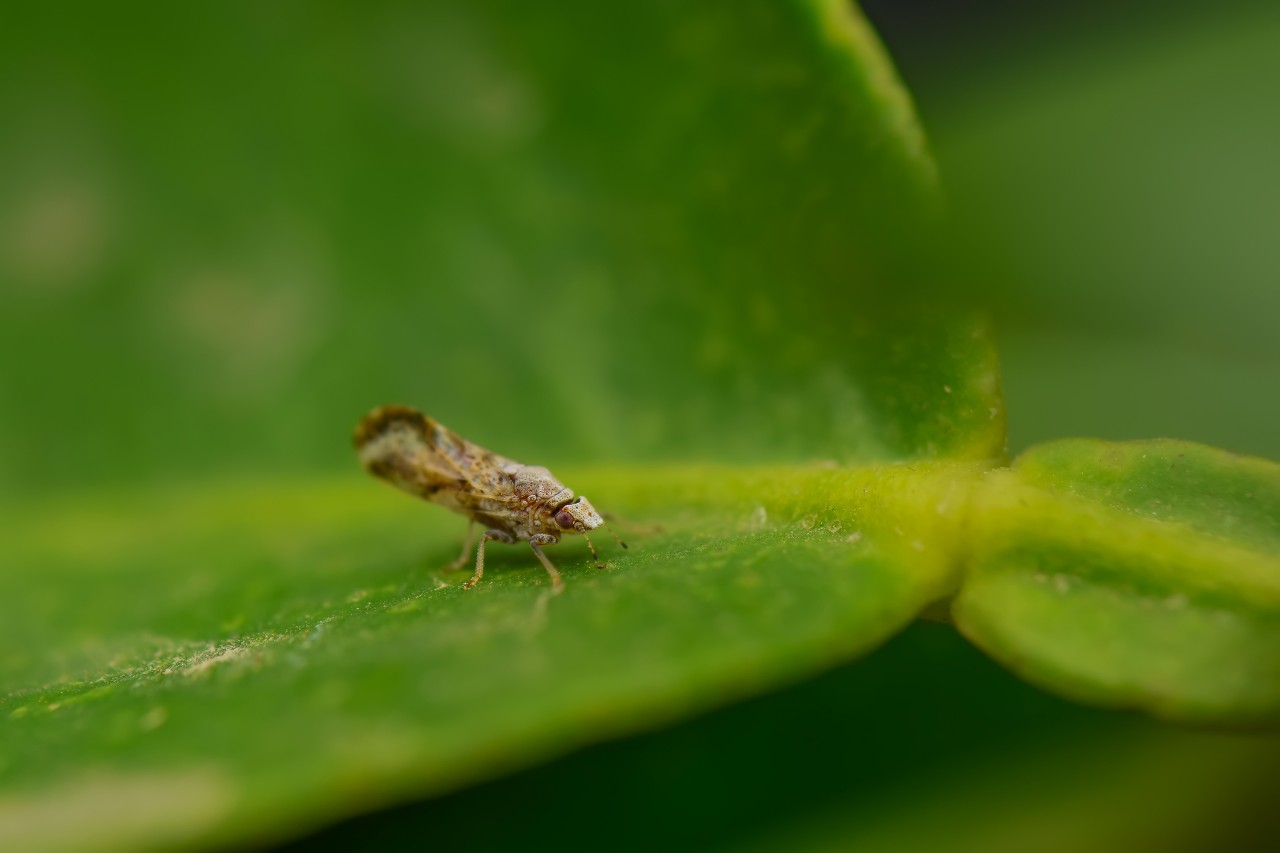
Researchers decode genome of insect harmful to citrus
Biologists at UC contributed to study on destructive insects

The Lake Okeechobee News in Florida highlighted an ambitious research project to unlock the genome of an insect that has devastated citrus growers.
Biologists with the University of Cincinnati collaborated with several other institutions on the project to study a sapsucking lice called the Asian citrus psyllid that feeds on citrus leaves. The insect spreads a bacterial infection called citrus greening disease that has caused billions of dollars in crop damage.
The disease has wiped out millions of acres of citrus trees in the United States and around the world. There is no known cure, according to the U.S. Department of Agriculture.
UC partnered with Indian River State College, the Boyce Thompson Institution, Cornell University and Kansas State University.
By unlocking the genome of the insect, researchers hope to find more effective methods to control the spread of the insect.
Read the Lake Okeechobee News story.
Featured image at top: UC biology students contributed to a study unlocking the genome of an insect that has devastated the citrus crop. Photo/Utkarsh Patil
Related Stories
Sugar overload killing hearts
November 10, 2025
Two in five people will be told they have diabetes during their lifetime. And people who have diabetes are twice as likely to develop heart disease. One of the deadliest dangers? Diabetic cardiomyopathy. But groundbreaking University of Cincinnati research hopes to stop and even reverse the damage before it’s too late.
Is going nuclear the solution to Ohio’s energy costs?
November 10, 2025

The Ohio Capital Journal recently reported that as energy prices continue to climb, economists are weighing the benefits of going nuclear to curb costs. The publication dove into a Scioto Analysis survey of 18 economists to weigh the pros and cons of nuclear energy. One economist featured was Iryna Topolyan, PhD, professor of economics at the Carl H. Lindner College of Business.
App turns smartwatch into detector of structural heart disease
November 10, 2025

An app that uses an AI model to read a single-lead ECG from a smartwatch can detect structural heart disease, researchers reported at the 2025 Scientific Sessions of the American Heart Association. Although the technology requires further validation, researchers said it could help improve the identification of patients with heart failure, valvular conditions and left ventricular hypertrophy before they become symptomatic, which could improve the prognosis for people with these conditions.