
UC DAAP students open pop-up storefront in OTR called ADAAPT
UC DAAP students open pop-up storefront in OTR called ADAAPT
Store bridges academia with real-world market opportunities

Just in time for the holidays.
The University of Cincinnati’s College of Design, Architecture, Art, and Planning (DAAP) and the 1819 Innovation Hub collaborated on a five-year lease in Over-the-Rhine neighborhood of Cincinnati to open a pop-up collective storefront, ADAAPT, as reported by MSN online.
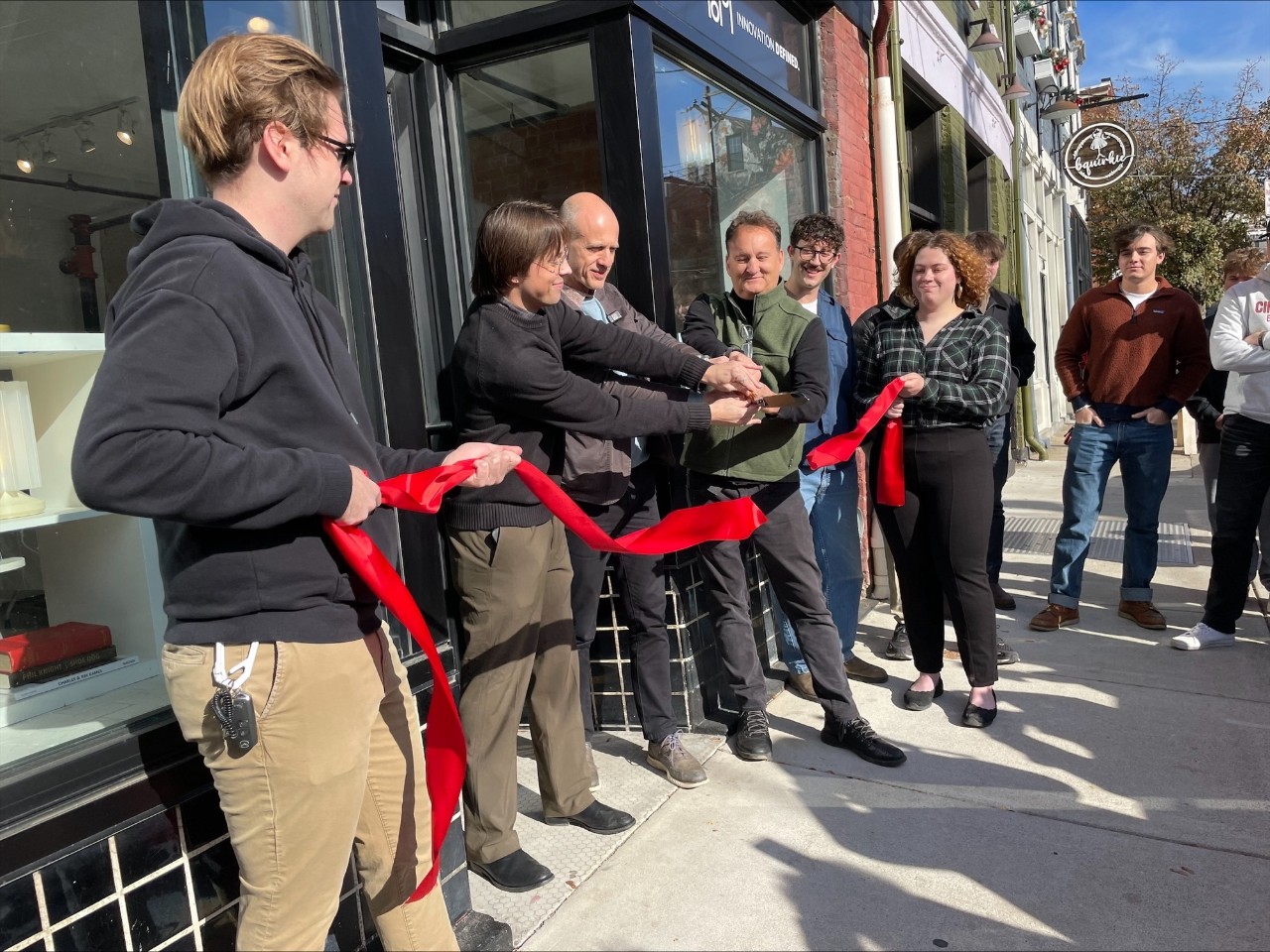
Stakeholders and students were excited to cut the ribbon and mark the grand opening of the ADAAPT store. Photo/Diana Lara
The grand opening of the retail space featured products that will rotate regularly. All products are developed by DAAP’s School of Design students.
Students, faculty and community members were excited to witness the ribbon-cutting at ADAAPT’s storefront at 24 W. Elder St. in OTR’s Findlay Market district.
When a student shares that they've been accepted into UC’s DAAP program, it’s often met with a sense of admiration. So, it’s only fitting for students from such a prestigious design school to showcase their innovative work as aspiring entrepreneurs to a community eager for unique, locally crafted products.
Today’s consumers are drawn to personalized, connected experiences and enjoy supporting homegrown talent. Associate professor and DAAP creative entrepreneurial lead Steven Doehler sees DAAP as a student-driven "idea factory" that’s perfectly aligned with thoughtful, meaningful shopping trends. Bloomberg Businessweek ranks the top 30 design schools on the planet every two years, and it’s not surprising that DAAP routinely makes the list.
“At DAAP, we are fertile ground for idea cultivation. Every semester, the region’s most thought-provoking and innovative ideas sprout from our college’s classrooms in the form of conceptual reality,” Doehler said. “We have a five-year lease, and this storefront will help students gain key consumer insights for their product's success and identify university student collaborators needed to push these ideas past conceptualization and hopefully into scalable, small-batch production."
This partnership between DAAP students and the 1819 Innovation Hub leveraged state-of-the-art equipment from the Ground Floor Makerspace and entrepreneurial mentoring from the UC Venture Lab.
Steven Doehler Associate professor, DAAP creative entrepreneurial lead
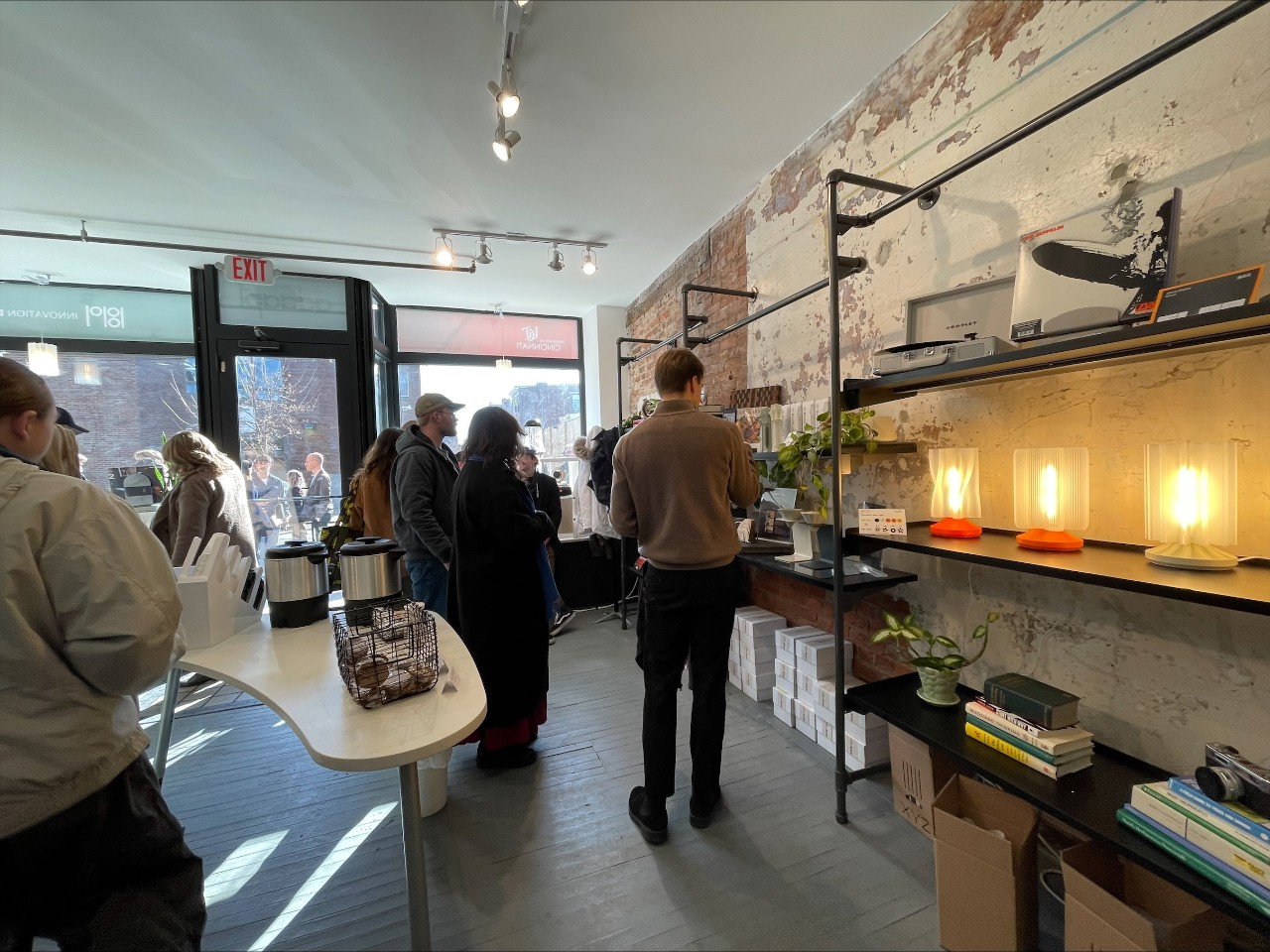
Students discuss their products with shoppers. Photo/Diana Lara
Collaborative resources
Doehler sees the importance of creating a footprint for UC through an urban studio space in the city’s core. However, refreshing a forgotten space downtown took some work. Combining DAAP's design thinking approach with the entrepreneurial resources of UC’s 1819 Innovation Hub created a unique environment for creativity to meet commerce, driving innovation in physical, digital and virtual product development.
“This partnership between DAAP students and the 1819 Innovation Hub leveraged state-of-the-art equipment from the Ground Floor Makerspace and entrepreneurial mentoring from the UC Venture Lab,” Doehler said.
The ADAAPT pop-up shop is a segment within DAAP’s Creative Entrepreneurial Initiative program that centers around three phases:
- Homegrown: Students learn how to design for small-batch manufacturing through consumer-based innovation and retail business practices.
- Creative Entrepreneurialism Lecture Series: Panel discussions and engagements that leverage DAAP’s alumni network to bring stories of “How they got to now” to university students and professionals.
- Curriculum: Aims to develop knowledge around creative entrepreneurialism and invite university students and the public to learn how DAAP translates that into viable small businesses.
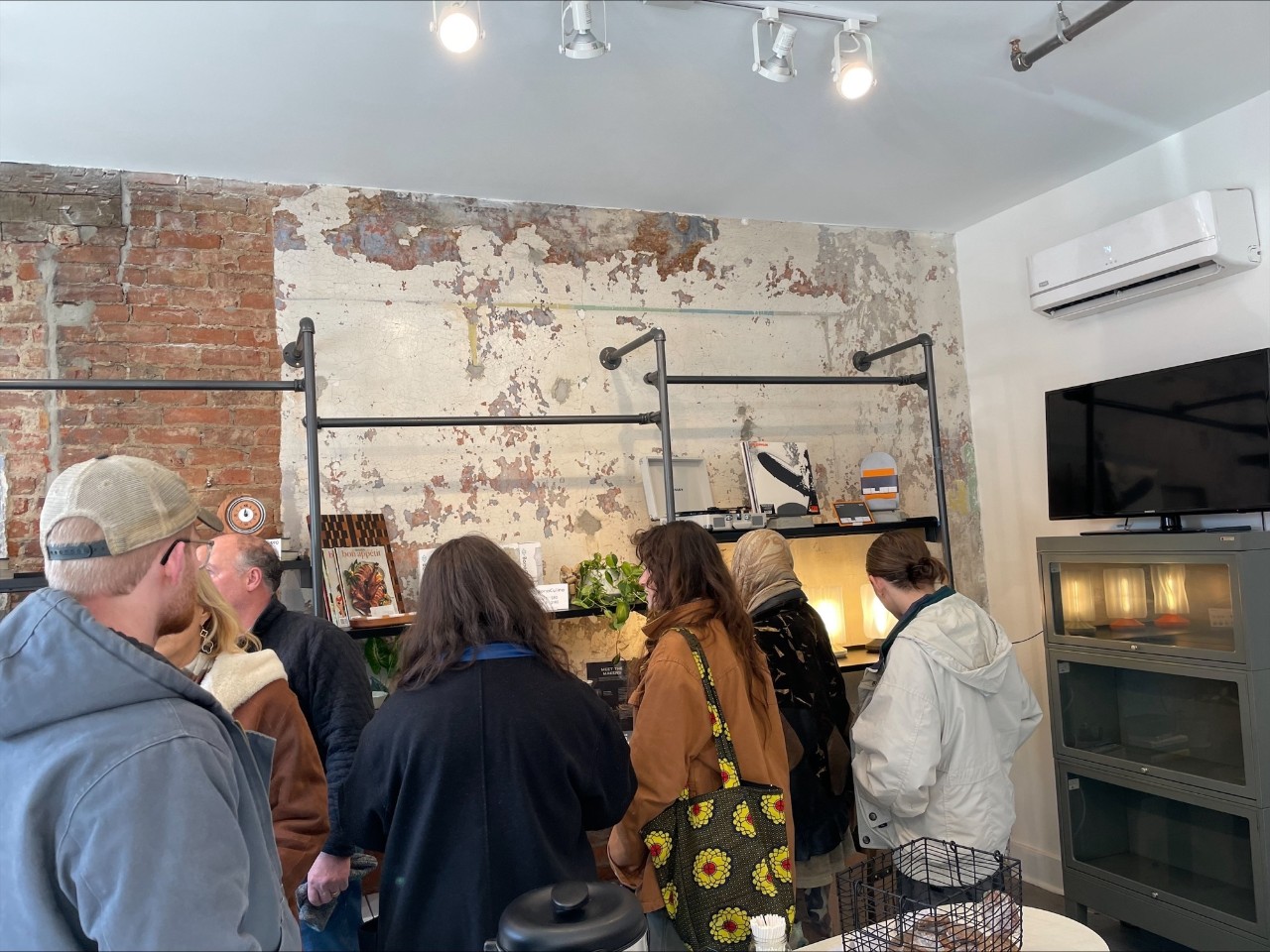
Shoppers were excited to enter the store and begin shopping. Photo/Diana Lara
Shop ADAAPT
Nine teams of 26 DAAP students from industrial and communication design are merchandising the store with unique items they’ve designed. ADAAPT will display various works that regularly rotate out with other students’ curated items. This space can be reserved by all students and alumni who are seeking to launch businesses focused on art and design.
During the ADAAPT storefront’s initial phase, students will use the space to test and refine ideas while gathering critical customer information to help scale products and projects. As ideas move past the concept phase, the 1819 Innovation Hub’s vast resources in startup knowledge through the Venture Lab, Ground Floor Makerspace and Center for Entrepreneurship will provide opportunities for company creation and idea licensing.
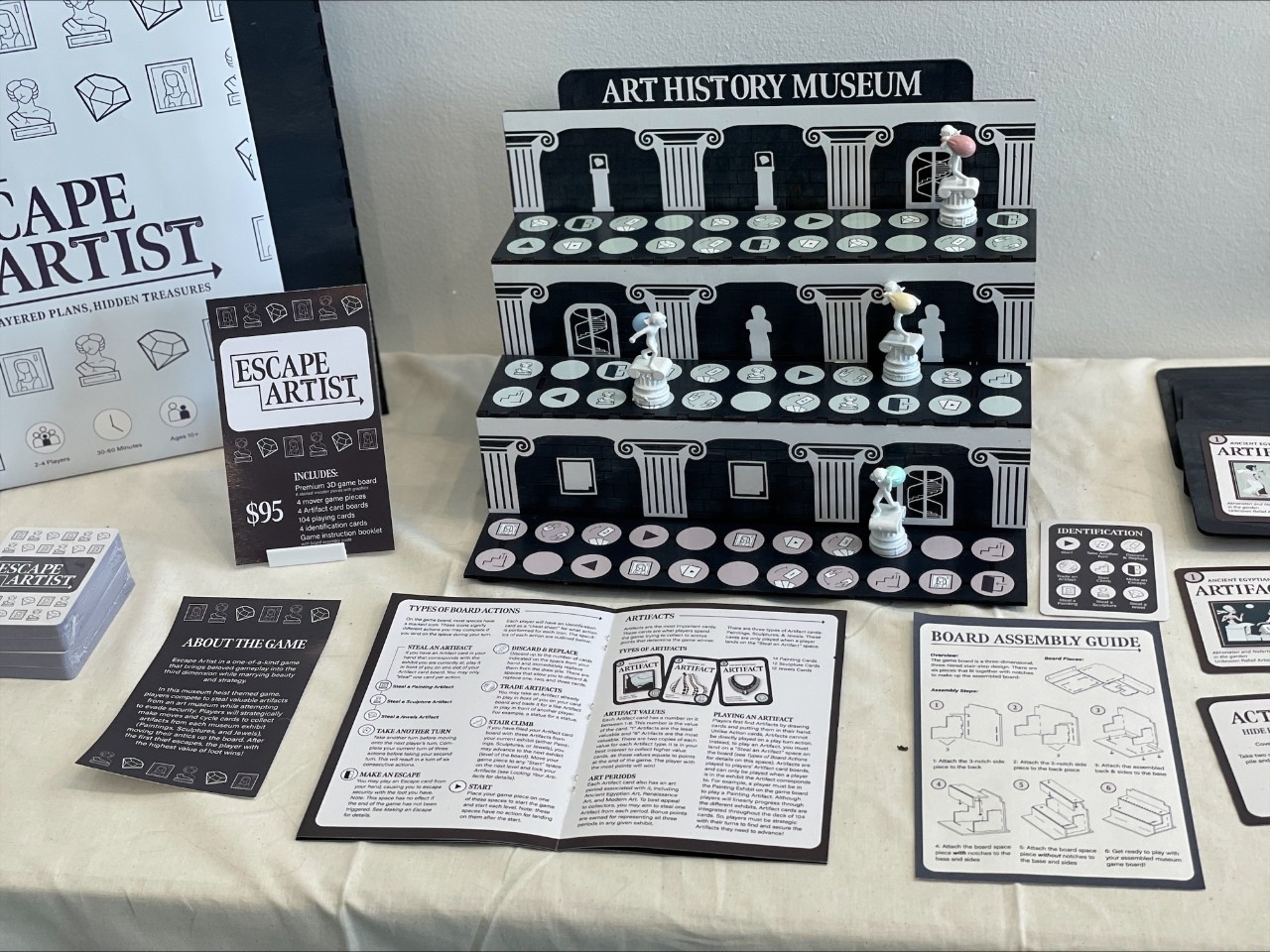
Student created items are proudly displayed for shoppers inside ADAAPT. Photo/Diana Lara
There is a sense of pride among students when customers realize these items are made by DAAP students in Cincinnati.
The DAAP-1819 collaboration is more than an academic program; it’s an economic catalyst. By providing a real-world retail platform, DAAP students are building customer bases and establishing a market presence while still in school. This gives their ventures a solid foundation to thrive as independent businesses post-graduation.
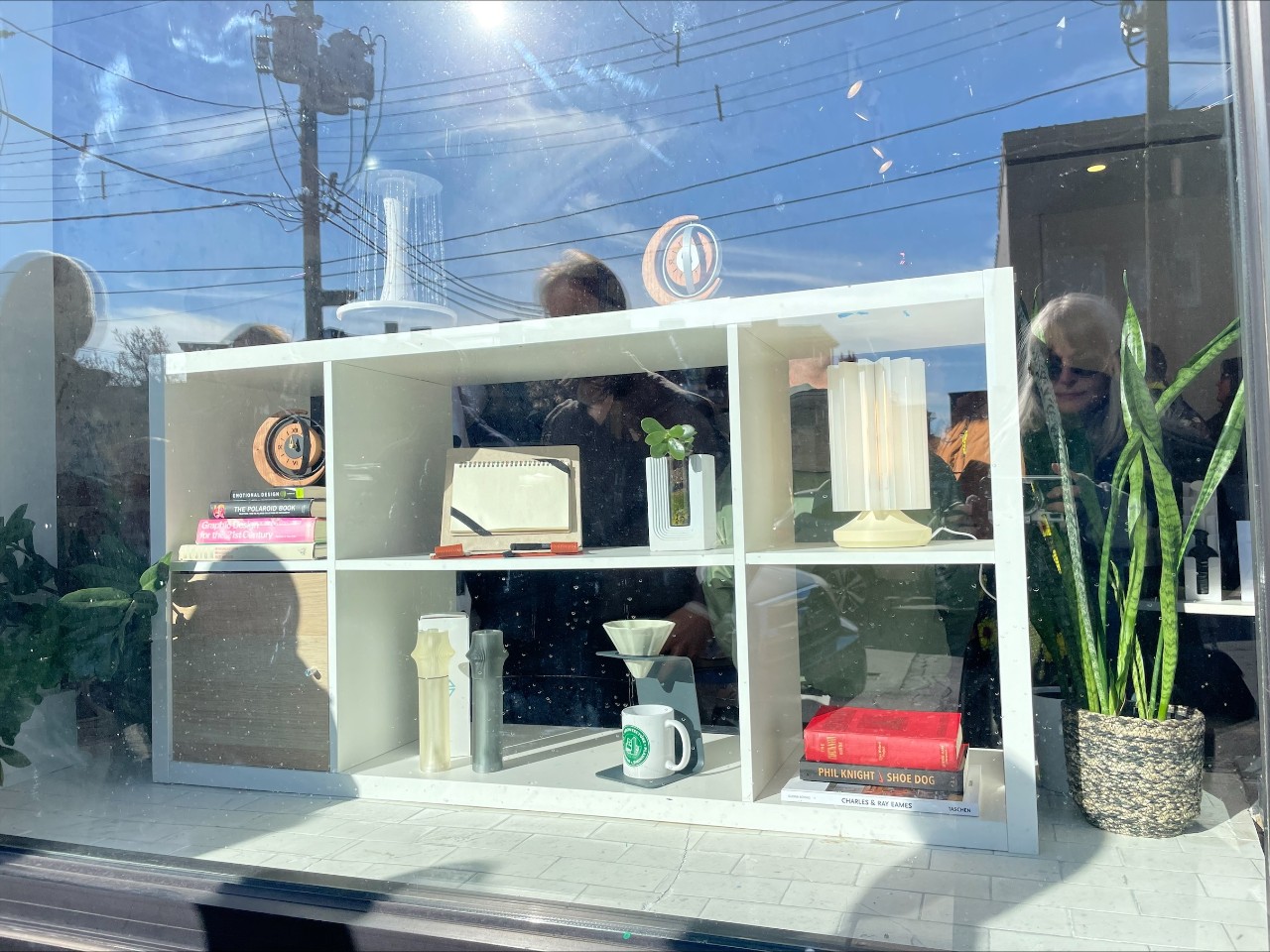
ADAAPT window display invites shoppers inside the storefront. Photo/Diana Lara
Doehler hopes the brick-and-mortar platform will evolve into a bustling marketplace of ideas that attracts investors, industry leaders and consumers alike.
“By facilitating direct connections between students and the broader market,” Doehler said, “the initiative aims to catalyze the transformation of imaginative concepts into viable businesses, fostering a new generation of design-driven entrepreneurs who will shape the future of Cincinnati's innovation ecosystem.”
Featured image at top: The ADAAPT storefront in Over-the-Rhine. Photo/Diana Lara
Innovation Lives Here
The University of Cincinnati is leading public urban universities into a new era of innovation and impact. Our faculty, staff and students are saving lives, changing outcomes and bending the future in our city's direction. Next Lives Here.
Related Stories
UC launches Bearcats Affordability Grant
January 7, 2026
The University of Cincinnati is making college more attainable for students across Ohio with the creation of the Bearcats Affordability Grant. The new grant will provide a pathway to tuition-free college for students of families who make less than $75,000 per year. Beginning in fall 2026, the Bearcats Affordability Grant will cover the remaining cost of tuition for Ohio residents who are Pell eligible.
BearcatGPT AI platform now available to all UC faculty and staff
December 9, 2025
University of Cincinnati Digital Technology Solutions is excited to announce that BearcatGPT, the university’s private, secure AI platform, is now available to all UC faculty and staff.
Sugar overload killing hearts
November 10, 2025
Two in five people will be told they have diabetes during their lifetime. And people who have diabetes are twice as likely to develop heart disease. One of the deadliest dangers? Diabetic cardiomyopathy. But groundbreaking University of Cincinnati research hopes to stop and even reverse the damage before it’s too late.