Transition clinic bridges gap in care for young people with disabilities
UC doctor, patient and mother featured in Quincy, Illinois news report

Quincy, Illinois television station WGEM highlighted the University of Cincinnati's Physical Medicine and Rehabilitation transition clinic led by Jensine’ J. Clark that helps patients like Tamia Craig move from pediatric to adult care.
Craig, 27, was born with cerebral palsy and has been in and out of hospitals her entire life. But as more patients with pediatric-onset disabilities like her live longer, they and their families can sometimes feel anxiety about moving from the pediatric care team some have known their whole lives to moving to adult care. The transition clinic helps ease this anxiety.
“Now they’re adults, now they’re 30 and 40 and maybe the pediatric setting is not the best place to care for them,” Clark, MD, assistant professor in the Department of Neurology and Rehabilitation Medicine in UC’s College of Medicine and a UC Health physician, told WGEM.
“She does need adult care because she’s got an adult body,” Tamia's mother Kristine Craig said. "[Clark] knew what things we needed to know. And it was amazing."
Another factor the transition team helps with is to make sure that the clinic is accessible to all patients, regardless of their mobility level. This means considering factors such as adjustable tables for easy transfers, wheelchair-accessible scales, and ample space for families with various seating options.
Read more about the PM&R and epilepsy transition clinics at UC.
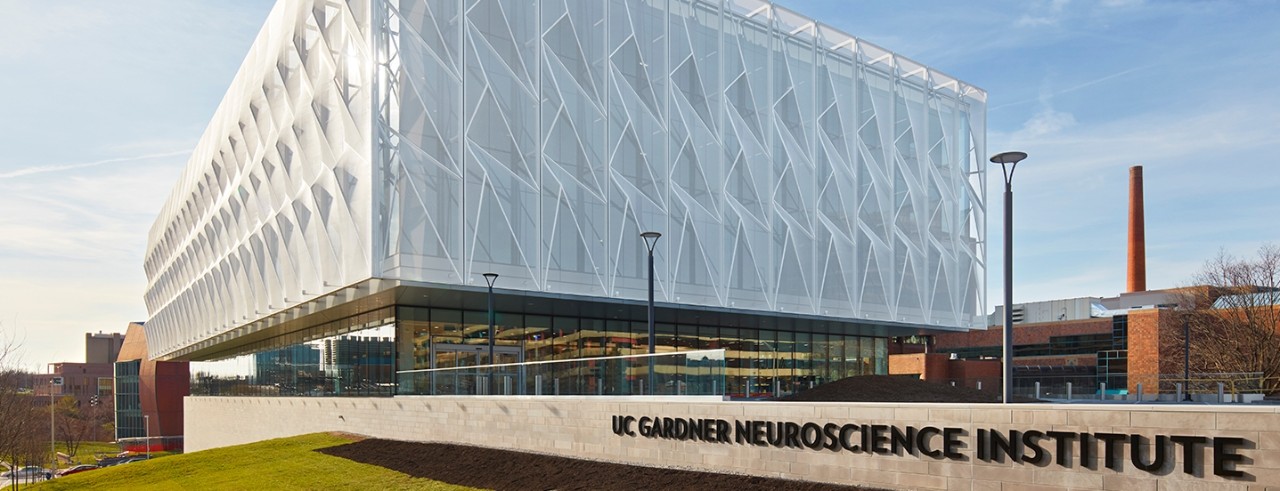
Featured photo at top of the UC Gardner Neuroscience Institute. Photo/University of Cincinnati.
Related Stories
Sugar overload killing hearts
November 10, 2025
Two in five people will be told they have diabetes during their lifetime. And people who have diabetes are twice as likely to develop heart disease. One of the deadliest dangers? Diabetic cardiomyopathy. But groundbreaking University of Cincinnati research hopes to stop and even reverse the damage before it’s too late.
Is going nuclear the solution to Ohio’s energy costs?
November 10, 2025

The Ohio Capital Journal recently reported that as energy prices continue to climb, economists are weighing the benefits of going nuclear to curb costs. The publication dove into a Scioto Analysis survey of 18 economists to weigh the pros and cons of nuclear energy. One economist featured was Iryna Topolyan, PhD, professor of economics at the Carl H. Lindner College of Business.
App turns smartwatch into detector of structural heart disease
November 10, 2025

An app that uses an AI model to read a single-lead ECG from a smartwatch can detect structural heart disease, researchers reported at the 2025 Scientific Sessions of the American Heart Association. Although the technology requires further validation, researchers said it could help improve the identification of patients with heart failure, valvular conditions and left ventricular hypertrophy before they become symptomatic, which could improve the prognosis for people with these conditions.