This Christmas, try a ‘sustainabiliTREE’
UC professor offers advice about green decorating alternatives this holiday season

Dreaming of a green Christmas? Why not try a “sustainabiliTREE?“
Americans will buy as many as 30 million live Christmas trees this holiday and another 13 million artificial ones. But University of Cincinnati Assistant Professor-Educator Teri Jacobs said there are other more sustainable options.
She teaches in UC’s School of Environment and Sustainability.

Teri Jacobs
Jacobs recommends buying a live potted tree that can be planted in the yard after the holidays.
Cut trees can still provide valuable backyard wildlife habitat after New Year’s, she said.
“It’s best if no pesticides or fertilizers were used in its production. Farms that employ agroecological safe practices safeguard water, soil, air and biodiversity,” Jacobs said.
Artificial trees have their merits if you can find one at a thrift, antique or vintage shop, she said.
“My parents gave me the tree I grew up with,” she said.
“I wouldn’t suggest buying a new artificial tree. I’m 100% against plastic. But research shows that an artificial tree that is kept for more than five years is more sustainable than cutting down a real tree each year,” she said.
While a tree is traditional, Jacobs said there are other ways to get into the holiday spirit.
“You can refuse to buy any Christmas tree and just create a festive home with crafts. This reduces consumption, pollution and waste,” she said.
And who says a Christmas tree has to be a Christmas tree? Jacobs said decorating indoor plants can be fun.
“Buy an indoor Ficus tree and decorate it!” she said. “Bonus: It will freshen your indoor air.”
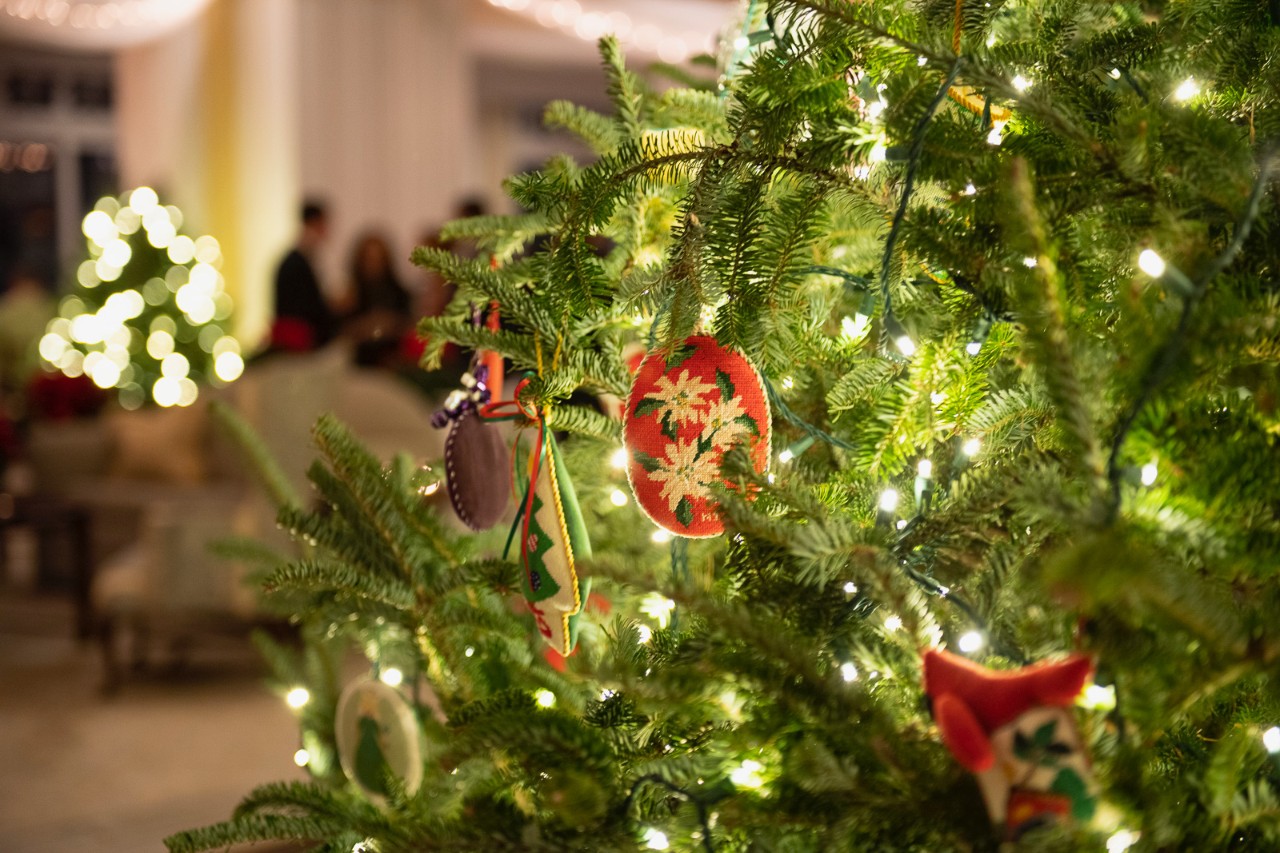
Featured image at top: 'Tis the season to make wise environmental choices, UC's Teri Jacobs says. Photo/Colleen Kelley/UC
Innovation Lives Here
The University of Cincinnati is leading public urban universities into a new era of innovation and impact. Our faculty, staff and students are saving lives, changing outcomes and bending the future in our city's direction. Next Lives Here.
Related Stories
Sugar overload killing hearts
November 10, 2025
Two in five people will be told they have diabetes during their lifetime. And people who have diabetes are twice as likely to develop heart disease. One of the deadliest dangers? Diabetic cardiomyopathy. But groundbreaking University of Cincinnati research hopes to stop and even reverse the damage before it’s too late.
Is going nuclear the solution to Ohio’s energy costs?
November 10, 2025

The Ohio Capital Journal recently reported that as energy prices continue to climb, economists are weighing the benefits of going nuclear to curb costs. The publication dove into a Scioto Analysis survey of 18 economists to weigh the pros and cons of nuclear energy. One economist featured was Iryna Topolyan, PhD, professor of economics at the Carl H. Lindner College of Business.
App turns smartwatch into detector of structural heart disease
November 10, 2025

An app that uses an AI model to read a single-lead ECG from a smartwatch can detect structural heart disease, researchers reported at the 2025 Scientific Sessions of the American Heart Association. Although the technology requires further validation, researchers said it could help improve the identification of patients with heart failure, valvular conditions and left ventricular hypertrophy before they become symptomatic, which could improve the prognosis for people with these conditions.