Cancer Center researchers study if vaccines can prevent lung cancer recurrence
WLWT highlights innovative clinical trial

WLWT highlighted a University of Cincinnati Cancer Center clinical trial exploring whether personalized mRNA vaccines are effective at reducing lung cancer recurrence.
"Cancer vaccines, vaccines to prevent cancer, have been kind of the holy grail. Can we design a vaccine to prevent cancer? That's not really quite what this trial is looking at," Jennifer Leddon, MD, Cancer Center physician researcher and assistant professor in UC's College of Medicine, told WLWT. "It's really more looking at can we prevent cancer recurrence in someone who's already had cancer? That's where the personalized comes in. They make the vaccine from your cancer. They figure out what are the vulnerabilities of your cancer that they can target."
The vaccines are developed from a patient's own surgically removed tumor. In combination with immunotherapy, doctors are seeking to train the body's immune system to fight off remaining cancer cells.
"I could absolutely envision a scenario where they use the information from this study to identify common tumor antigens that are shared across many patients," Leddon said. "Not just your individual but many patients, and design a preventative vaccine based off of that."
The trial is open for patients seeking additional treatment options for lung cancer. Patients who have localized Stage II-II B (N2) lung cancer and are candidates for surgery may qualify. Patients can call 513-585-UCCC for more information.
Read about a similar pancreatic cancer vaccine trial at the Cancer Center.
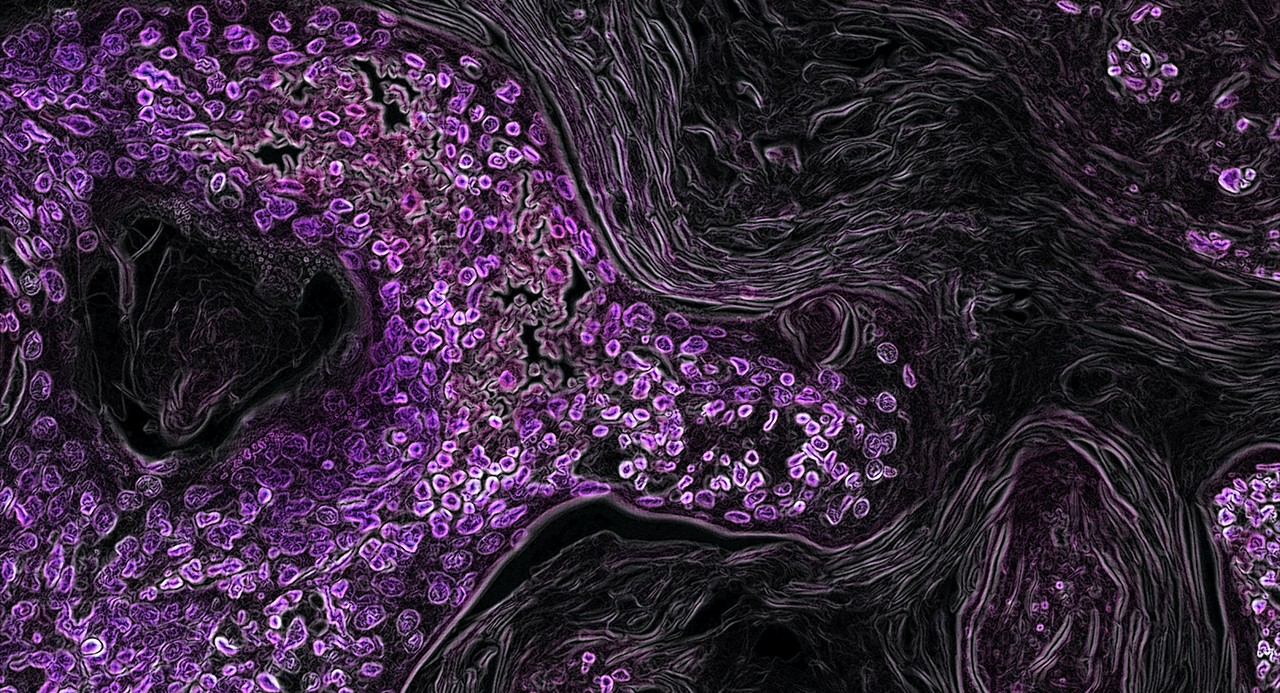
Featured image at top: KRAS-driven lung cancer cells. Created by Eric Snyder, 2015. Image used courtesy of the National Institutes of Health.
Stay connected with the Cancer Center
Interested in learning more about the University of Cincinnati Cancer Center? Keep up to date by signing up for communications and newsletters based on your specific interests. Sign up for Cancer Center communications.
Related Stories
Sugar overload killing hearts
November 10, 2025
Two in five people will be told they have diabetes during their lifetime. And people who have diabetes are twice as likely to develop heart disease. One of the deadliest dangers? Diabetic cardiomyopathy. But groundbreaking University of Cincinnati research hopes to stop and even reverse the damage before it’s too late.
Is going nuclear the solution to Ohio’s energy costs?
November 10, 2025

The Ohio Capital Journal recently reported that as energy prices continue to climb, economists are weighing the benefits of going nuclear to curb costs. The publication dove into a Scioto Analysis survey of 18 economists to weigh the pros and cons of nuclear energy. One economist featured was Iryna Topolyan, PhD, professor of economics at the Carl H. Lindner College of Business.
App turns smartwatch into detector of structural heart disease
November 10, 2025

An app that uses an AI model to read a single-lead ECG from a smartwatch can detect structural heart disease, researchers reported at the 2025 Scientific Sessions of the American Heart Association. Although the technology requires further validation, researchers said it could help improve the identification of patients with heart failure, valvular conditions and left ventricular hypertrophy before they become symptomatic, which could improve the prognosis for people with these conditions.