Portman, Manchin make case for bipartisanship in divided Congress
UC's Portman Center for Policy Solutions hosts panel discussion

The Ohio Capital Journal highlighted a panel discussion on bipartisanship in a divided Congress hosted by the University of Cincinnati's Portman Center for Policy Solutions.
UC played host to former U.S. Sen. Rob Portman, R-Ohio, and U.S. Sen. Joe Manchin III, I-W.V., to discuss ways to build consensus in a sharply divided Congress.
The center offers a fellowship program named in Portman’s honor to teach students interested in policy to pursue consensus central to Portman’s legislative career, the Ohio Capital Journal reported.
“I meet with them regularly and it’s just been great for thinking about the future of our country to be with some young people who are really bright and accomplished and committed to the mission,” Portman told the Ohio Capital Journal.
Portman and Manchin highlighted some bipartisan accomplishments of the 117th Congress on which they served between 2021-23, including legislation such as the Infrastructure law, the CHIPS and Science Act and the Electoral Count Reform Act passed after the Jan. 6 riot.
Even this year’s sharply divided Congress has been able to find some common ground. The House of Representatives this year passed bills to improve weather forecasting for wildfire conditions, cap orphaned and abandoned oil wells and pursue land use methods to improve carbon sequestration, among other bills.
“To pass meaningful legislation in a divided Congress, elected officials in the two parties must work together,” UC Associate Professor Andrew Lewis said.
Lewis is executive director of UC's Portman Center for Policy Solutions.
“Bipartisanship has become increasingly challenging, but Sen. Manchin and Sen. Portman have been leaders in crafting common ground legislation and getting it enacted,” Lewis said.
Read the Ohio Capital Journal story.
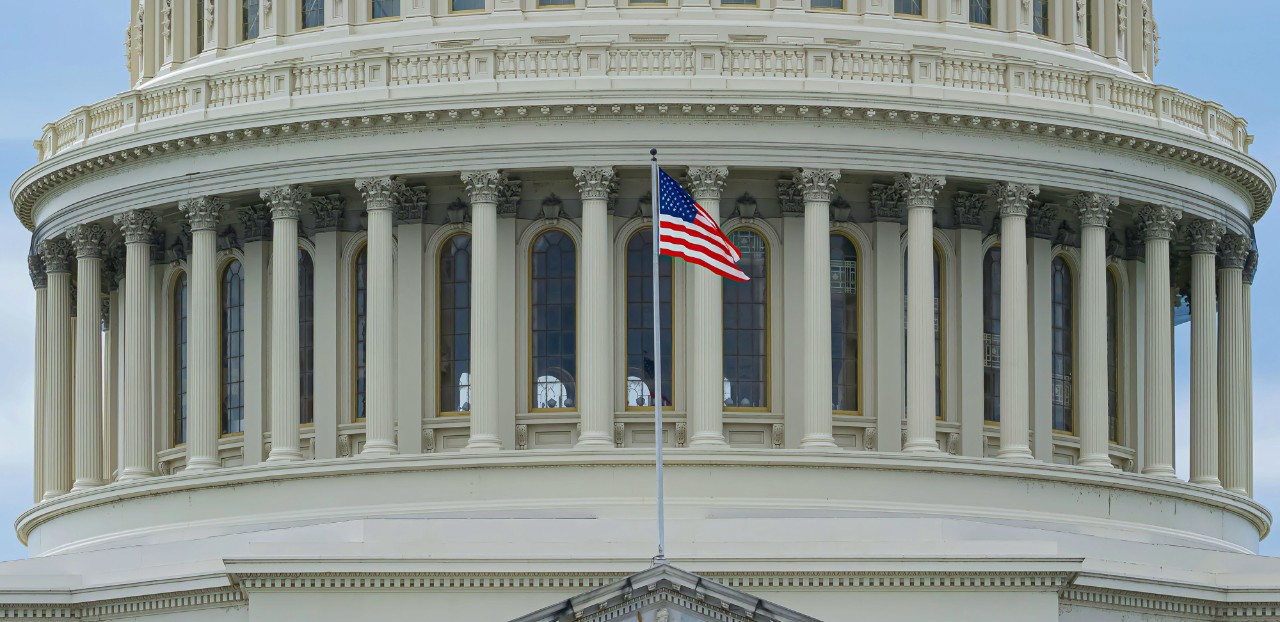
Featured image at top: UC's Portman Center for Policy Solutions hosted a panel discussion on the value of bipartisanship in Congress. Photo/Adam Michael Szuscik/Unsplash
Related Stories
Sugar overload killing hearts
November 10, 2025
Two in five people will be told they have diabetes during their lifetime. And people who have diabetes are twice as likely to develop heart disease. One of the deadliest dangers? Diabetic cardiomyopathy. But groundbreaking University of Cincinnati research hopes to stop and even reverse the damage before it’s too late.
Is going nuclear the solution to Ohio’s energy costs?
November 10, 2025

The Ohio Capital Journal recently reported that as energy prices continue to climb, economists are weighing the benefits of going nuclear to curb costs. The publication dove into a Scioto Analysis survey of 18 economists to weigh the pros and cons of nuclear energy. One economist featured was Iryna Topolyan, PhD, professor of economics at the Carl H. Lindner College of Business.
App turns smartwatch into detector of structural heart disease
November 10, 2025

An app that uses an AI model to read a single-lead ECG from a smartwatch can detect structural heart disease, researchers reported at the 2025 Scientific Sessions of the American Heart Association. Although the technology requires further validation, researchers said it could help improve the identification of patients with heart failure, valvular conditions and left ventricular hypertrophy before they become symptomatic, which could improve the prognosis for people with these conditions.