Sale-leaseback transaction contributes to Frisch’s closings
UC Real Estate Center executive director helps WCPO, WLWT and Local 12 explain what’s happening

The Frisch’s Big Boy chain could be forced to close more restaurants, which can in part be traced back to the sale-leaseback transaction by the company, University of Cincinnati Real Estate Center Executive Director Carl Goertemoeller told WCPO.

Carl Goertemoeller, UC Real Estate Center executive director
More than a dozen Frisch's locations in the Cincinnati region received eviction notices. The locations had been owned by Frisch’s but were sold as part of a sale-leaseback transaction.
“There are plenty of examples of companies who went into this type of real estate strategy with good intentions, and it just didn’t work out,” said Carl Goertemoeller, executive director of the UC Real Estate Center. “I hope that’s not the case with Frisch’s, but we’ve seen this movie before.”
While sale-leaseback arrangements give companies an influx of money up front, Goertemoeller said they can be risky as they require annual rent increases that make it harder for companies to adapt to rising food, energy and labor costs.
“If you own the real estate, that gives you control,” he said to WCPO. “If you have an underperforming location, it gives you the ability to monetize it by selling it. And it allows you as an ongoing enterprise to avoid having to pay rent.”
In the early 2000s, sale-leaseback agreements were popular with some department stores, Goertemoeller told Local 12.
“Generally speaking, they didn’t turn out well,” he said.
Even if some of the restaurants have done well financially, their rent payments have been collectively tied together. Thus, the financial problems have cascaded.
“They can’t pay their rent,” Goertemoller told WLWT. "It was a blanket rent payment, so one rent payment. It was not individual rent payments on individual locations.”
Read more:
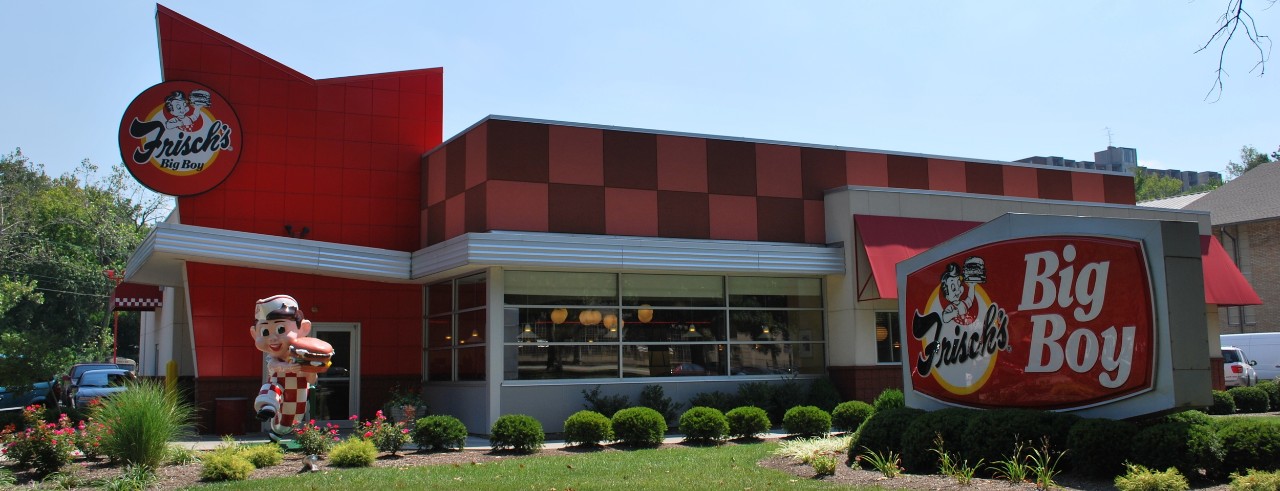
Featured image at top: A Frisch’s Big Boy restaurant. Photo/Lisa Britton/UC Marketing + Brand
Impact Lives Here
The University of Cincinnati is leading public urban universities into a new era of innovation and impact. Our faculty, staff and students are saving lives, changing outcomes and bending the future in our city's direction. Next Lives Here.
Related Stories
UC launches Bearcats Affordability Grant
January 7, 2026
The University of Cincinnati is making college more attainable for students across Ohio with the creation of the Bearcats Affordability Grant. The new grant will provide a pathway to tuition-free college for students of families who make less than $75,000 per year. Beginning in fall 2026, the Bearcats Affordability Grant will cover the remaining cost of tuition for Ohio residents who are Pell eligible.
Lindner graduate students shine in international simulation competition
November 10, 2025
Five master’s of information systems (MS IS) students took home fifth place out of 23 universities at the International ERPsim Competition hosted by HEC Montreal during the recent spring semester. The competition tests students’ knowledge of enterprise resource planning (ERP) software and their ability to adapt to challenging business problems.
Sugar overload killing hearts
November 10, 2025
Two in five people will be told they have diabetes during their lifetime. And people who have diabetes are twice as likely to develop heart disease. One of the deadliest dangers? Diabetic cardiomyopathy. But groundbreaking University of Cincinnati research hopes to stop and even reverse the damage before it’s too late.