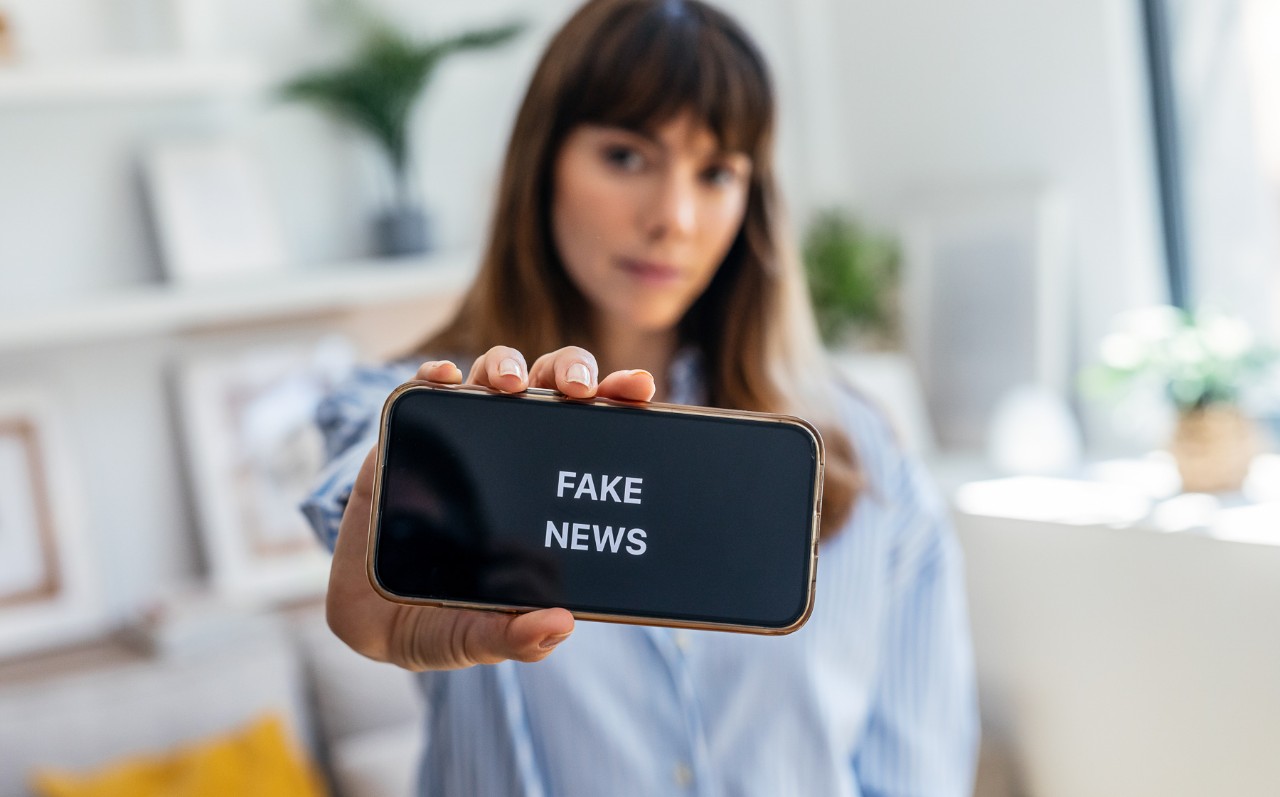
Fake news headlines are going viral. What to know
UC journalism professor tells CBS News that education in media literacy could be the answer

CBS News turned to a University of Cincinnati journalism professor to explain why so much online content is fabricated for the express purpose of deceiving people.
UC College of Arts and Sciences Professor Jeffrey Blevins told CBS News that fake headlines are being shared by influencers and politicians who either don't check the veracity of the content or simply don't care if it's bogus.
CBS News identified fake headlines purporting to be from outlets including the Atlantic, the New York Times, the Associated Press, CNN and local news sites. The headlines referenced the 2024 campaign, aid for Ukraine, the 2024 Paris Olympics and other subjects.
Elon Musk, owner of the site X formerly known as Twitter, posted a fake news headline claiming to be from the Daily Telegraph promoting a conspiracy theory that England was building a detention camp for rioters on the Falkland Islands. Musk eventually deleted the inflammatory post but not before it was viewed by more than 1.7 million people, CBS News said.
“The real problem is when elected officials, politicians, celebrities, influencers start reposting this stuff,” Blevins told CBS News. “That gives it real credibility, and quite frankly, they should know better. I think many of them do, they just don't care.”
Blevins said the remedy is media literacy starting in gradeschool to help consumers identify propaganda and unfounded conspiracy theories so they can recognize when they are being manipulated by social media.
“When you go online, there's just this firehose of information out there,” Blevins said. “I think we need real serious media literacy education that starts a lot sooner, that starts in K-12.”
Blevins is the co-author of the 2024 book “Social Media and Digital Politics: Networked Reason in an Age of Digital Emotion.”
Blevins told CBS News there are relatively easy ways for social media users to tell the provenance and veracity of news headlines:
- See if the suspicious headline shared on social media appears on the news outlet's website.
- Be wary of language used to inflame emotions or stir outrage.
- Check to see if the news was reported by other credible outlets.
Featured image at top: UC journalism Professor Jeffrey Blevins says media literacy could help inoculate social media users against conspiracy theories and propaganda. Photo/iStockPhoto

UC College of Arts and Sciences Professor Jeffrey Blevins teaches in the Department of Journalism and the School of Public and International Affairs. Photo/Andrew Higley/UC Marketing + Brand
Related Stories
Sugar overload killing hearts
November 10, 2025
Two in five people will be told they have diabetes during their lifetime. And people who have diabetes are twice as likely to develop heart disease. One of the deadliest dangers? Diabetic cardiomyopathy. But groundbreaking University of Cincinnati research hopes to stop and even reverse the damage before it’s too late.
Is going nuclear the solution to Ohio’s energy costs?
November 10, 2025

The Ohio Capital Journal recently reported that as energy prices continue to climb, economists are weighing the benefits of going nuclear to curb costs. The publication dove into a Scioto Analysis survey of 18 economists to weigh the pros and cons of nuclear energy. One economist featured was Iryna Topolyan, PhD, professor of economics at the Carl H. Lindner College of Business.
App turns smartwatch into detector of structural heart disease
November 10, 2025

An app that uses an AI model to read a single-lead ECG from a smartwatch can detect structural heart disease, researchers reported at the 2025 Scientific Sessions of the American Heart Association. Although the technology requires further validation, researchers said it could help improve the identification of patients with heart failure, valvular conditions and left ventricular hypertrophy before they become symptomatic, which could improve the prognosis for people with these conditions.