UC Blue Ash receives largest grant in school history
The University of Cincinnati Blue Ash College has received a record-setting grant from the U.S. Department of Education.
The college was recently awarded $2.2 million through the Title III Part A Strengthening Institutions grant. The funding will be spread over the next five years with the goal of increasing student retention and graduation rates through additional support for programs in allied health, career services, information technology and nursing. It is the largest grant in the college’s history.

The grant will provide funding for enhancements to the Nursing Simulation Lab on the UC Blue Ash campus. Photo/UC Blue Ash College.
“Securing this grant is a huge development for our students and our college,” said UC Blue Ash Dean Robin Lightner, PhD. “It allows us to enhance the technology, education and support we provide for our students while also adding new faculty and staff. As we share the positive results we generate through this grant, it certainly improves our chances of being awarded additional federal grants to support educational opportunities at our college.”

New faculty will be added through funding from the grant to keep up with enrollment growth in programs like information technology. Photo/UC Blue Ash College.
There is always strong competition for the Title III Part A Strengthening Institutions grant. Only about 20% of the proposals submitted by colleges and universities across the U.S. are awarded funding. UC Blue Ash focused its proposal on supporting programs that lead to in-demand careers. The grant will provide funding for the following initiatives at the college:
- Hiring new instructors in biology and information technology, along with an additional staff member for career services.
- Adding approximately $100,000 in new equipment for the Nursing Simulation Lab that provides hands-on experience for nursing students.
- Purchasing access to the NCLEX prep course for nursing students in advance of their licensing exam.
- Purchasing new equipment for the medical assisting and radiologic technology programs.
- Hiring a grant administrator to manage this grant and build the capacity for awards like this.
- Purchasing a passenger van that will be used for class field trips and student outings.
UC Blue Ash offers more than 50 academic programs and serves more than 5,000 students, with the majority coming from the Greater Cincinnati region. It has the most diverse student body among UC’s colleges, and nearly half of its students are the first in their family to attend college.
You can learn more about the Title III Part A Strengthening Institutions grant on the Department of Education website.
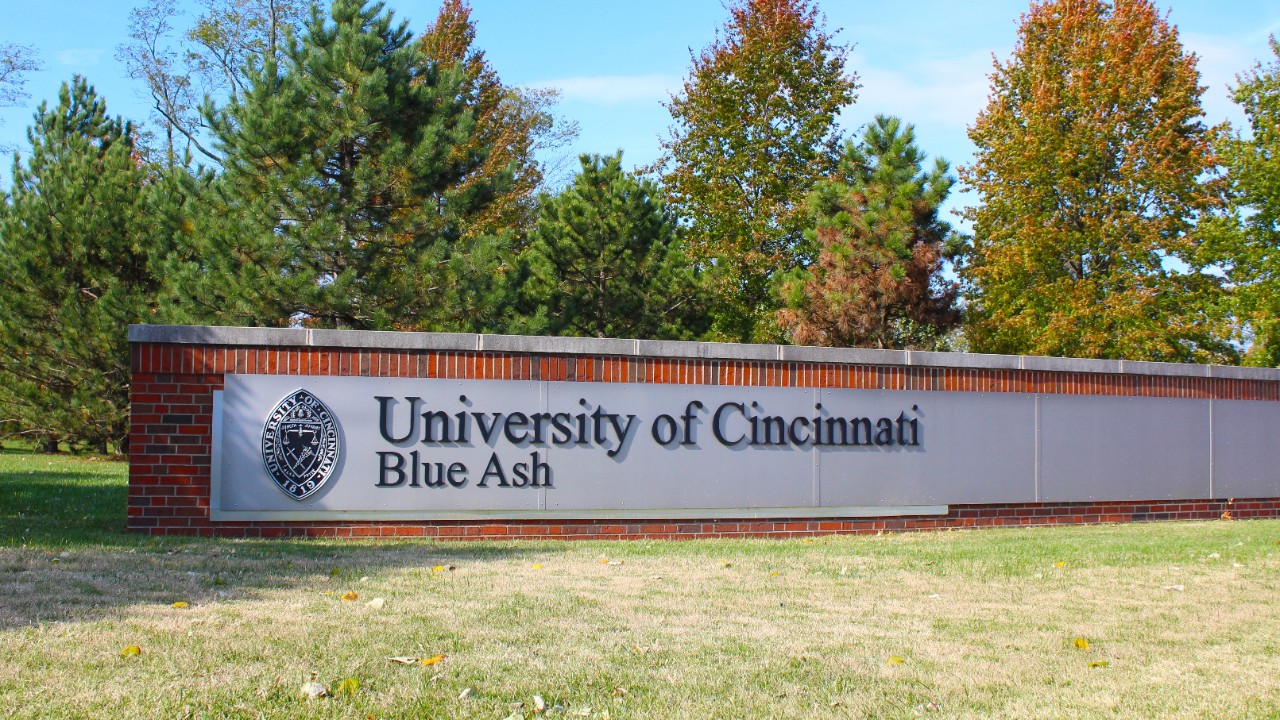
Featured photo: UC Blue Ash College campus sign.
About UC Blue Ash College
UC Blue Ash College is a regional college within the University of Cincinnati. It offers one of the best values in higher education with access to a nationally recognized UC education in more than 50 degree and certificate programs, as well as tuition that is about half of most colleges and universities. The college is located on a scenic 135-acre wooded campus in the heart of Blue Ash, Ohio. To learn more, call 513-558-9495, visit us online, like us on Facebook or follow us on Twitter and Instagram.
Related Stories
Sugar overload killing hearts
November 10, 2025
Two in five people will be told they have diabetes during their lifetime. And people who have diabetes are twice as likely to develop heart disease. One of the deadliest dangers? Diabetic cardiomyopathy. But groundbreaking University of Cincinnati research hopes to stop and even reverse the damage before it’s too late.
App turns smartwatch into detector of structural heart disease
November 10, 2025

An app that uses an AI model to read a single-lead ECG from a smartwatch can detect structural heart disease, researchers reported at the 2025 Scientific Sessions of the American Heart Association. Although the technology requires further validation, researchers said it could help improve the identification of patients with heart failure, valvular conditions and left ventricular hypertrophy before they become symptomatic, which could improve the prognosis for people with these conditions.
Combination immunotherapy helps overcome melanoma treatment resistance
November 10, 2025

MSN highlighted research led by the University of Cincinnati Cancer Center's Trisha Wise-Draper showing a combination of immunotherapy medications can activate a robust immune response and help overcome treatment resistance in patients with refractory melanoma.