Is your garden in need of drought relief?
UC biology professor takes listener questions on WVXU

WVXU's Cincinnati Edition invited a University of Cincinnati biologist onto its gardening program to field listener questions about this summer's regional drought and invasive species.
UC College of Arts and Sciences Professor Theresa Culley is an expert on invasive species and is an avid gardener.
She told host Lucy May about a new project she is leading to organize public gardens into an early warning network for emerging nonnative, invasive species. So far she has organized a collection of more than 50 public gardens across North America to share expertise about potentially problematic plants that they are observing.
According to the U.S. Department of Agriculture, the costs of eliminating invasive species get exponentially greater once the plants become well established. If gardens can warn property owners earlier, they might be able to stem their spread before they can take hold, she said.
Culley helps states such as Ohio identify invasive plants that pose a threat to the economy, the environment or agriculture.
“We really need to know what plants are rising up to be a problem. Plants like Amur honeysuckle are already a huge problem that take a lot of time and effort to remove,” she said.
Culley said experts who maintain public gardens often are the first to notice nonnative plants that one day could become problematic.
Culley was joined on the show by Turner Farm Community Garden program director Peter Huttinger and Jon Butcher, CEO of Madison Tree Care & Landscaping.
Listen to the Cincinnati Edition episode.
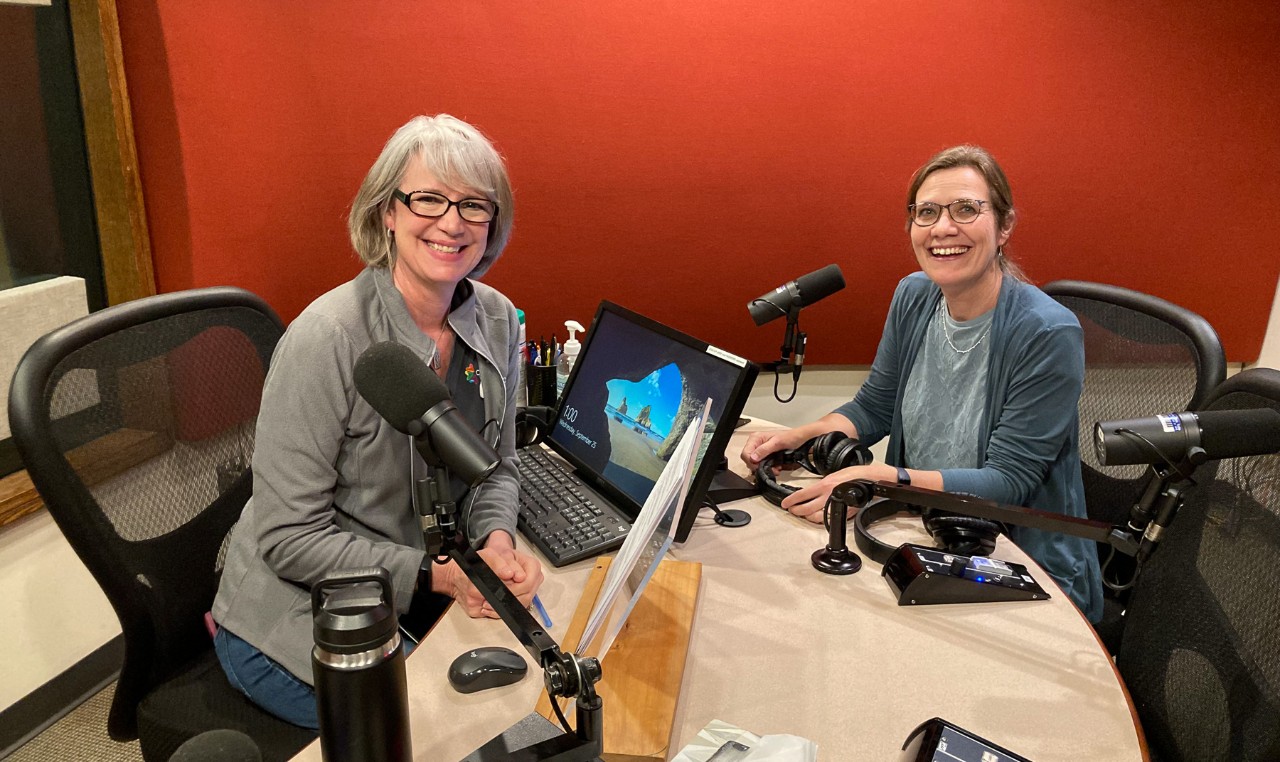
Featured image at top: WVXU Cincinnati Edition host Lucy May, left, and UC Professor Theresa Culley sit in the WVXU studio. Photo/Michael Miller
Related Stories
Sugar overload killing hearts
November 10, 2025
Two in five people will be told they have diabetes during their lifetime. And people who have diabetes are twice as likely to develop heart disease. One of the deadliest dangers? Diabetic cardiomyopathy. But groundbreaking University of Cincinnati research hopes to stop and even reverse the damage before it’s too late.
Is going nuclear the solution to Ohio’s energy costs?
November 10, 2025

The Ohio Capital Journal recently reported that as energy prices continue to climb, economists are weighing the benefits of going nuclear to curb costs. The publication dove into a Scioto Analysis survey of 18 economists to weigh the pros and cons of nuclear energy. One economist featured was Iryna Topolyan, PhD, professor of economics at the Carl H. Lindner College of Business.
App turns smartwatch into detector of structural heart disease
November 10, 2025

An app that uses an AI model to read a single-lead ECG from a smartwatch can detect structural heart disease, researchers reported at the 2025 Scientific Sessions of the American Heart Association. Although the technology requires further validation, researchers said it could help improve the identification of patients with heart failure, valvular conditions and left ventricular hypertrophy before they become symptomatic, which could improve the prognosis for people with these conditions.