Styrene and its health, environmental impacts
Two UC experts work to inform public after chemical leak from train car

Some residents of Whitewater Township, Ohio were ordered to evacuate their homes on Sept. 24, 2024 after a leak of the chemical styrene.
The leak came from a rail car in the area of U.S. 50 and S.R. 128.
Styrene is a common industrial chemical. It's used in fiberglass and rubber. When it's in its gas form, experts say it can be difficult to contain. It also can be dangerous to humans.
Glenn Talaska, PhD, professor emeritus in the Department of Environmental and Public Health Sciences at the University of Cincinnati College of Medicine, said if people are exposed to styrene, it can cause "narcotic-like symptoms."
Those symptoms can be similar to what it's like to be intoxicated from alcohol. Additionally, styrene exposure can lead to headaches, nausea and respiratory issues.
"That effect is reversible as you breathe out the styrene. When exposure goes down, those effects will go away, much like it goes away for alcohol," Talaska told WKRC-TV.
Jun Wang, PhD, program director and associate professor of environmental and industrial hygiene in the Department of Environmental and Public Health Sciences at the University of Cincinnati College of Medicine, shared his expertise on WLWT-TV and WCPO-TV.
"You will feel dizzy, you'll feel like some sort of drunken use, and it attacks your nervous system, which is your brain," said Wang.
He said styrene can cause irritation to the eyes and nose.
Wang said vulnerable populations, including pregnant women, the elderly and those with respiratory issues, are advised to talk to a doctor if they have been exposed.
Talaska also said there are ways to monitor a person's exposure. Those exposed would have traces of it in their urine for a period of time, which would help doctors pinpoint how high the levels were in a person's system.
Wang explained to WKRC-TV how such a leak could have happened in the first place. He said a stabilizer is necessary to prevent styrene from overheating.
"It usually lasts for several months, if you add them. So, it will make sure the styrene won’t go through this self-polymerization during transportation. However, there’s a timeline attached to that, so you have to replenish it every three months or shorter. It depends on the situation," he said.
Wang suggested the additive might have expired or was insufficient.
"My educational guess with this is that the additive either expired, or there’s not sufficient enough additive that's making styrene stable," said Wang.
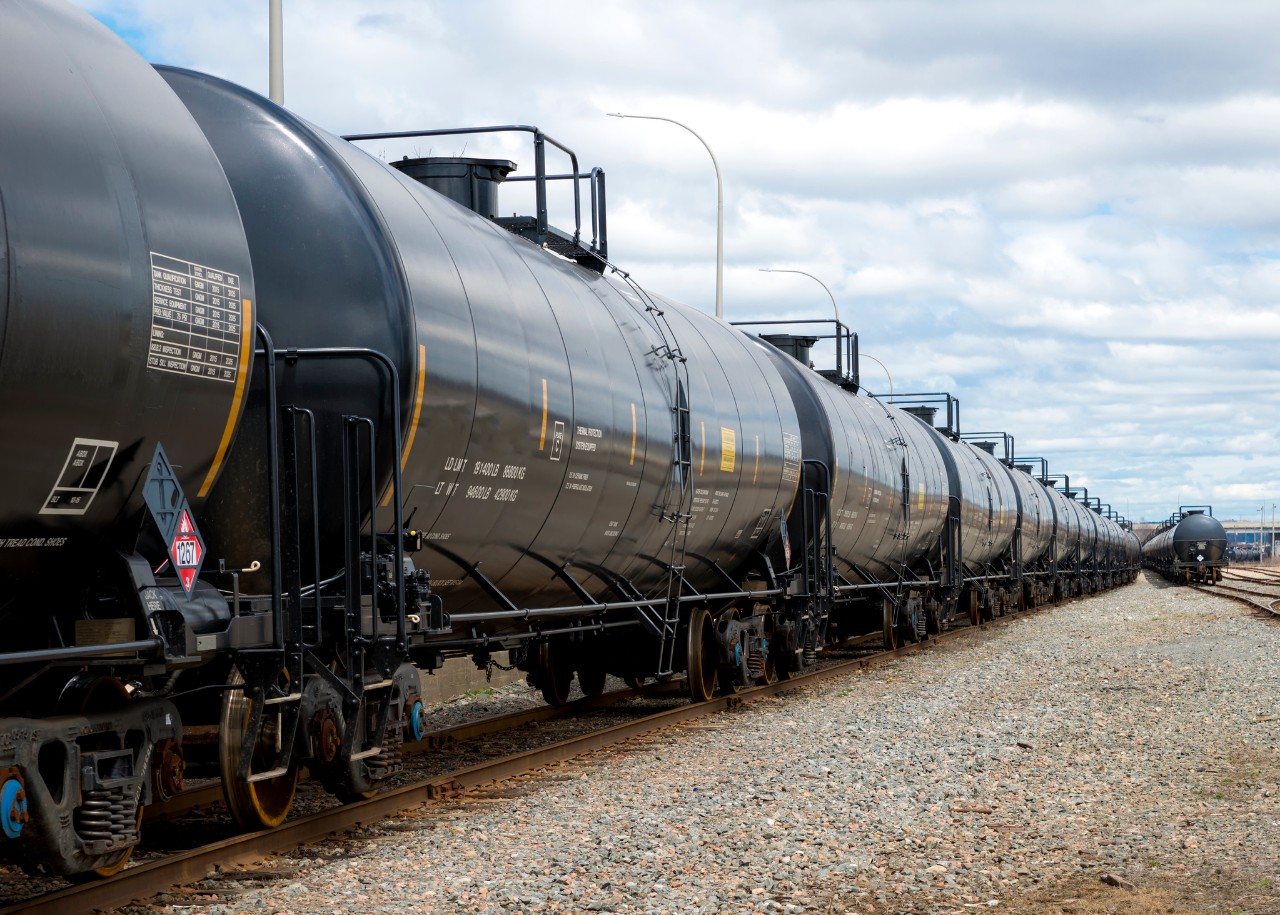
Featured image at top: Stock image of line of train cars in rail yard. Photo: istock/madsci
Related Stories
Sugar overload killing hearts
November 10, 2025
Two in five people will be told they have diabetes during their lifetime. And people who have diabetes are twice as likely to develop heart disease. One of the deadliest dangers? Diabetic cardiomyopathy. But groundbreaking University of Cincinnati research hopes to stop and even reverse the damage before it’s too late.
Is going nuclear the solution to Ohio’s energy costs?
November 10, 2025

The Ohio Capital Journal recently reported that as energy prices continue to climb, economists are weighing the benefits of going nuclear to curb costs. The publication dove into a Scioto Analysis survey of 18 economists to weigh the pros and cons of nuclear energy. One economist featured was Iryna Topolyan, PhD, professor of economics at the Carl H. Lindner College of Business.
App turns smartwatch into detector of structural heart disease
November 10, 2025

An app that uses an AI model to read a single-lead ECG from a smartwatch can detect structural heart disease, researchers reported at the 2025 Scientific Sessions of the American Heart Association. Although the technology requires further validation, researchers said it could help improve the identification of patients with heart failure, valvular conditions and left ventricular hypertrophy before they become symptomatic, which could improve the prognosis for people with these conditions.