Fall can be prime time of year for sinus suffering
UC expert offers insight on local news about how to ease misery

The fall season can be a prime time of year for sinus suffering, but Ahmad Sedaghat, MD, PhD, FACS, said it doesn't have to be that way.
Sedaghat is a professor of otolaryngology in the UC College of Medicine. He is also director of the division of rhinology, allergy and anterior skull base surgery. He is an internationally recognized expert on chronic rhinosinusitis and allergies.
Sedaghat recently appeared on WXIX-TV/Fox 19 NOW News at 9 a.m. to explain why this time of year can trigger symptoms for so many people and discuss ways to relieve suffering.
He explained that the Ohio River Valley has high levels of ragweed, which release pollen during the early fall. That can trigger symptoms.
"The no. 1 factor related to causing allergy symptoms is exposure to the allergens. So, the more that we can do to avoid exposure, the better off we're going to be," said Sedaghat.
He also said if symptoms don't improve with standard, over-the-counter medications, then a person should see a doctor.
Click here to watch the entire interview involving Sedaghat.
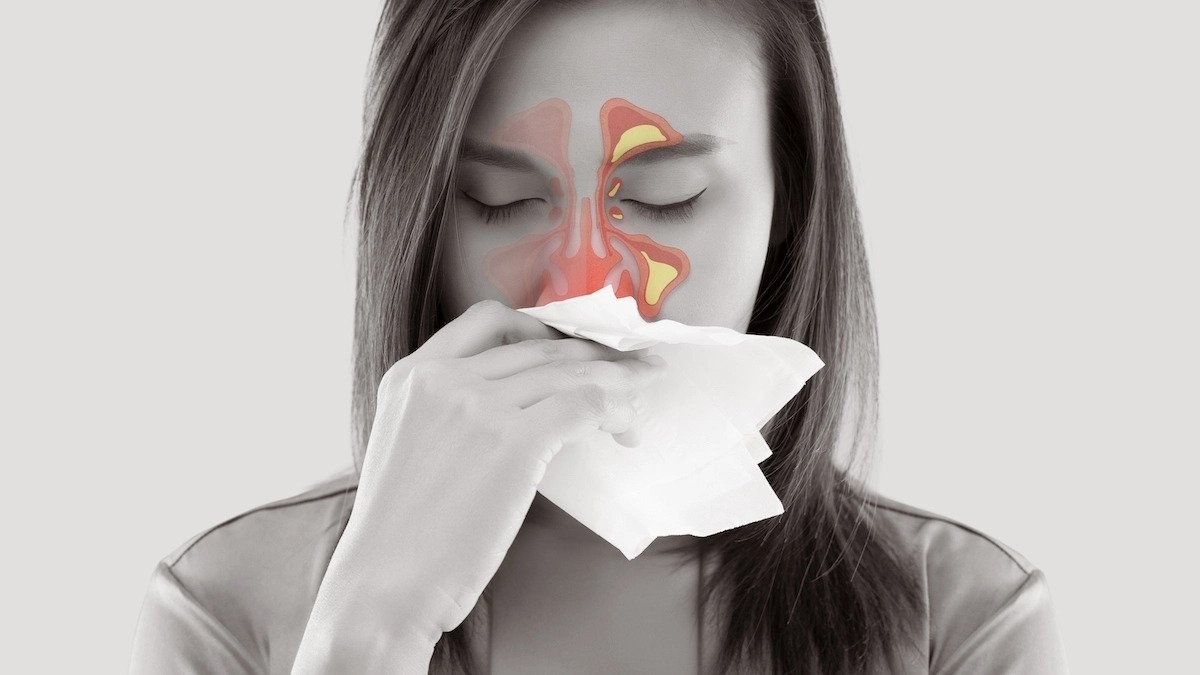
Featured image at top: Illustration of woman with inflamed sinuses blowing her nose. Image/Provided.
Related Stories
Sugar overload killing hearts
November 10, 2025
Two in five people will be told they have diabetes during their lifetime. And people who have diabetes are twice as likely to develop heart disease. One of the deadliest dangers? Diabetic cardiomyopathy. But groundbreaking University of Cincinnati research hopes to stop and even reverse the damage before it’s too late.
Is going nuclear the solution to Ohio’s energy costs?
November 10, 2025

The Ohio Capital Journal recently reported that as energy prices continue to climb, economists are weighing the benefits of going nuclear to curb costs. The publication dove into a Scioto Analysis survey of 18 economists to weigh the pros and cons of nuclear energy. One economist featured was Iryna Topolyan, PhD, professor of economics at the Carl H. Lindner College of Business.
App turns smartwatch into detector of structural heart disease
November 10, 2025

An app that uses an AI model to read a single-lead ECG from a smartwatch can detect structural heart disease, researchers reported at the 2025 Scientific Sessions of the American Heart Association. Although the technology requires further validation, researchers said it could help improve the identification of patients with heart failure, valvular conditions and left ventricular hypertrophy before they become symptomatic, which could improve the prognosis for people with these conditions.