Nationwide map shows area's risks of landslides
UC geosciences professor talks to WVXU about local examples

WVXU highlighted a new national map that identifies the greatest risk of landslides in every state.
University of Cincinnati geologist Daniel Sturmer helped the U.S. Geological Survey assemble the map from data he collected from more than 700 landslides in Nevada, where they pose a major threat to some populated areas.
“It's important to know where you've had landslides, because that can tell you where you will have landslides again,” Sturmer told WVXU.
Some of the hills around Cincinnati present a landslide threat as happened in 2019 when transportation officials had to close parts of Columbia Parkway.
The highest landslide risks are in the western United States and the Appalachians. But Sturmer said the risks are not limited to mountain areas.
“Generally landslides don't just happen out of the blue with no initial indicators,” Sturmer said. “If you can learn those warning signs and learn to look for them, then you can hopefully contact somebody, and bring somebody out who can help mitigate it before it's a catastrophe.”
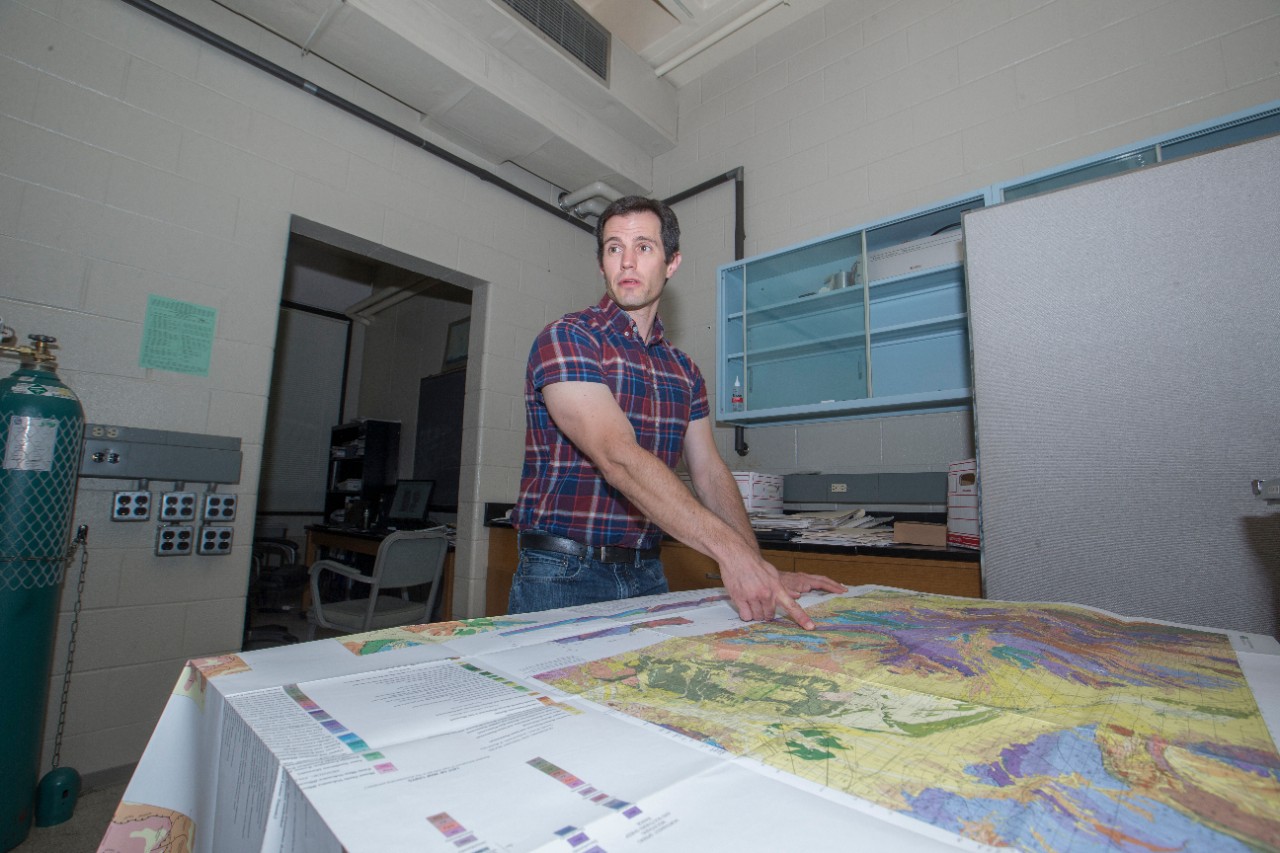
Featured image at top: UC Associate Professor Daniel Sturmer studies landslides in the Department of Geosciences. Photo/Joseph Fuqua II/UC

The U.S. Geological Survey released a new map identifying areas at greatest risk of landslides across the United States. Illustration/USGS
Related Stories
Sugar overload killing hearts
November 10, 2025
Two in five people will be told they have diabetes during their lifetime. And people who have diabetes are twice as likely to develop heart disease. One of the deadliest dangers? Diabetic cardiomyopathy. But groundbreaking University of Cincinnati research hopes to stop and even reverse the damage before it’s too late.
Is going nuclear the solution to Ohio’s energy costs?
November 10, 2025

The Ohio Capital Journal recently reported that as energy prices continue to climb, economists are weighing the benefits of going nuclear to curb costs. The publication dove into a Scioto Analysis survey of 18 economists to weigh the pros and cons of nuclear energy. One economist featured was Iryna Topolyan, PhD, professor of economics at the Carl H. Lindner College of Business.
App turns smartwatch into detector of structural heart disease
November 10, 2025

An app that uses an AI model to read a single-lead ECG from a smartwatch can detect structural heart disease, researchers reported at the 2025 Scientific Sessions of the American Heart Association. Although the technology requires further validation, researchers said it could help improve the identification of patients with heart failure, valvular conditions and left ventricular hypertrophy before they become symptomatic, which could improve the prognosis for people with these conditions.