Study combines data, molecular simulations to accelerate drug discovery
New research involving the UC College of Medicine may lead to finding effective therapies faster

Researchers from the University of Cincinnati College of Medicine and Cincinnati Children’s Hospital have found a new method to increase both speed and success rates in drug discovery.
The study, published Aug. 30 in the journal Science Advances, offers renewed promise when it comes to discovering new drugs.
“The hope is we can speed up the timeline of drug discovery from years to months,” said Alex Thorman, PhD, co-first author and a postdoctoral fellow in the Department of Environmental and Public Health Sciences in the College of Medicine.
Researchers combined two approaches for screening potential new drugs. First, they used a database from the Library of Integrated Network-based Cellular Signatures (LINCS) to screen tens of thousands of small molecules with potential therapeutic effects simultaneously. Then they combined the search with targeted docking simulations used to model the interaction between small molecules and their protein targets to find compounds of interest. That sped up the timing of the work from months to minutes — taking weeks of work required for initial screening down to an afternoon.
“Accuracy will only improve, hopefully offering new hope to many people who have diseases with no known cure, including those with cancer."
Alex Thorman, PhD Co-first author and postdoctoral fellow
Thorman said this faster screening method for compounds that could become drugs accelerates the drug research process. But it’s not only speed that is crucial.
He added that this newer approach is more efficient at identifying potentially effective compounds.
“And the accuracy will only improve, hopefully offering new hope to many people who have diseases with no known cure, including those with cancer,” Thorman said.
It can also create more targeted treatment options in precision medicine, an innovative approach to tailoring disease prevention and treatment that takes into account differences in people's genes, environments and lifestyles.
“An accelerated drug discovery process also could be a game changer in the ability to respond to public health crises, such as the COVID-19 pandemic,” said Thorman. “The timeline for developing effective drugs could be expedited.”
“As we know from COVID-19 research, mere detection of a pathogen doesn't mean it can cause infection,” she said. “The microbe should be live or viable to cause an infection.”
Researchers will also study the effectiveness of the current control measures, which include regular testing of admitted patients, periodic disinfection and high air exchange rates within the hospital. They will also study the effectiveness of alternate methods of inactivating MRSA, such as UVC light sterilizers, disinfectant sprays and air purifiers.
Shankar explained that if researchers discover that MRSA is live, they will follow protocols to disinfect the air and make recommendations to further enhance workplace safety.
“Our team will also seek input from hospital workers about current protocols and potential changes in the future,” she said. “We expect existing policies to minimize the risk of MRSA exposure to workers and patients. Our study gives an added layer of confidence that the risk of exposure to MRSA is minimal to none in their units.”
The study team includes Jagjit Yadav, PhD, from the Department of Environmental and Public Health Sciences; Vivek Narendran, MD, in the Division of Neonatology in the Department of Pediatrics and a Cincinnati Children’s Hospital physician; Elizabeth Bien in the College of Nursing; and industry collaborator Arantzazu Eiguren-Fernandez, senior research chemist at Aerosol Dynamics Inc.
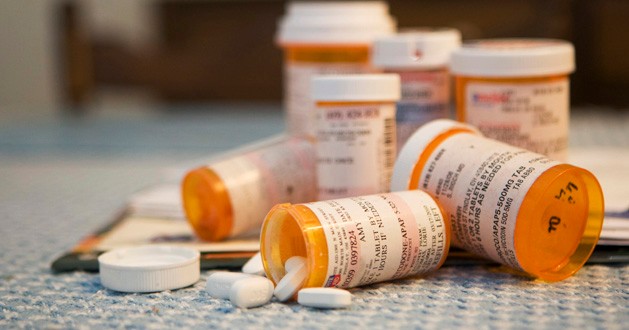
Feature image at top: Collection of prescription drug bottles and pills. Photo/Provided.
Innovation Lives Here
The University of Cincinnati is leading public urban universities into a new era of innovation and impact. Our faculty, staff and students are saving lives, changing outcomes and bending the future in our city's direction. Next Lives Here.
Other co-first authors included Jim Reigle, PhD, a postdoctoral fellow at Cincinnati Children’s Hospital, and Somchai Chutipongtanate, PhD, an associate professor in the Department of Environmental and Public Health Sciences in the College of Medicine.
The corresponding authors of the study were Jarek Meller, PhD, a professor of biostatistics, health informatics and data sciences in the College of Medicine, and Andrew Herr, PhD, a professor of immunobiology in the Department of Pediatrics in the College of Medicine.
Other co-investigators included Mario Medvedovic, PhD, professor and director of the Center for Biostatistics and Bioinformatics Services in the College of Medicine, and David Hildeman, PhD, professor of immunobiology in the College of Medicine. Both Herr and Hildeman have faculty research labs at Cincinnati Children’s Hospital.
This research was funded in part by grants from the National Institutes of Health, a Department of Veterans Affairs merit award, a UC Cancer Center Pilot Project Award and a Cincinnati Children’s Hospital Innovation Fund award.
Those involved in the research are also co-inventors on three U.S. patents that are related to their work and have been filed by Cincinnati Children’s Hospital.
Related Stories
Sugar overload killing hearts
November 10, 2025
Two in five people will be told they have diabetes during their lifetime. And people who have diabetes are twice as likely to develop heart disease. One of the deadliest dangers? Diabetic cardiomyopathy. But groundbreaking University of Cincinnati research hopes to stop and even reverse the damage before it’s too late.
Is going nuclear the solution to Ohio’s energy costs?
November 10, 2025

The Ohio Capital Journal recently reported that as energy prices continue to climb, economists are weighing the benefits of going nuclear to curb costs. The publication dove into a Scioto Analysis survey of 18 economists to weigh the pros and cons of nuclear energy. One economist featured was Iryna Topolyan, PhD, professor of economics at the Carl H. Lindner College of Business.
App turns smartwatch into detector of structural heart disease
November 10, 2025

An app that uses an AI model to read a single-lead ECG from a smartwatch can detect structural heart disease, researchers reported at the 2025 Scientific Sessions of the American Heart Association. Although the technology requires further validation, researchers said it could help improve the identification of patients with heart failure, valvular conditions and left ventricular hypertrophy before they become symptomatic, which could improve the prognosis for people with these conditions.