Designing the next generation of drug delivery
Nanotech offers new frontiers in medicine, UC chemistry professor says

The nonprofit PhRMA Foundation talked to a chemist at the University of Cincinnati about how nanotechnology is offering new avenues for delivering medicine.
UC College of Arts and Sciences Assistant Professor Briana Simms told PhRMA that she and her students study lipid nanoparticles in her chemistry lab.
"Lipid nanoparticles essentially are fancy soap bubbles," she said. "But they were used prevalently in the COVID-19 vaccines."
She is working to create synthetic versions that can be fine-tuned to a particular application. This could help deliver medicine directly to precise parts of the body that would benefit most from it, she said.
She was the recipient of the group's faculty starter grant in drug delivery for 2024.
"Ultimately, our goal is to be able to look at a specific disease or disorder and hand select a nanoparticle with the exact properties we need to treat it," she said.
Simms said she hopes that her work will lead to better community and public health.
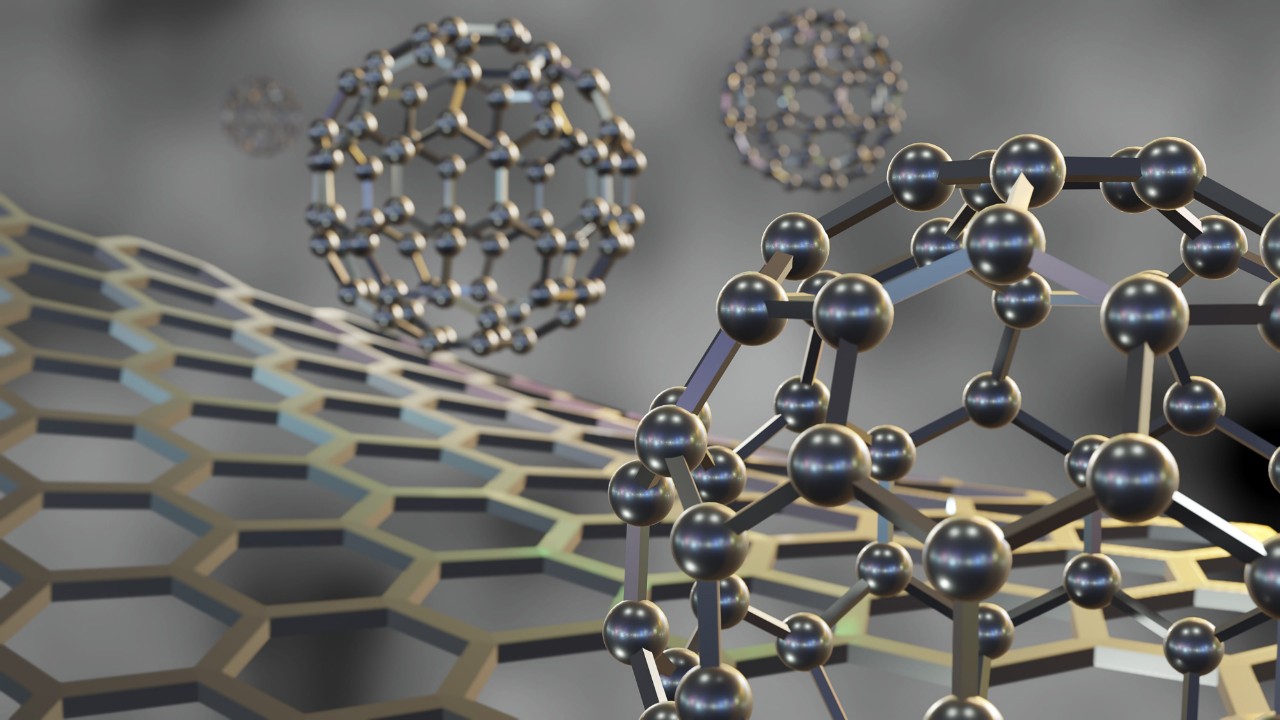
Featured image at top: UC Assistant Professor Briana Simms is working on the frontiers of nanomedicine in her chemistry lab. Photo/iStockPhoto
Related Stories
Sugar overload killing hearts
November 10, 2025
Two in five people will be told they have diabetes during their lifetime. And people who have diabetes are twice as likely to develop heart disease. One of the deadliest dangers? Diabetic cardiomyopathy. But groundbreaking University of Cincinnati research hopes to stop and even reverse the damage before it’s too late.
Is going nuclear the solution to Ohio’s energy costs?
November 10, 2025

The Ohio Capital Journal recently reported that as energy prices continue to climb, economists are weighing the benefits of going nuclear to curb costs. The publication dove into a Scioto Analysis survey of 18 economists to weigh the pros and cons of nuclear energy. One economist featured was Iryna Topolyan, PhD, professor of economics at the Carl H. Lindner College of Business.
App turns smartwatch into detector of structural heart disease
November 10, 2025

An app that uses an AI model to read a single-lead ECG from a smartwatch can detect structural heart disease, researchers reported at the 2025 Scientific Sessions of the American Heart Association. Although the technology requires further validation, researchers said it could help improve the identification of patients with heart failure, valvular conditions and left ventricular hypertrophy before they become symptomatic, which could improve the prognosis for people with these conditions.