U.S. stroke survival is improving, but race still plays role
UC stroke research covered in U.S. News & World Report

U.S. News & World Report, HealthDay, Local 12 and Real Health covered new research from the University of Cincinnati that found overall rates of long-term survival following stroke are improving, but Black individuals experience worse long-term outcomes compared to white individuals.
UC's David Robinson, MD, led the study recently published in the journal Neurology that looked at five-year survival rates following a stroke.
Among patients with acute ischemic stroke, the most common type of stroke, five-year mortality after stroke improved from 53% in 1993-94 to 48.3% in 2015, an absolute decline nearly double what would be expected in the general population. There were no changes in five-year survival for patients following an intracerebral hemorrhage, the most severe type of stroke.
“For the first time, we saw that there clearly has been an improvement in five-year mortality after stroke, and it probably is at least partially driven by the stroke systems of care that have been set up here in Cincinnati,” Robinson said. “The data suggests that we have specific interventions in the care of stroke that are disproportionately improving mortality for that particular group of people.”
While the overall numbers are improving, Black individuals were found to be 20% more likely to die within five years after an ischemic stroke than white individuals. Previous research confirmed that strokes are more common in Black individuals, but this research found for the first time that long-term outcomes are worse for Black patients.
Read the U.S. News & World Report article, originally published on HealthDay.
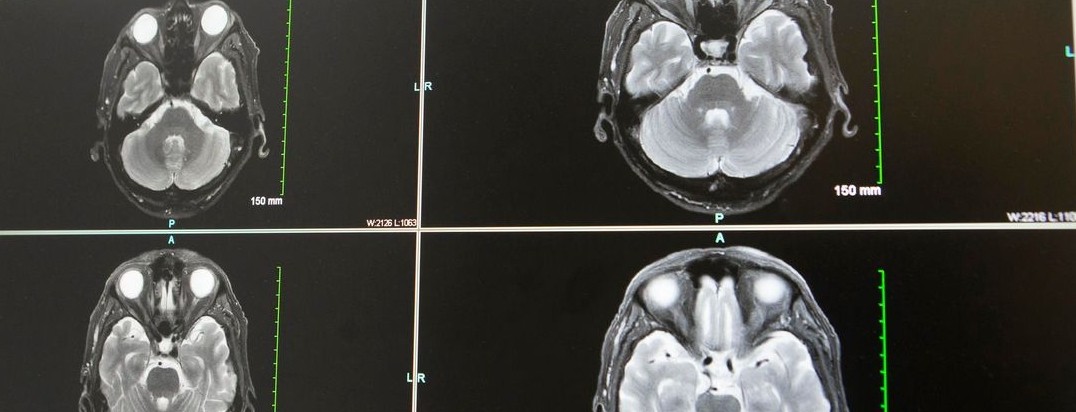
Featured photo at top of brain scans. Photo courtesy of Joseph Broderick.
Related Stories
Sugar overload killing hearts
November 10, 2025
Two in five people will be told they have diabetes during their lifetime. And people who have diabetes are twice as likely to develop heart disease. One of the deadliest dangers? Diabetic cardiomyopathy. But groundbreaking University of Cincinnati research hopes to stop and even reverse the damage before it’s too late.
Is going nuclear the solution to Ohio’s energy costs?
November 10, 2025

The Ohio Capital Journal recently reported that as energy prices continue to climb, economists are weighing the benefits of going nuclear to curb costs. The publication dove into a Scioto Analysis survey of 18 economists to weigh the pros and cons of nuclear energy. One economist featured was Iryna Topolyan, PhD, professor of economics at the Carl H. Lindner College of Business.
App turns smartwatch into detector of structural heart disease
November 10, 2025

An app that uses an AI model to read a single-lead ECG from a smartwatch can detect structural heart disease, researchers reported at the 2025 Scientific Sessions of the American Heart Association. Although the technology requires further validation, researchers said it could help improve the identification of patients with heart failure, valvular conditions and left ventricular hypertrophy before they become symptomatic, which could improve the prognosis for people with these conditions.