UC study: Long-term stroke survival improving, but racial disparities remain
Research published in the journal Neurology

Overall rates of long-term survival following stroke are improving, but Black individuals experience worse long-term outcomes compared to white individuals, according to University of Cincinnati research published online July 15, 2024 in Neurology®, the medical journal of the American Academy of Neurology.

David Robinson, MD. Photo/UC Health.
UC’s David Robinson, MD, corresponding author on the research, said prior studies had examined short-term stroke outcomes of 30 or 60 days, but this time the team looked at survival rates five years past a person’s stroke.
“This was the first attempt to look at a much longer period of follow-up time after a stroke, since a lot of the interventions we’ve come up with have more effect long term than they do in the short term,” said Robinson, a UC Gardner Neuroscience Institute physician researcher and assistant professor in the Department of Neurology and Rehabilitation Medicine in UC’s College of Medicine. “We’ve never been able to show that outcomes from strokes were definitively improving over longer periods of time.”
Researchers pulled data from the Greater Cincinnati Northern Kentucky Stroke Study, which has been following stroke epidemiology in a five-county region in Greater Cincinnati since 1993. Robinson said this area is a microcosm of the United States, representing similar representations of race, educational attainment and socioeconomic status as the country as a whole.
Among patients with acute ischemic stroke, the most common type of stroke, five-year mortality after stroke improved from 53% in 1993-94 to 48.3% in 2015, an absolute decline nearly double what would be expected in the general population. There were no changes in five-year survival for patients following an intracerebral hemorrhage, the most severe type of stroke.
“For the first time, we saw that there clearly has been an improvement in five-year mortality after stroke, and it probably is at least partially driven by the stroke systems of care that have been set up here in Cincinnati,” Robinson said. “The data suggests that we have specific interventions in the care of stroke that are disproportionately improving mortality for that particular group of people.”

Robinson said the combination of new treatments and establishing a more comprehensive system of stroke care have contributed to an overall improvement in long-term mortality after a stroke. Mobile stroke units help provide faster and more advanced care to patients on their way to the hospital. Photo/UC Health.
While the overall numbers are improving, Black individuals were found to be 20% more likely to die within five years after an ischemic stroke than white individuals. Previous research confirmed that strokes are more common in Black individuals, but this research found for the first time that long-term outcomes are worse for Black patients.
Robinson said there is no singular cause for the overall improvement in mortality, but the combination of new treatments and establishing a more comprehensive system of stroke care have contributed. Similarly, a number of different long-term social, economic and environmental inequities likely contribute to worse outcomes for Black patients.
Moving forward, Robinson said this data makes clear that ongoing follow-up and monitoring of patients following a stroke are critical to continue to improve long-term survival, especially among Black patients.
“This includes making sure that they’re on the right medications to minimize their chances of having an additional stroke; keeping them on the medications we know help, including cholesterol medications; and keeping their blood pressure under control,” he said.
Additionally, more people surviving strokes probably means more people living with disabilities caused by their strokes, highlighting the need for ongoing and improving rehabilitation services such as UC’s Stroke Recovery Clinic.
“If we’re helping people survive more, we’re going to have to come up with better treatments to help them with their disability, and that’s a big focus of our rehab group here, which I think is critical,” Robinson said. “I don’t think there’s any way you can look at this data and not be concerned about the number of people who are going to be surviving and need some help in terms of getting them as functional as we can.”
Impact Lives Here
The University of Cincinnati is leading public urban universities into a new era of innovation and impact. Our faculty, staff and students are saving lives, changing outcomes and bending the future in our city's direction. Next Lives Here.
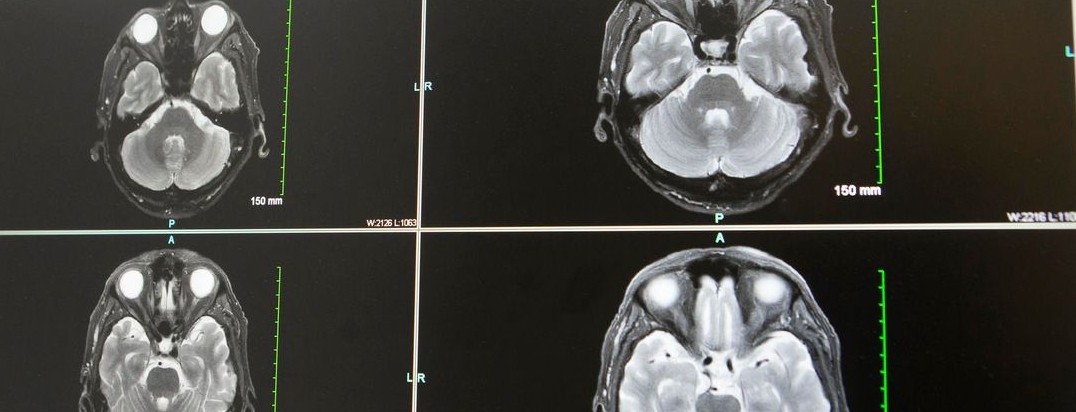
Featured photo at top of brain scans. Photo courtesy of Joseph Broderick.
Coauthors on the study include UC’s Robert Stanton, Heidi Sucharew, Mary Haverbusch, Lisa Nobel, Pooja Khatri, Joseph Broderick, Simona Ferioli, Daniel Woo, Matthew Flaherty, Stacie Demel, Kyle Walsh, Eva Mistry and Brett Kissela; Lili Ding and Jane Khoury of Cincinnati Children’s Hospital; George Howard of the University of Alabama at Birmingham; Opeolu Adeoye of Washington University; Jason Mackey of Indiana University; Felipe De Los Rios La Rosa of Miami Neuroscience Institute; Sabreena Slavin of the University of Kansas; Michael Star of Soroka Medical center; Sharyl Martini of the VA National TeleStroke Program; Elisheva Coleman of the University of Chicago; Adam Jasne of Yale University; and Dawn Kleindorfer of the University of Michigan.
Related Stories
Sugar overload killing hearts
November 10, 2025
Two in five people will be told they have diabetes during their lifetime. And people who have diabetes are twice as likely to develop heart disease. One of the deadliest dangers? Diabetic cardiomyopathy. But groundbreaking University of Cincinnati research hopes to stop and even reverse the damage before it’s too late.
Is going nuclear the solution to Ohio’s energy costs?
November 10, 2025

The Ohio Capital Journal recently reported that as energy prices continue to climb, economists are weighing the benefits of going nuclear to curb costs. The publication dove into a Scioto Analysis survey of 18 economists to weigh the pros and cons of nuclear energy. One economist featured was Iryna Topolyan, PhD, professor of economics at the Carl H. Lindner College of Business.
App turns smartwatch into detector of structural heart disease
November 10, 2025

An app that uses an AI model to read a single-lead ECG from a smartwatch can detect structural heart disease, researchers reported at the 2025 Scientific Sessions of the American Heart Association. Although the technology requires further validation, researchers said it could help improve the identification of patients with heart failure, valvular conditions and left ventricular hypertrophy before they become symptomatic, which could improve the prognosis for people with these conditions.