The health impact of living near a natural gas leak
UC expert talks to BBC about issue of methane leaks at abandoned wells

The BBC talked to a University of Cincinnati professor about the ways leaking oil and natural gas wells might be affecting public health.
Studies have linked pollutants related to the oil and gas industry with as many as 710 premature deaths and tens of thousands of cases of childhood asthma nationwide each year. Leaking wells are known to release volatile organic compounds such as benzene, which has been linked to cancer.

UC Professor Amy Townsend-Small. Photo/Jay Yocis/UC
The BBC spoke to UC College of Arts and Sciences Professor Amy Townsend-Small who has been studying the national problem of leaking and abandoned wells across the country.
"The highest concentrations of these non-methane hydrocarbons are in gas at wellheads, which also have the highest emission rates," Townsend-Small told the BBC.
Millions of Americans live within a mile of an orphaned oil or gas well or abandoned coal mine, according to the U.S. Department of the Interior. These sites are notorious for creating air and water pollution.
Congress set aside $4.7 billion in President Biden's Infrastructure Law to inventory and cap abandoned oil and gas wells. The initiative is expected to help address the escape of methane, a greenhouse gas that is a key driver of climate change.
In a study published last year in the journal PLOS Climate, Townsend-Small recommended a proposal to cap "marginal" or low-producing wells, many of which have also been found to be leaking.
She found that these marginal wells leak methane at a disproportionate rate compared to their meager production of oil or natural gas.
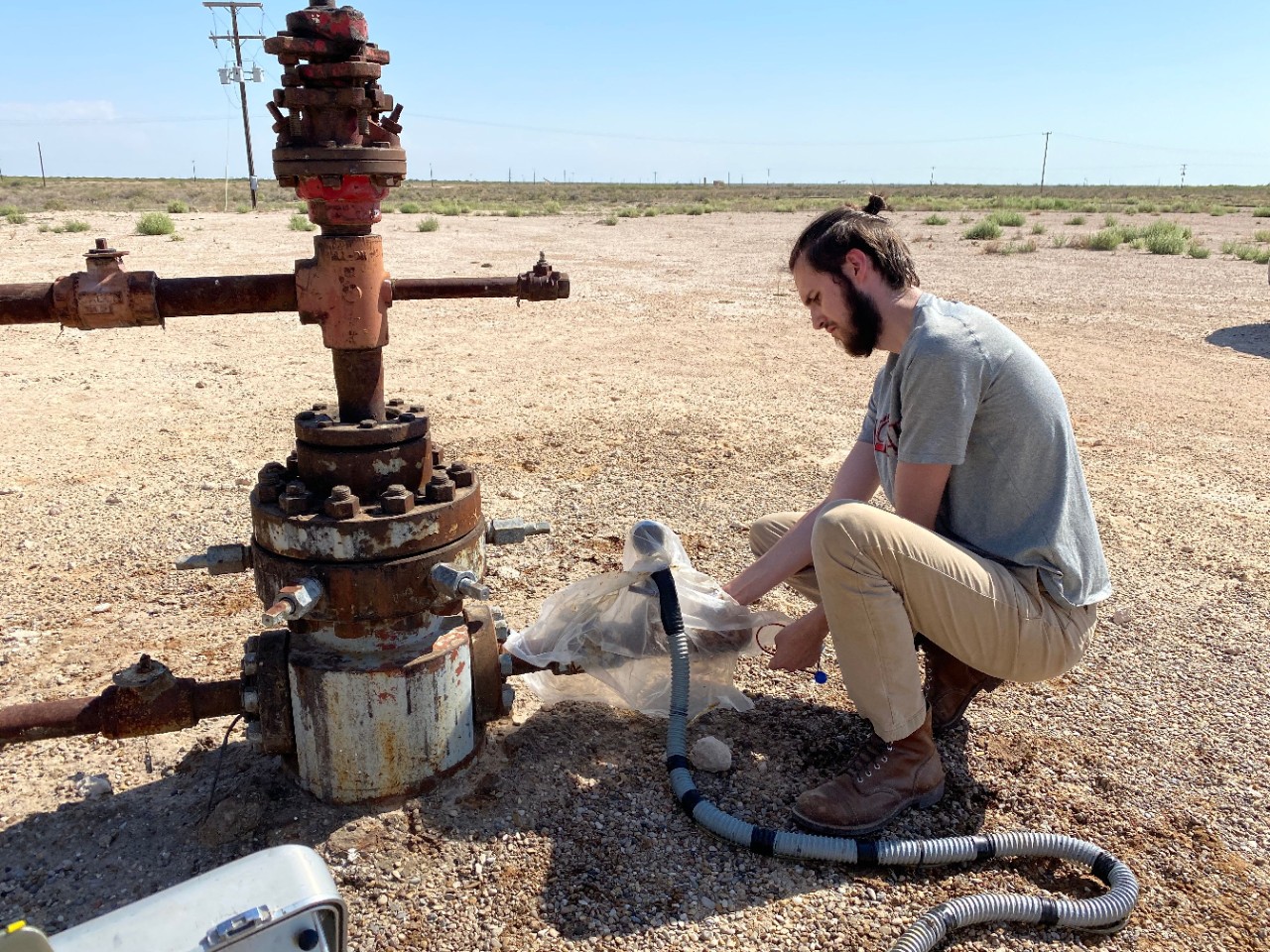
Featured image at top: UC graduate Jacob Hoschouer measures methane emissions at the site of an abandoned well in Texas. Photo/Provided
Related Stories
Sugar overload killing hearts
November 10, 2025
Two in five people will be told they have diabetes during their lifetime. And people who have diabetes are twice as likely to develop heart disease. One of the deadliest dangers? Diabetic cardiomyopathy. But groundbreaking University of Cincinnati research hopes to stop and even reverse the damage before it’s too late.
Is going nuclear the solution to Ohio’s energy costs?
November 10, 2025

The Ohio Capital Journal recently reported that as energy prices continue to climb, economists are weighing the benefits of going nuclear to curb costs. The publication dove into a Scioto Analysis survey of 18 economists to weigh the pros and cons of nuclear energy. One economist featured was Iryna Topolyan, PhD, professor of economics at the Carl H. Lindner College of Business.
App turns smartwatch into detector of structural heart disease
November 10, 2025

An app that uses an AI model to read a single-lead ECG from a smartwatch can detect structural heart disease, researchers reported at the 2025 Scientific Sessions of the American Heart Association. Although the technology requires further validation, researchers said it could help improve the identification of patients with heart failure, valvular conditions and left ventricular hypertrophy before they become symptomatic, which could improve the prognosis for people with these conditions.