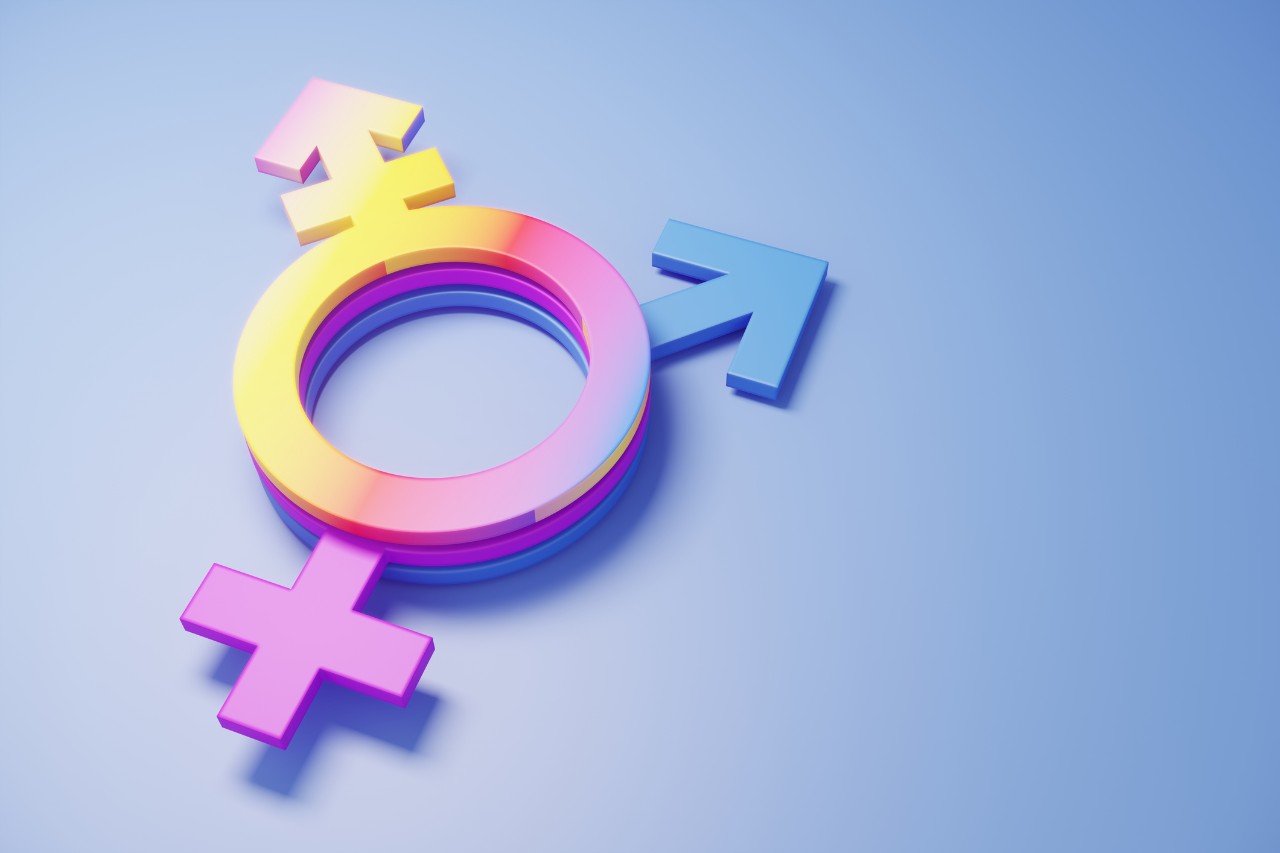
Two-spirit and intersex people explain they/them pronouns
UC medical student Delia Sosa shares their personal journey with Spectrum News

“Two-spirit” is a term that Native American culture uses to define someone who isn’t male or female, but embodies both masculine and feminine souls. Intersex is a term used to describe someone born with a combination of male and female biological traits.
A non-binary person is someone who doesn't identify as exclusively male or female. Non-binary people may identify as both, neither, or a combination of the two. The typical pronouns ‘she, her, he and him’ may not be an accurate description of people who identify as "two-spirit” or as “intersex” or as “non-binary.”
“I am not the typical female, not the typical male,” explains Delia Sosa, a medical student at the University of Cincinnati. “I just fall somewhere between.”
Sosa and Dayton resident India “Indalo” Holley, both spoke with Spectrum News for a segment that focused on awareness of the transgender and non-binary communities. During June, Pride month, Spectrum is sharing stories about the LGBTQ+community.

Delia Sosa, a medical student in the UC College of Medicine, is shown during a Spectrum News interview in the college's simulation center. Photo provided.
And so what does it mean to be transgender?
Assigned female at birth, Holley was adopted and raised by Native American parents.
“I have facial hair naturally, always have,” Holley told Spectrum News. “I've naturally always had an Adam's apple, a deeper voice. I know what it's like to go into a guys restroom. I know what it's like to give birth to a baby.”
Two-spirit people are respected in Native American culture and thought to be healers and leaders with spiritual gifts, reports Spectrum News.
Sosa identifies as both intersex and transgender.
Sosa says some intersex traits are noticed at birth, while others don't show up until puberty or later in life. Sosa says they found out they were intersex by accident when they began growing a full beard and went to a doctor for testing.
“I have some combination of hormones and chromosomes and anatomy that's different from what we expect to see in the typical male or the typical female,” Sosa told Spectrum News.
“So intersex literally means between the sexes, and that's where I fall,” Sosa explains. “There are way more intersex people in the world than a lot of folks realize. Not everyone uses the term intersex, and that's okay, but I think in general, we don't talk enough about the diversity of lived experiences that each of our bodies has and how much variety there is in terms of the anatomy and primary and secondary sex characteristics that each person has.”
Listen to the Spectrum News segment online.
Understand more about transgender people online.
Featured top image is courtesy of Istock.
Related Stories
Sugar overload killing hearts
November 10, 2025
Two in five people will be told they have diabetes during their lifetime. And people who have diabetes are twice as likely to develop heart disease. One of the deadliest dangers? Diabetic cardiomyopathy. But groundbreaking University of Cincinnati research hopes to stop and even reverse the damage before it’s too late.
Is going nuclear the solution to Ohio’s energy costs?
November 10, 2025

The Ohio Capital Journal recently reported that as energy prices continue to climb, economists are weighing the benefits of going nuclear to curb costs. The publication dove into a Scioto Analysis survey of 18 economists to weigh the pros and cons of nuclear energy. One economist featured was Iryna Topolyan, PhD, professor of economics at the Carl H. Lindner College of Business.
App turns smartwatch into detector of structural heart disease
November 10, 2025

An app that uses an AI model to read a single-lead ECG from a smartwatch can detect structural heart disease, researchers reported at the 2025 Scientific Sessions of the American Heart Association. Although the technology requires further validation, researchers said it could help improve the identification of patients with heart failure, valvular conditions and left ventricular hypertrophy before they become symptomatic, which could improve the prognosis for people with these conditions.