Thrombectomy less beneficial in large-core stroke
UC expert comments on trial results to Medscape

Thrombectomy, a minimally invasive stroke procedure that uses a catheter to remove a blood clot from a blood vessel in the brain to restore blood flow, has been shown to be beneficial in patients with large-core ischemic stroke.
But a secondary analysis of data from the randomized SELECT2 trial recently showed that patients with the greatest volume of tissue injury may benefit less from the procedure.
The analysis used imaging and outcome data from the 322 patients with large-core ischemic stroke included in the trial to look at whether the occurrence of severe hypodensity modified the effect of thrombectomy.
The results showed that as the volume of severe hypodensity increased, the odds of a favorable outcome with thrombectomy decreased.
The University of Cincinnati's Joseph Broderick, MD, commented on the study findings to Medscape.
"These data, if validated, provide a more fine-tuned approach to the use of endovascular therapy in patients with larger volumes of ischemic core," said Broderick, professor in the University of Cincinnati’s Department of Neurology and Rehabilitation Medicine in the College of Medicine and director of the UC Gardner Neuroscience Institute.
Broderick explained that greater intensity of hypodensity has been recognized as a marker for a greater likelihood of unsalvageable brain.
"There are some parallels with diffusion/flair mismatch that have been used to identify patients who may benefit from reperfusion," he said. "The next step will be to test these parameters in other published and reported large-core trials, but time to first image and time to treatment will be important variables to be considered in validating these data and incorporating them into clinical practice."
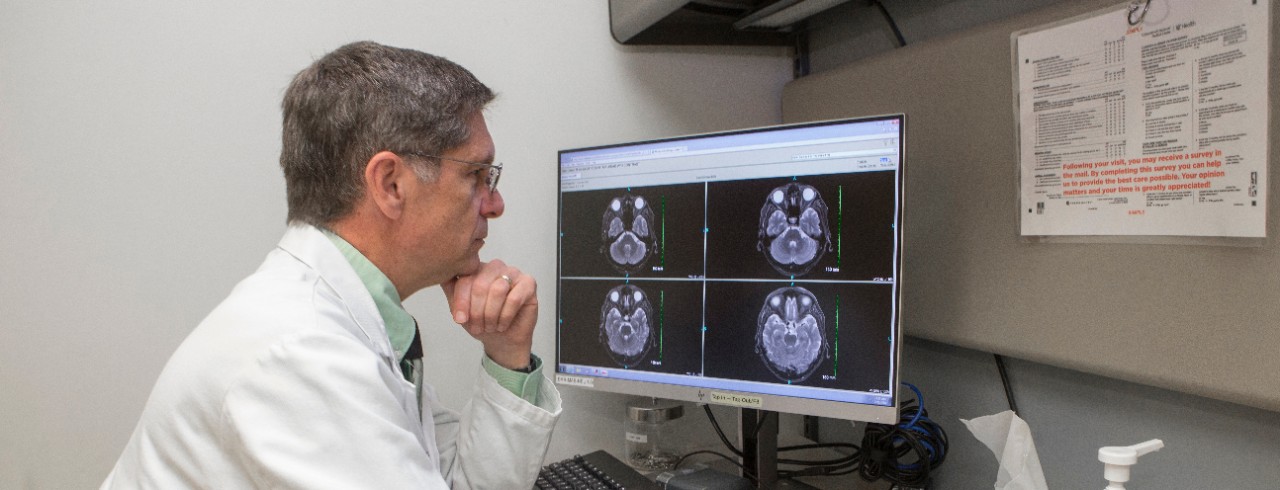
Featured photo at top of Dr. Broderick. Photo/Joseph Fuqua II/University of Cincinnati
Related Stories
Sugar overload killing hearts
November 10, 2025
Two in five people will be told they have diabetes during their lifetime. And people who have diabetes are twice as likely to develop heart disease. One of the deadliest dangers? Diabetic cardiomyopathy. But groundbreaking University of Cincinnati research hopes to stop and even reverse the damage before it’s too late.
Is going nuclear the solution to Ohio’s energy costs?
November 10, 2025

The Ohio Capital Journal recently reported that as energy prices continue to climb, economists are weighing the benefits of going nuclear to curb costs. The publication dove into a Scioto Analysis survey of 18 economists to weigh the pros and cons of nuclear energy. One economist featured was Iryna Topolyan, PhD, professor of economics at the Carl H. Lindner College of Business.
App turns smartwatch into detector of structural heart disease
November 10, 2025

An app that uses an AI model to read a single-lead ECG from a smartwatch can detect structural heart disease, researchers reported at the 2025 Scientific Sessions of the American Heart Association. Although the technology requires further validation, researchers said it could help improve the identification of patients with heart failure, valvular conditions and left ventricular hypertrophy before they become symptomatic, which could improve the prognosis for people with these conditions.