University of Cincinnati study looks at recovery of kidney use
Silvi Shah, MD, talks to Local 12 about a new predictive recovery scoring model for kidney patients

Individuals who lose kidney function due to acute kidney injury (AKI) do sometimes recover kidney function, explains Silvi Shah, MD, associate professor in the Division of Nephrology at the UC College of Medicine.
Shah spoke with Local 12’s Liz Bonis about a scoring model she and other researchers have created that uses key health indicators to predict recovery for patients who suffer kidney failure due to AKI. The scoring model found that 24% and 34% of patients with kidney failure due to AKI recovered kidney function within 90 days and 12 months respectively. Their observational study used information from the United States Renal Data System to make predictions.
“Acute kidney injury is a major contributor of end-stage-kidney disease and our study looked at factors that could predict recovery in patients who have kidney failure due to dialysis,” Shah told Local 12 listeners. “What we found is that we looked at 22,000 patients over a period of nine years and found around one fourth of those patients recover within 90 days and about one third of those patients recover in 12 months.”
Patients' factors such as the age, race or ethnicity, body mass index, congestive heart failure, cancer, amputation, functional status, hemoglobin and prior nephrology care were used in a regression model for predictions.
Listen to her interview on Local 12 News online. Shah's segment airs from 35:18 to 41 minutes.
Read more about her latest research online.
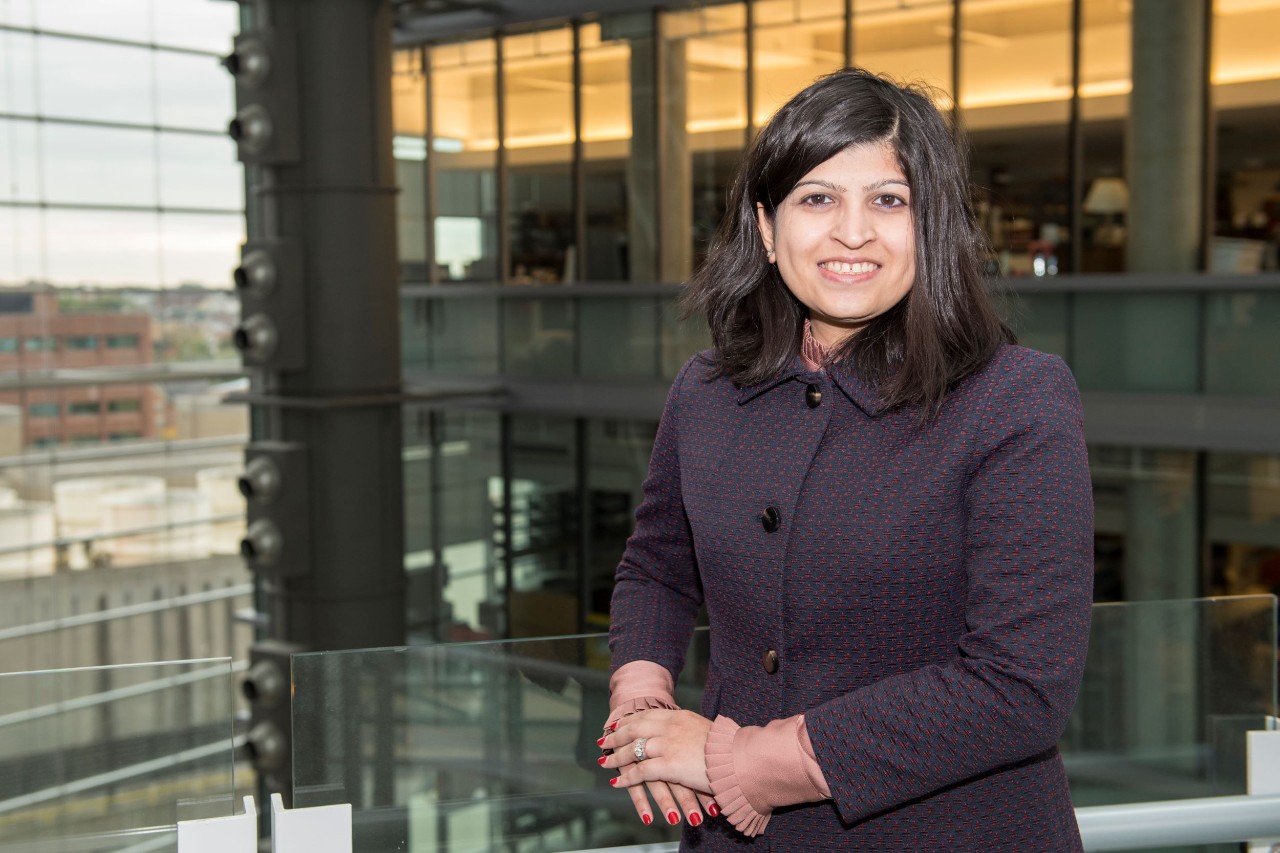
Featured top image of Silvi Shah, MD, taken by Colleen Kelley/UC Marketing + Brand.
Related Stories
Sugar overload killing hearts
November 10, 2025
Two in five people will be told they have diabetes during their lifetime. And people who have diabetes are twice as likely to develop heart disease. One of the deadliest dangers? Diabetic cardiomyopathy. But groundbreaking University of Cincinnati research hopes to stop and even reverse the damage before it’s too late.
Is going nuclear the solution to Ohio’s energy costs?
November 10, 2025

The Ohio Capital Journal recently reported that as energy prices continue to climb, economists are weighing the benefits of going nuclear to curb costs. The publication dove into a Scioto Analysis survey of 18 economists to weigh the pros and cons of nuclear energy. One economist featured was Iryna Topolyan, PhD, professor of economics at the Carl H. Lindner College of Business.
App turns smartwatch into detector of structural heart disease
November 10, 2025

An app that uses an AI model to read a single-lead ECG from a smartwatch can detect structural heart disease, researchers reported at the 2025 Scientific Sessions of the American Heart Association. Although the technology requires further validation, researchers said it could help improve the identification of patients with heart failure, valvular conditions and left ventricular hypertrophy before they become symptomatic, which could improve the prognosis for people with these conditions.