A century-old love affair with the Bearcat
Cincinnati Enquirer explains the origins of UC’s most prominent citizen of goodwill

The Bearcat mascot is probably the most recognizable ambassador for goodwill and school spirit at the University of Cincinnati.
The term “UC Bearcat” dates back to 1914 and seems to have first appeared in the campus newspaper following a football game between UC and the University of Kentucky Wildcats. The name was inspired by a cheer and play on words for UC star player Leonard K. “Teddy” Baehr.
A chant created during the game, “They may be Wildcats, but we have a Baehr-cat on our side,” eventually led to the name being memorialized in a cartoon published in the student newspaper following Cincinnati’s win. The cartoon, by John "Paddy" Reece, depicted a bedraggled Kentucky Wildcat being chased by a creature labeled "Cincinnati Bear Cats."
UC has a live mascot as well, a binturong named Lucille. She’s the fourth in a line of Cincinnati Zoo binturongs — first was Bo, then Alice and Lucy, who died in 2021.
The Cincinnati Enquirer in a recent story looked into the origins of the UC Bearcat.
Whether he is part of a parade along Clifton Avenue, helping the university rowing club or donning a pink tutu to race across the field of Nippert Stadium, the UC Bearcat mascot creates some pretty memorable moments.
He joined the UC Cheer Team to welcome to the newest group of Baby Bearcats at UC Medical Center, greeted and surprised Marian Spencer Scholarship winners and visited area high schools to welcome the first admitted Bearcats. The team of student Bearcats who don the mascot suit offer high-energy antics designed to entertain and revive up school spirit at sports events.
But the mascot is also in demand for other occasions, making appearances for UC admissions, other special university events and various community requests such as weddings, birthday parties, school activities and other engagements.
"How passionate are you about the University of Cincinnati?" asks Chris Helmers, the UC Bearcat mascot coach, when looking for students to wear the mascot suit.
“We are looking for someone who is a diehard Bearcat fan,” Helmers saint for a 2021 story on the Bearcat mascot. “We are looking for people that want to be the number one Bearcat fan in the land. They need to have that mentality no matter the situation.
“In or out of the Bearcat suit, you’re an ambassador for the University of Cincinnati,” Helmers added. “It could be a sporting event or a community appearance, there will be a Bearcat fan and they will come up and say ‘Go Bearcats’ and you need to be able to react and engage.”
Read the Cincinnati Enquirer story on the origins of Bearcat online.
Learn more about the Bearcat mascot online.
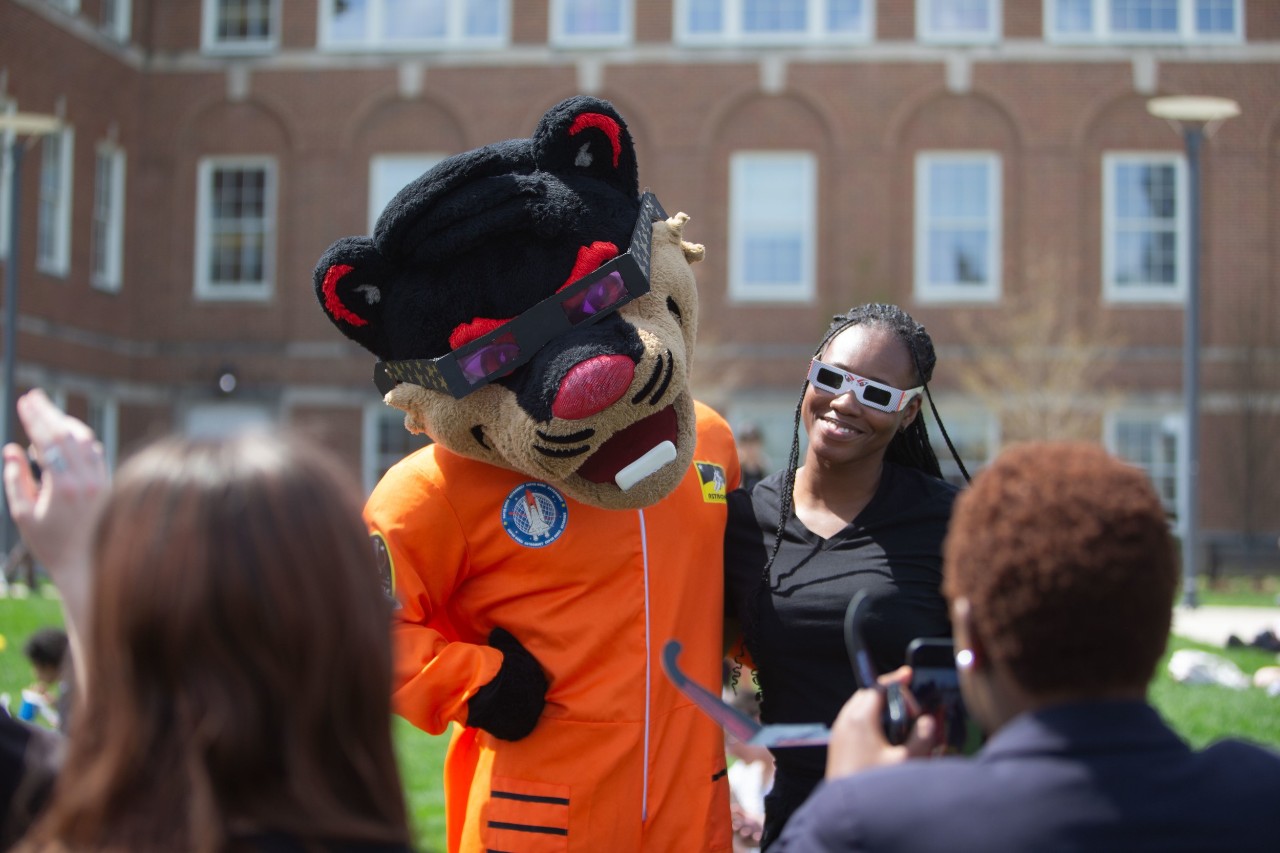
Featured top image of the Bearcat mascot with students in Bearcat commons for the eclipes of 2024. Photo/Abby Hardesty/UC Marketing + Brand

Bearcat revs up the crowd at a Cincinnati football game in Nippert Stadium. Photo by Joe Fuqa/UC Marketing+Brand.
Related Stories
Sugar overload killing hearts
November 10, 2025
Two in five people will be told they have diabetes during their lifetime. And people who have diabetes are twice as likely to develop heart disease. One of the deadliest dangers? Diabetic cardiomyopathy. But groundbreaking University of Cincinnati research hopes to stop and even reverse the damage before it’s too late.
Is going nuclear the solution to Ohio’s energy costs?
November 10, 2025

The Ohio Capital Journal recently reported that as energy prices continue to climb, economists are weighing the benefits of going nuclear to curb costs. The publication dove into a Scioto Analysis survey of 18 economists to weigh the pros and cons of nuclear energy. One economist featured was Iryna Topolyan, PhD, professor of economics at the Carl H. Lindner College of Business.
App turns smartwatch into detector of structural heart disease
November 10, 2025

An app that uses an AI model to read a single-lead ECG from a smartwatch can detect structural heart disease, researchers reported at the 2025 Scientific Sessions of the American Heart Association. Although the technology requires further validation, researchers said it could help improve the identification of patients with heart failure, valvular conditions and left ventricular hypertrophy before they become symptomatic, which could improve the prognosis for people with these conditions.