Ex-smokers who vape at higher risk of lung cancer
UC tobacco expert Ashley Merianos cited as expert in global media reporting on vape study

One of the few large population, long-term studies of vaping as an alternative to smoking is covered in the global publication Deutsche Welle, with UC’s tobacco researcher Ashley Merianos cited for her expert opinion.

Tobacco use expert Ashley Merianos, PhD. Photo/Andrew Higley/UC Marketing+ Brand.
The study, out of South Korea, found that former cigarette smokers who took up e-cigarettes were at a greater risk of a lung cancer diagnosis and cancer-related death than ex-smokers who had quit and avoided e-cigarettes as well.
"Dangerous chemicals found in vaping products that can damage lungs include acrolein, formaldehyde, diacetyl, and ultrafine particles that can be deeply inhaled. Vaping products can also include heavy metals such as lead," Merianos, an associate professor in UC’s School of Human Services, told DW.
According to the article, some studies show that vaping short-term, for less than two years, is not associated with a rise in cancer diagnoses. But this latest study, it says, is one of several more recent studies indicating that vapes may increase the risk of developing cancer later in life, at least for people who used to smoke conventional cigarettes.
Merianos said that for now: Researchers lack the overall evidence to make conclusions about the long-term health effects of vaping, including cancer outcomes.
Merianos is currently serving as a co-investigator on two U.S. National Institutes of Health research projects and is the co-author of the e-book, “Who Vapes?”, a look at E-cigarettes and the potential harm to users have become a prevalent public health problem in the United States especially among adolescents and young adults. Merianos is also an affiliate member of the Thirdhand Smoke Research Consortium.
Merianos is also cited in a prior Deutsche Welle article for opinion her on a study of vaping and pregnancy: Vaping while pregnant: What we know.
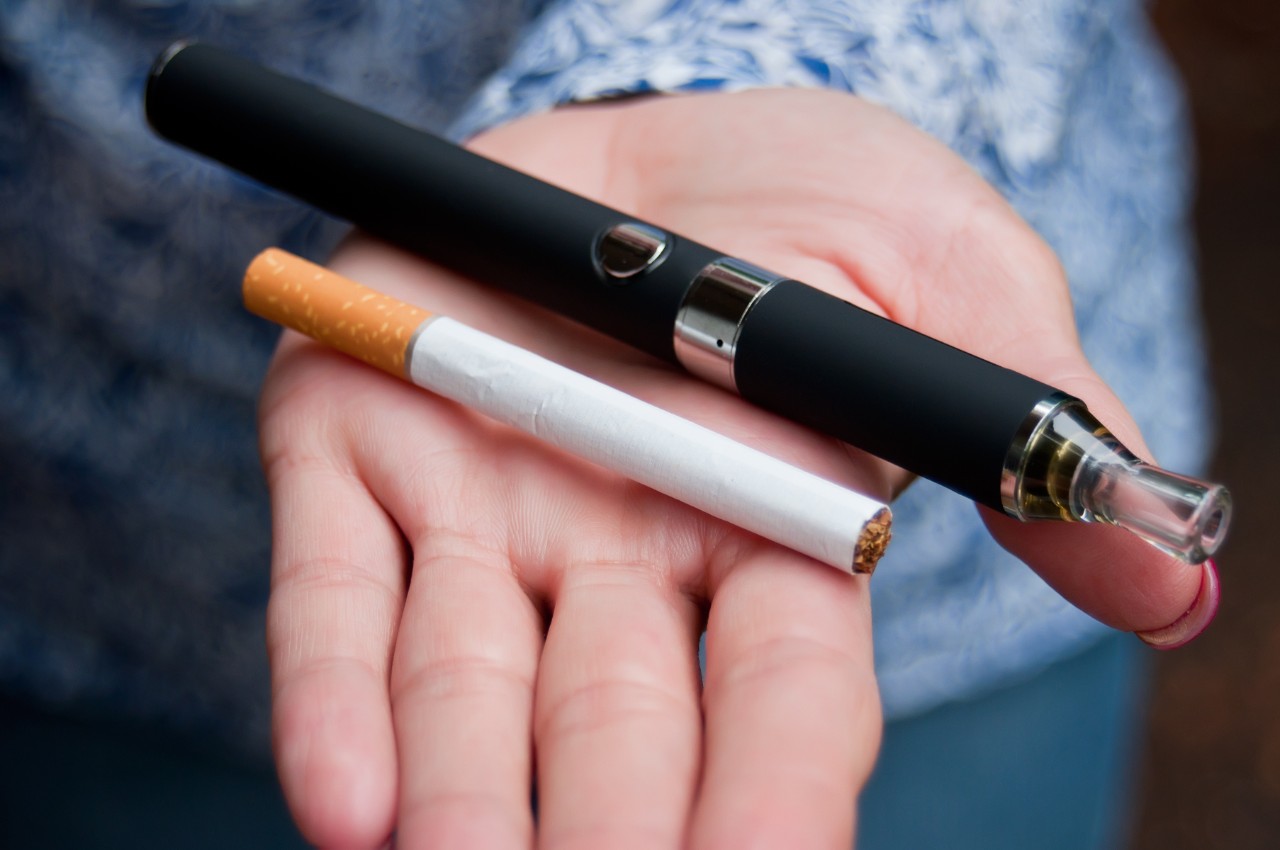
Featured image at top of vape pen and cigarette: iStock Photo/Neydtstock.
Impact Lives Here
The University of Cincinnati is leading public urban universities into a new era of innovation and impact. Our faculty, staff and students are saving lives, changing outcomes and bending the future in our city's direction. Next Lives Here.
Related Stories
Sugar overload killing hearts
November 10, 2025
Two in five people will be told they have diabetes during their lifetime. And people who have diabetes are twice as likely to develop heart disease. One of the deadliest dangers? Diabetic cardiomyopathy. But groundbreaking University of Cincinnati research hopes to stop and even reverse the damage before it’s too late.
Is going nuclear the solution to Ohio’s energy costs?
November 10, 2025

The Ohio Capital Journal recently reported that as energy prices continue to climb, economists are weighing the benefits of going nuclear to curb costs. The publication dove into a Scioto Analysis survey of 18 economists to weigh the pros and cons of nuclear energy. One economist featured was Iryna Topolyan, PhD, professor of economics at the Carl H. Lindner College of Business.
App turns smartwatch into detector of structural heart disease
November 10, 2025

An app that uses an AI model to read a single-lead ECG from a smartwatch can detect structural heart disease, researchers reported at the 2025 Scientific Sessions of the American Heart Association. Although the technology requires further validation, researchers said it could help improve the identification of patients with heart failure, valvular conditions and left ventricular hypertrophy before they become symptomatic, which could improve the prognosis for people with these conditions.