Is ketamine the answer to treatment-resistant depression?
UC expert joins WVXU's Cincinnati Edition roundtable discussion

While once considered a counterculture drug, ketamine is now giving hope for patients with treatment-resistant depression.
The University of Cincinnati's Stephen Rush, MD, treats patients with intranasal ketamine and esketamine in the Treatment Resistant Depression Clinic and joined WVXU's Cincinnati Edition to discuss the drugs' benefits and the importance of administering the drug in a safe and controlled setting.
Rush explained ketamine was initially developed as an anesthetic, and its "mirror image" molecule esketamine has been approved by the FDA for treatment-resistant depression.
"Ketamine or esketamine impact an entirely different molecule in the brain (than traditional antidepressants)," said Rush, associate professor of clinical psychiatry in UC's College of Medicine and medical director of ambulatory services. "Ketamine increases the neuroplasticity of the brain. That is, it increases the ability of our nervous system to change its activity by reorganizing its structure, functions and connections with other parts of the brain, going from a function causing depression to a function in which depression is no longer present."
Rush said administering intranasal ketamine and esketamine in the clinic is structured with safety in mind, as vital signs like heart rate and blood pressure are monitored, side effects are reported and patients stay for 2-4 hours after treatment to confirm their vital signs are in normal range and they are safe to be discharged.
"My personal opinion is that the data on safety around home-use ketamine is not there yet, and I would generally advise against it," Rush said. "Certainly someone who is participating in treatment in our clinics cannot also be getting home treatment through another service."
Since the use of ketamine or esketamine is focused on people who have failed traditional treatments, Rush said it is exciting to see patients entering remission from depression through this treatment. Meta-analyses of studies have found likelihood of remission with esketamine treatment is about 30-45%, while likelihood of having at least a 50% reduction in symptoms is about 40-55%.
"I often hear about patients telling me about how life has changed, whether that means going back to work and coming off of disability, or going back to school, engaging in relationships in ways they haven’t for years and generally functioning," Rush said. "Not only are we talking about the improvement in mood, we’re talking about the increase in functioning and the person’s ability to contribute to society and be productive, which is a huge factor in determining someone's sense of wellness."
Listen to the Cincinnati Edition segment.
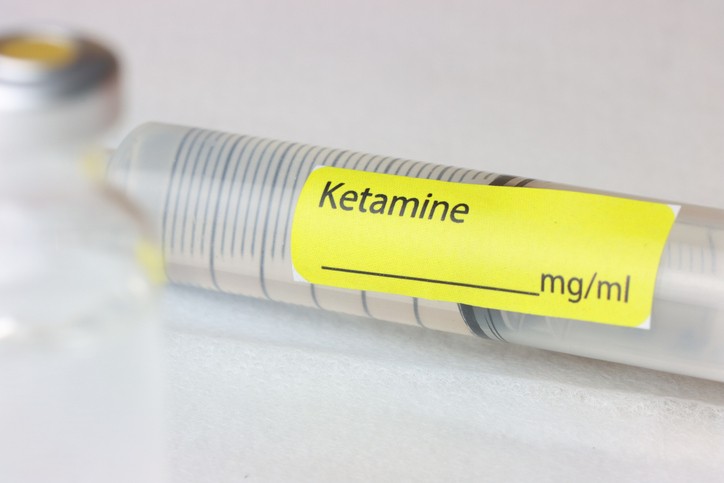
Featured photo at top of ketamine vial. Photo/Jennifer Fontan/iStock.
Related Stories
Sugar overload killing hearts
November 10, 2025
Two in five people will be told they have diabetes during their lifetime. And people who have diabetes are twice as likely to develop heart disease. One of the deadliest dangers? Diabetic cardiomyopathy. But groundbreaking University of Cincinnati research hopes to stop and even reverse the damage before it’s too late.
Is going nuclear the solution to Ohio’s energy costs?
November 10, 2025

The Ohio Capital Journal recently reported that as energy prices continue to climb, economists are weighing the benefits of going nuclear to curb costs. The publication dove into a Scioto Analysis survey of 18 economists to weigh the pros and cons of nuclear energy. One economist featured was Iryna Topolyan, PhD, professor of economics at the Carl H. Lindner College of Business.
App turns smartwatch into detector of structural heart disease
November 10, 2025

An app that uses an AI model to read a single-lead ECG from a smartwatch can detect structural heart disease, researchers reported at the 2025 Scientific Sessions of the American Heart Association. Although the technology requires further validation, researchers said it could help improve the identification of patients with heart failure, valvular conditions and left ventricular hypertrophy before they become symptomatic, which could improve the prognosis for people with these conditions.