WLWT: Beautiful pear tree causes ugly invasive problem
UC biologist suggests homeowners consider replacing tree with native alternatives

WLWT spoke to a biologist with the University of Cincinnati about a pretty but invasive ornamental tree that is in bloom now across Ohio.
UC College of Arts and Sciences Professor Theresa Culley, head of UC's Department of Biological Sciences, told WLWT that the Bradford or Callery pear tree was sterile when growers introduced it to neighborhoods across the Midwest in the 1960s.

Theresa Culley. Photo/Joseph Fuqua II/UC
But this tree from Asia tended to split at its trunk, so growers introduced other varieties that cross-pollinated with Bradford pear trees and began producing seed-bearing fruit.
Soon, the pear trees were showing up in disturbed patches of forest and along highway edges in Ohio and other states.
An Ohio law went into effect last year making the selling, growing or planting of Callery pears illegal statewide.
Culley said homeowners might consider replacing pear trees in their yards with native plants.
"A lot of people really love their tree," she said.
One alternative is to spray the tree with plant-growth regulator treatments available at home and garden shops that inhibit a tree's development of fruit, she said.
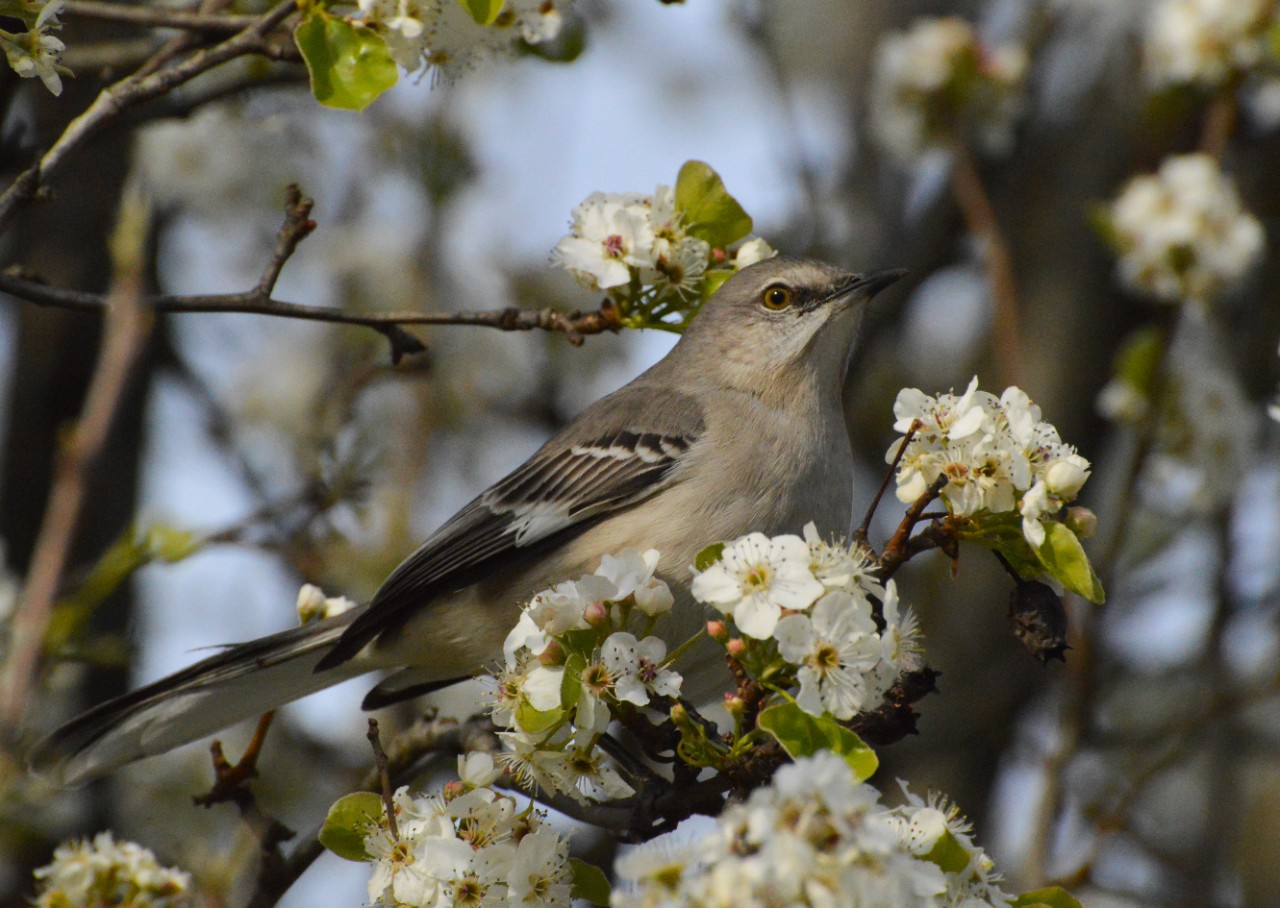
Featured image at top: A mockingbird perches in a Callery pear tree. Photo/Michael Miller
Related Stories
Sugar overload killing hearts
November 10, 2025
Two in five people will be told they have diabetes during their lifetime. And people who have diabetes are twice as likely to develop heart disease. One of the deadliest dangers? Diabetic cardiomyopathy. But groundbreaking University of Cincinnati research hopes to stop and even reverse the damage before it’s too late.
Is going nuclear the solution to Ohio’s energy costs?
November 10, 2025

The Ohio Capital Journal recently reported that as energy prices continue to climb, economists are weighing the benefits of going nuclear to curb costs. The publication dove into a Scioto Analysis survey of 18 economists to weigh the pros and cons of nuclear energy. One economist featured was Iryna Topolyan, PhD, professor of economics at the Carl H. Lindner College of Business.
App turns smartwatch into detector of structural heart disease
November 10, 2025

An app that uses an AI model to read a single-lead ECG from a smartwatch can detect structural heart disease, researchers reported at the 2025 Scientific Sessions of the American Heart Association. Although the technology requires further validation, researchers said it could help improve the identification of patients with heart failure, valvular conditions and left ventricular hypertrophy before they become symptomatic, which could improve the prognosis for people with these conditions.