WVXU: There's more than one type of bedbug
UC biologist talks to Cincinnati Edition about household pest

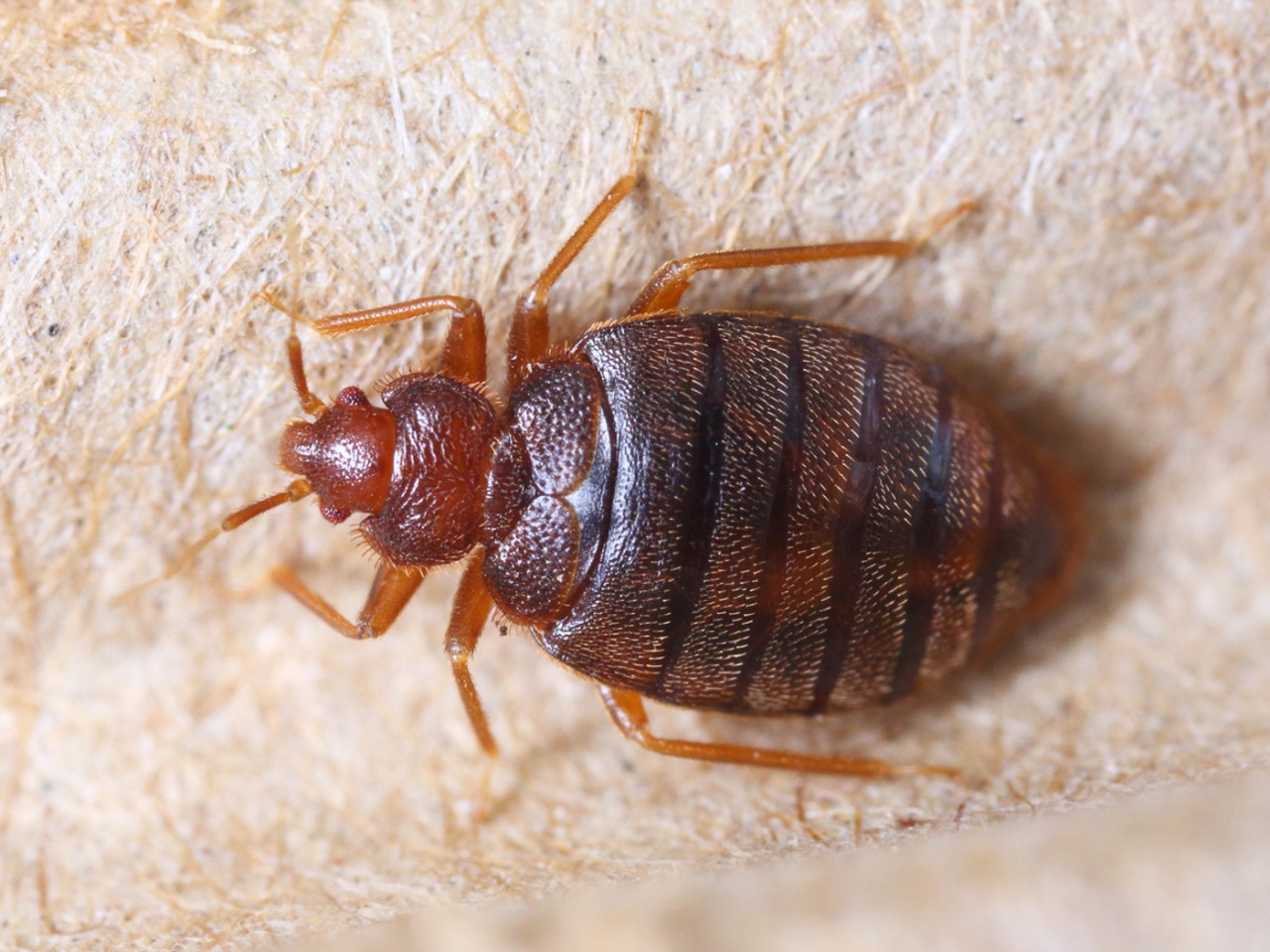
WVXU's Cincinnati Edition spoke to a University of Cincinnati biologist about a new tropical species of bedbug that is showing up in the United States.
Bedbugs are tiny blood-feeding insects found around the world.
“Bedbugs probably started as a bat or sparrow bug living in caves. And they made the jump to humans. They've probably been with humans since we were living in caves,” UC College of Arts and Sciences Professor Joshua Benoit told host Lucy May.
Benoit said pest control was able to suppress bedbugs for more than a generation after World War II, but they started to make a resurgence across the country in the 1990s, most likely because of pesticide resistance.
Show guest Rick Cooper, a research associate for Rutgers University, said many bedbug populations also shrank during the COVID-19 pandemic when people stopped traveling as much.
But Benoit said they are showing up in more homes in cities across the United States. And some states, including Florida and Hawaii, have reported seeing a nonnative species of bedbug from the tropics.
This bedbug is similar to the common species, Benoit said.
“They're a little more heat-tolerant and tolerant of higher humidities,” Benoit said. “But they're not as good at tolerating the dry conditions we have in the Northeast.”
Benoit said he recommends a multi-pronged approach to get rid of bedbugs, including pesticides, dessicants such as diatomaceous earth, high heat to dry clothes and linens and lots of cleaning and vacuuming. He recommends hiring pest-control experts.
“It's really hard to get rid of them,” he said. “For control, you dont want to use a single bullet.”
Listen to the Cincinnati Edition interview.
Featured image at top: Bedbugs are making a resurgence in many U.S. cities. Photo/smuay/Unsplash

UC Professor Joshua Benoit studies ticks, mosquitoes and other disease vectors in his biology lab. Photo/Joseph Fuqua II/UC
Related Stories
Sugar overload killing hearts
November 10, 2025
Two in five people will be told they have diabetes during their lifetime. And people who have diabetes are twice as likely to develop heart disease. One of the deadliest dangers? Diabetic cardiomyopathy. But groundbreaking University of Cincinnati research hopes to stop and even reverse the damage before it’s too late.
Is going nuclear the solution to Ohio’s energy costs?
November 10, 2025

The Ohio Capital Journal recently reported that as energy prices continue to climb, economists are weighing the benefits of going nuclear to curb costs. The publication dove into a Scioto Analysis survey of 18 economists to weigh the pros and cons of nuclear energy. One economist featured was Iryna Topolyan, PhD, professor of economics at the Carl H. Lindner College of Business.
App turns smartwatch into detector of structural heart disease
November 10, 2025

An app that uses an AI model to read a single-lead ECG from a smartwatch can detect structural heart disease, researchers reported at the 2025 Scientific Sessions of the American Heart Association. Although the technology requires further validation, researchers said it could help improve the identification of patients with heart failure, valvular conditions and left ventricular hypertrophy before they become symptomatic, which could improve the prognosis for people with these conditions.