The Washington Post: Iceland volcano erupts again. Is it normal?
UC geochemist talks about latest eruption outside Grindavik

The Washington Post turned to a geochemist at the University of Cincinnati to explain the significance of the third volcanic eruption in as many months outside Grindavik, Iceland, this week.
The eruption at Grindavik closed the Blue Lagoon, a popular tourist attraction, and several surrounding roads and damaged some plumbing infrastructure supplying hot water to 30,000 people.
Department of Geosciences Professor Thomas Algeo in UC's College of Arts and Sciences told the Washington Post that the latest eruption occurred in one of several volcanic regions on the island.
The series of eruptions at Grindavik could be a sign that this western region, which has been quiet volcanically since the 1200s, could see eruptions for decades or centuries to come, he said.
Among other research projects, Algeo has studied the geological and astronomical cataclysms that led to the largest mass extinctions on Earth.
This week's eruption sent lava fountains 260 feet into the air. They're providing a wealth of information to geoscientists, Algeo told the Post.
“The eruptions are providing new insights into how mid-ocean ridge spreading systems behave,” Algeo said. “Iceland is about the only place in the world where an oceanic spreading center rises above sea level, making direct observations possible. Scientists are gaining new insights into how magma moves and is redistributed in such volcanic systems.”
Read the Washington Post story.
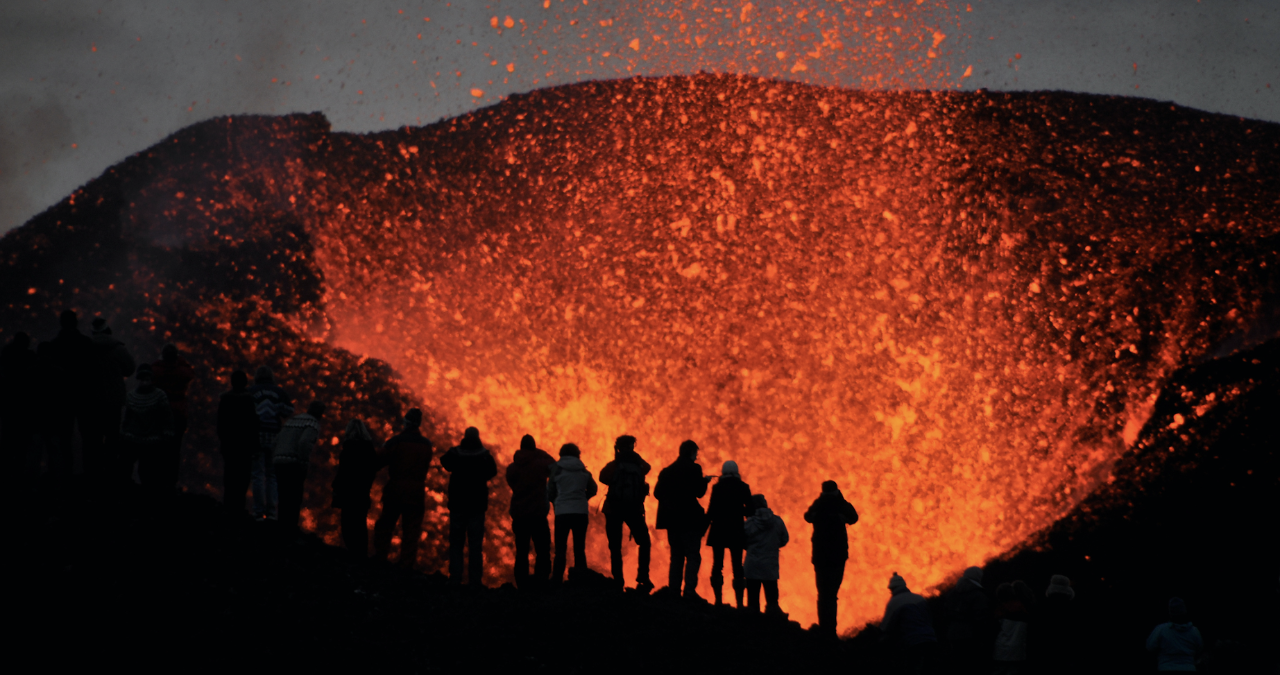
Featured image at top: Featured image at top: Iceland's Eyjafjallajökull volcano erupts in 2010. Photo/TrueCapture

UC Professor Thomas Algeo says the latest volcanic eruption in Iceland is providing valuable information to geoscientists. Photo/Andrew Higley/UC Marketing + Brand
Related Stories
Sugar overload killing hearts
November 10, 2025
Two in five people will be told they have diabetes during their lifetime. And people who have diabetes are twice as likely to develop heart disease. One of the deadliest dangers? Diabetic cardiomyopathy. But groundbreaking University of Cincinnati research hopes to stop and even reverse the damage before it’s too late.
Is going nuclear the solution to Ohio’s energy costs?
November 10, 2025

The Ohio Capital Journal recently reported that as energy prices continue to climb, economists are weighing the benefits of going nuclear to curb costs. The publication dove into a Scioto Analysis survey of 18 economists to weigh the pros and cons of nuclear energy. One economist featured was Iryna Topolyan, PhD, professor of economics at the Carl H. Lindner College of Business.
App turns smartwatch into detector of structural heart disease
November 10, 2025

An app that uses an AI model to read a single-lead ECG from a smartwatch can detect structural heart disease, researchers reported at the 2025 Scientific Sessions of the American Heart Association. Although the technology requires further validation, researchers said it could help improve the identification of patients with heart failure, valvular conditions and left ventricular hypertrophy before they become symptomatic, which could improve the prognosis for people with these conditions.