'LIVE with Kelly and Mark' highlights UC strawberry study

University of Cincinnati research on how eating strawberries may reduce dementia risk was featured in a recent "LIVE with Kelly and Mark" segment on superfoods to eat in 2024.
Doctor and author William Li told hosts Kelly Ripa and Mark Consuelo that while strawberries are known to have anti-inflammatory properties, they also can play a role in brain health. He cited a 2023 UC study that enrolled a total of 30 overweight patients between 50-65 years old with complaints of mild cognitive decline.
Over a period of 12 weeks, the participants were asked to abstain from berry fruit consumption of any kind except for a daily packet of supplement powder to be mixed with water and consumed with breakfast. Half of the participants received powders that contained the equivalent of one cup of whole strawberries (the standard serving size), while the other half received a placebo.
Those in the strawberry powder group had diminished memory interference, which is consistent with an overall improvement in executive ability.
“Reduced memory interference refers to less confusion of semantically related terms on a word-list learning test,” said lead study author Robert Krikorian, professor emeritus in the UC College of Medicine’s Department of Psychiatry and Behavioral Neuroscience. “This phenomenon generally is thought to reflect better executive control in terms of resisting intrusion of non-target words during the memory testing.”
The strawberry-treated participants also had a significant reduction of depressive symptoms, which Krikorian said can be understood as a result from “enhanced executive ability that would provide better emotional control and coping and perhaps better problem-solving.”
Watch the "LIVE with Kelly and Mark" segment.
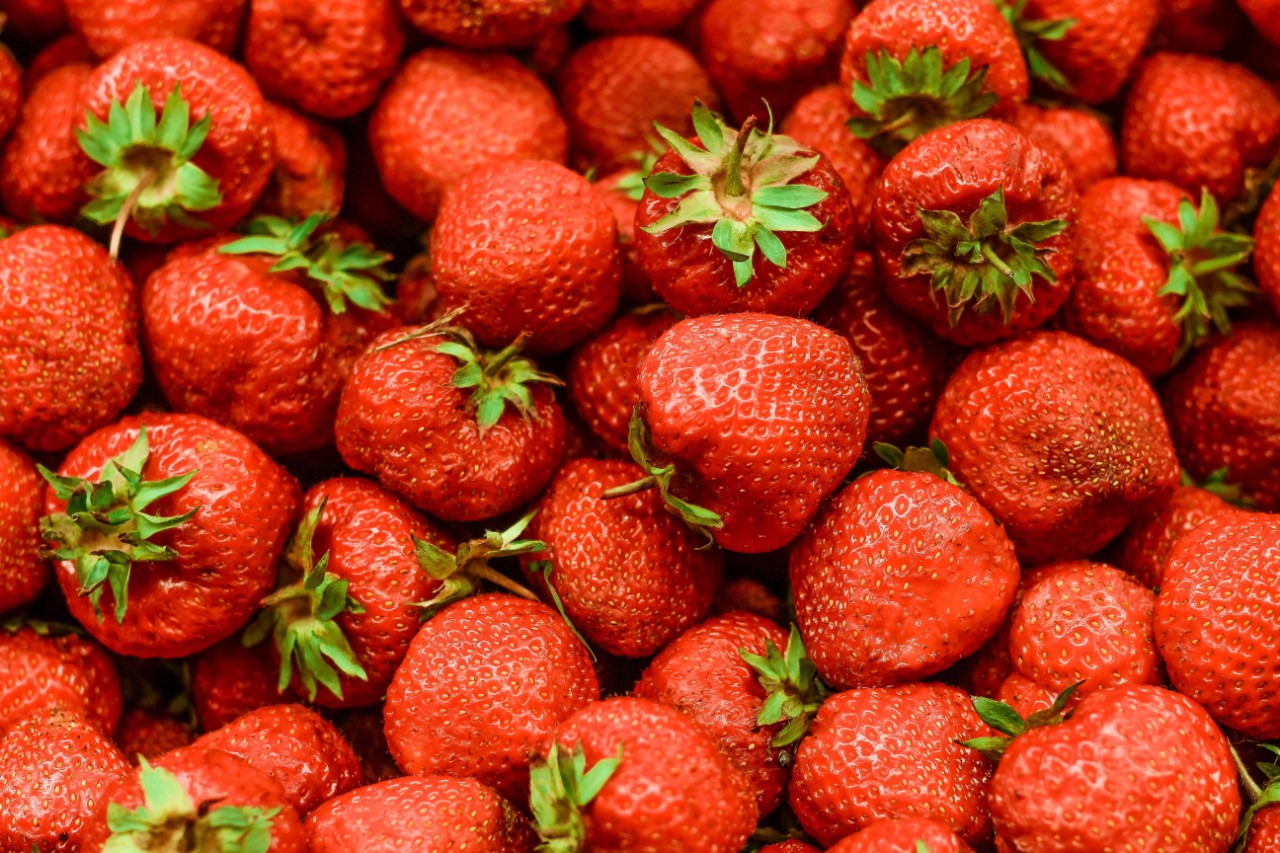
Featured photo at top of strawberries. Photo/Anton Darius/Unsplash.
Related Stories
Sugar overload killing hearts
November 10, 2025
Two in five people will be told they have diabetes during their lifetime. And people who have diabetes are twice as likely to develop heart disease. One of the deadliest dangers? Diabetic cardiomyopathy. But groundbreaking University of Cincinnati research hopes to stop and even reverse the damage before it’s too late.
Is going nuclear the solution to Ohio’s energy costs?
November 10, 2025

The Ohio Capital Journal recently reported that as energy prices continue to climb, economists are weighing the benefits of going nuclear to curb costs. The publication dove into a Scioto Analysis survey of 18 economists to weigh the pros and cons of nuclear energy. One economist featured was Iryna Topolyan, PhD, professor of economics at the Carl H. Lindner College of Business.
App turns smartwatch into detector of structural heart disease
November 10, 2025

An app that uses an AI model to read a single-lead ECG from a smartwatch can detect structural heart disease, researchers reported at the 2025 Scientific Sessions of the American Heart Association. Although the technology requires further validation, researchers said it could help improve the identification of patients with heart failure, valvular conditions and left ventricular hypertrophy before they become symptomatic, which could improve the prognosis for people with these conditions.