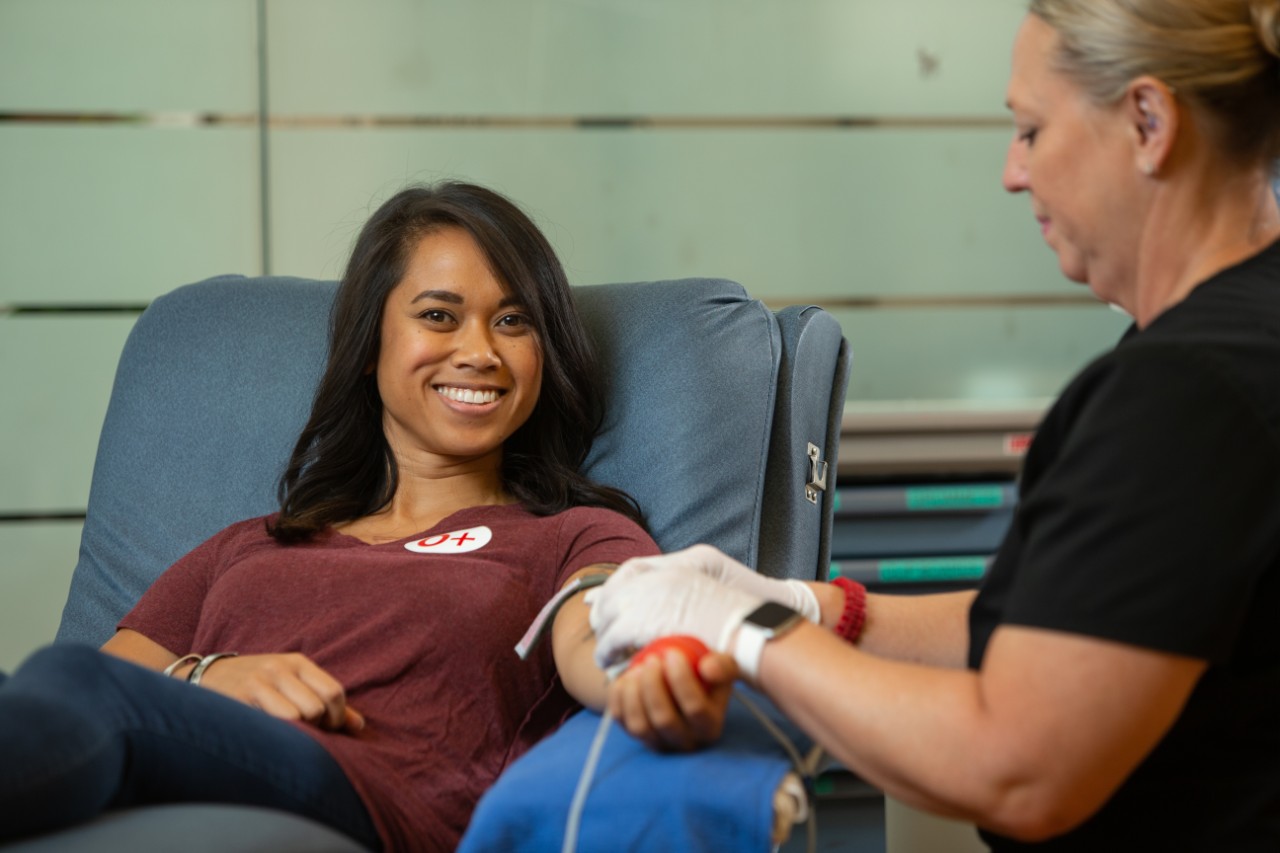
January is National Blood Donor Month
Highlighting the contributions of lifesaving blood donors and inspiring the community to take action

Did you know that every two seconds in America, someone urgently needs blood?

This need extends beyond unexpected emergencies like car crashes, encompassing a wide range of medical treatments such as cancer therapies, cardiovascular and orthopedic surgeries, and organ and bone marrow transplants.
Hoxworth Blood Center, University of Cincinnati, is the oldest operating blood center in the nation, and the sole supplier of blood products to all greater Cincinnati hospitals and health systems.
“Donating blood is an easy and impactful way to come together and be part of our community,” says David Oh, MD, Chief Medical Officer, Hoxworth Blood Center. “When you donate blood or platelets with Hoxworth, you know that it will be used for a child going through cancer treatments at Cincinnati Children’s, a local mother experiencing child birth, a neighbor who needs surgery, and more. You are saving lives close to home.”

Only three percent of eligible Americans currently donate blood, despite 65% of the population being eligible to do so. Additionally, less than 20% of blood donations come from individuals in communities of color, and donations from individuals aged 19-24 have declined by nearly 32% from 2019 to 2021. This drop is largely attributed to the restrictions imposed on blood drives at school campuses during the peak of the COVID-19 pandemic.
“Blood transfusions are one of the most common medical procedures performed in hospitals,” says Oh. “If just one percent more Americans donated blood, shortages could be eliminated.”

Given the current state of blood donations, there is an urgent need for younger, more diverse donors. National Blood Donor Month, celebrated every January, provides an opportunity to raise awareness about the importance of blood donation and to honor those who have already made a life-saving contribution.

The inaugural National Blood Donor Month was proclaimed by President Richard Nixon and held in January 1970, with the aim of acknowledging voluntary blood donors and encouraging more individuals to donate for the first time. Despite the changes that have occurred in the last five decades, the demand for blood remains constant, as does the selflessness of those who answer the call to give.
"We express our heartfelt gratitude to all those who regularly donate blood and encourage all those eligible to join them,” explains Oh. “Such ongoing generosity not only saves lives today but also extends hope for a brighter tomorrow for countless individuals in need in our greater Cincinnati community.”
About Hoxworth:
Hoxworth Blood Center, University of Cincinnati, was founded in 1938 and serves more than 30 hospitals in 18 counties in Southwestern Ohio, Northern Kentucky, and Southeastern Indiana. Annually, Hoxworth collects more than 100,000 units of blood from local donors to help save the lives of patients in area hospitals. Hoxworth Blood Center: Saving Lives Close to Home.
Related Stories
Sugar overload killing hearts
November 10, 2025
Two in five people will be told they have diabetes during their lifetime. And people who have diabetes are twice as likely to develop heart disease. One of the deadliest dangers? Diabetic cardiomyopathy. But groundbreaking University of Cincinnati research hopes to stop and even reverse the damage before it’s too late.
App turns smartwatch into detector of structural heart disease
November 10, 2025

An app that uses an AI model to read a single-lead ECG from a smartwatch can detect structural heart disease, researchers reported at the 2025 Scientific Sessions of the American Heart Association. Although the technology requires further validation, researchers said it could help improve the identification of patients with heart failure, valvular conditions and left ventricular hypertrophy before they become symptomatic, which could improve the prognosis for people with these conditions.
Combination immunotherapy helps overcome melanoma treatment resistance
November 10, 2025

MSN highlighted research led by the University of Cincinnati Cancer Center's Trisha Wise-Draper showing a combination of immunotherapy medications can activate a robust immune response and help overcome treatment resistance in patients with refractory melanoma.